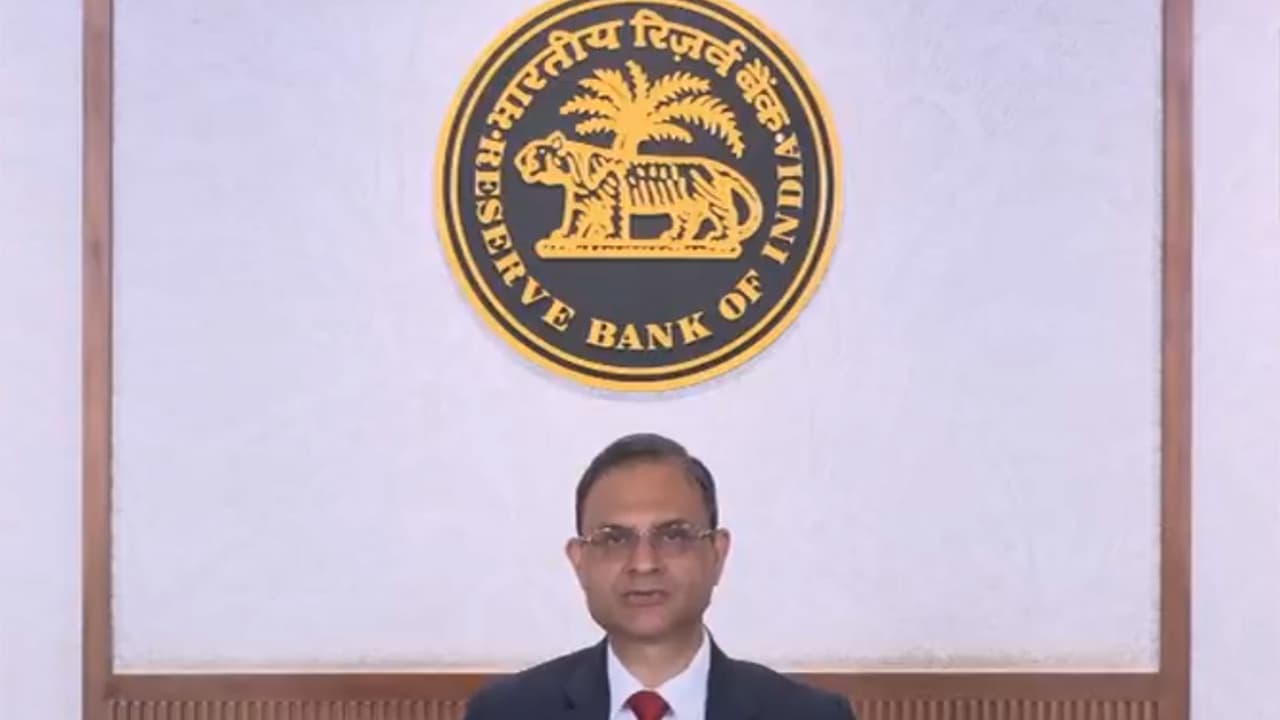
The RBI proposed easing regulations for NBFCs to boost business, including exempting smaller firms from registration and simplifying branch expansion. Governor Sanjay Malhotra noted the move aims to reduce compliance burden on low-risk entities.
The Reserve Bank of India (RBI) proposed significant regulatory easing for Non-Banking Financial Companies (NBFCs) to promote ease of doing business while maintaining strong sectoral growth.
Key Proposals for NBFCs
RBI Governor Sanjay Malhotra, delivering the Monetary Policy Statement, stated, “NBFCs having no public funds and customer interface, with asset size not exceeding Rs 1000 crore, are proposed to be exempted from the requirement of registration. Moreover, it is proposed to dispense with the requirement for certain NBFCs to obtain prior approval to open more than 1000 branches.”
Financial Sector Stability
“The system-level financial parameters related to capital adequacy, liquidity, asset quality and profitability of Scheduled Commercial Banks (SCBs) continue to remain robust,” Malhotra said. He noted that the system-level parameters of NBFCs are also sound, characterised by an adequate capital position and improved asset quality.
NBFC Financial Parameters
Data from the Monetary Policy Statement indicated that the total Capital to Risk-Weighted Assets Ratio (CRAR) of NBFCs stood at 25.11 per cent in September 2025. The Tier I CRAR was recorded at 23.27 per cent during the same period, which remains well above the minimum regulatory requirements. This capital cushion supports the stability of the shadow banking sector amid changing market conditions.
The quality of assets within the NBFC sector also demonstrated a positive trend over the last year. The Gross Non-Performing Asset (GNPA) ratio improved to 2.21 per cent in September 2025, down from 2.57 per cent in September 2024. Similarly, the Net Non-Performing Asset (NNPA) ratio saw a decline from 1.04 per cent in September 2024 to 0.99 per cent in September 2025.
While asset quality and capital levels improved, the Return on Assets (RoA) for the sector decreased slightly during this timeframe.
“Similarly, the system-level parameters of NBFCs too are sound, with adequate capital position and improved asset quality,” Malhotra said.
Rationale and Economic Context
The proposed exemptions for smaller NBFCs without public interface aim to reduce the compliance burden on entities that pose minimal systemic risk.
“The Indian economy continues to register high growth despite a challenging external environment clouded by geo-political uncertainties. Benign inflation provides the leeway to remain growth-supportive while preserving financial stability,” the RBI Governor said. (ANI)
(Except for the headline, this story has not been edited by Asianet Newsable English staff and is published from a syndicated feed.)