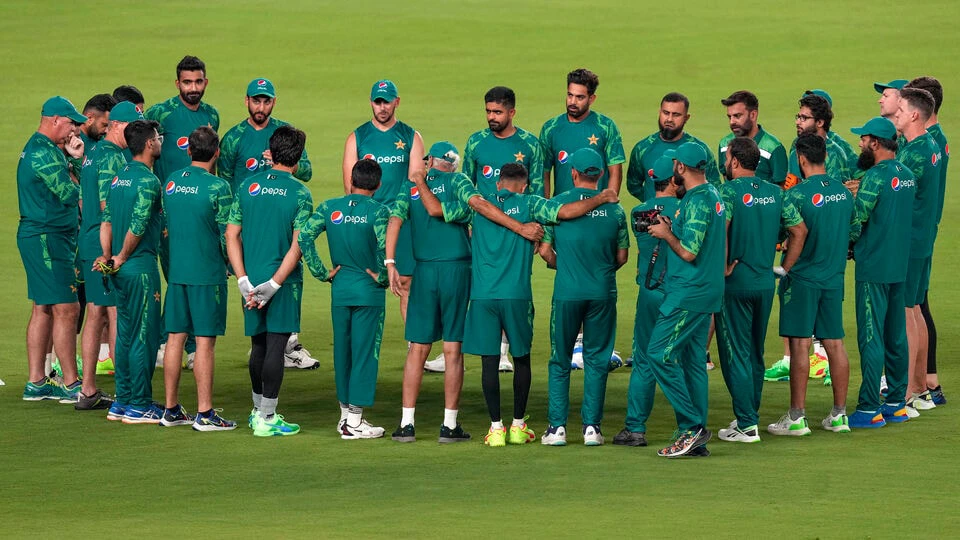
Pakistan have threatened that they will be boycotting their T20 World Cup Group Stage match against India on 15 February after Bangladesh were removed from the tournament when they refused to travel to India citing security concerns.
All of Pakistan’s match, including the one against India, are scheduled to be held in Colombo, Sri Lanka, just like India played all of their ICC Champions Trophy (hosted by Pakistan) matches last year in Dubai.
Ball in Pakistan’s court
There are two likely scenarios if Pakistan decide to not play in the match:
Scenario 1: The Indian team travels to Colombo, attends practice sessions and the pre-match press conference, showing that they are ready for the match, but Pakistan refuse to show up. In this case, as per ICC rules, it will be deemed that Pakistan have forfeited the match and two points will be handed to India. Pakistan’s net run rate will also be negatively affected in this case.
Scenario 2: Both teams do not travel to Colombo, showing that neither is willing to play. In this case, the match will be considered ‘abandoned’ and points will be shared between the two sides.
How will not playing the match affect Pakistan?
Pakistan will start their tournament at a disadvantage if they refuse to play against India. This will mean that they will they have to win their matches against all the three other opponents – Namibia, the Netherlands, and the United States. Although these teams do not look like a big challenge on paper, one must remember how the US beat Pakistan in the Super Over in the 2024 edition of the tournament.
What is ‘Force Majeure’ clause? Can Pak invoke the same?
Pakistan can challenge that their refusal to play against India can be covered under the ‘Force Majeure’ clause. In this case, there is no punishment meted out to a side if they refuse to play due to unforeseeable circumstances, which include situations like natural disasters, wars, and other extreme political situations.
This will be a difficult argument for Pakistan to make since the match is being held at a neutral venue and political objections cannot qualify for a ‘force majeure’ cover unless there is a clear sign of threat to safety.
Is there precedence of teams boycotting World Cup matches?
Yes, there have been a few occasions when teams have boycotted playing against certain opponents or certain venues in the cricket World Cup.
In 1996, both Australia and West Indies refused to play in Sri Lanka after Colombo was rocked by a bomb blast. This led to Sri Lanka being awarded full points for both group stage matches.
England refused to play against Zimbabwe in Harare in 2003 over safety concerns, while New Zealand also cited similar reasons to not take the field against Kenya in Nairobi in the same year.
In recent times, Zimbabwe pulled out of the T20 World Cup in 2009 and the U-19 team of New Zealand exited the U-19 World Cup in 2022 owing to COVID-19 restrictions.