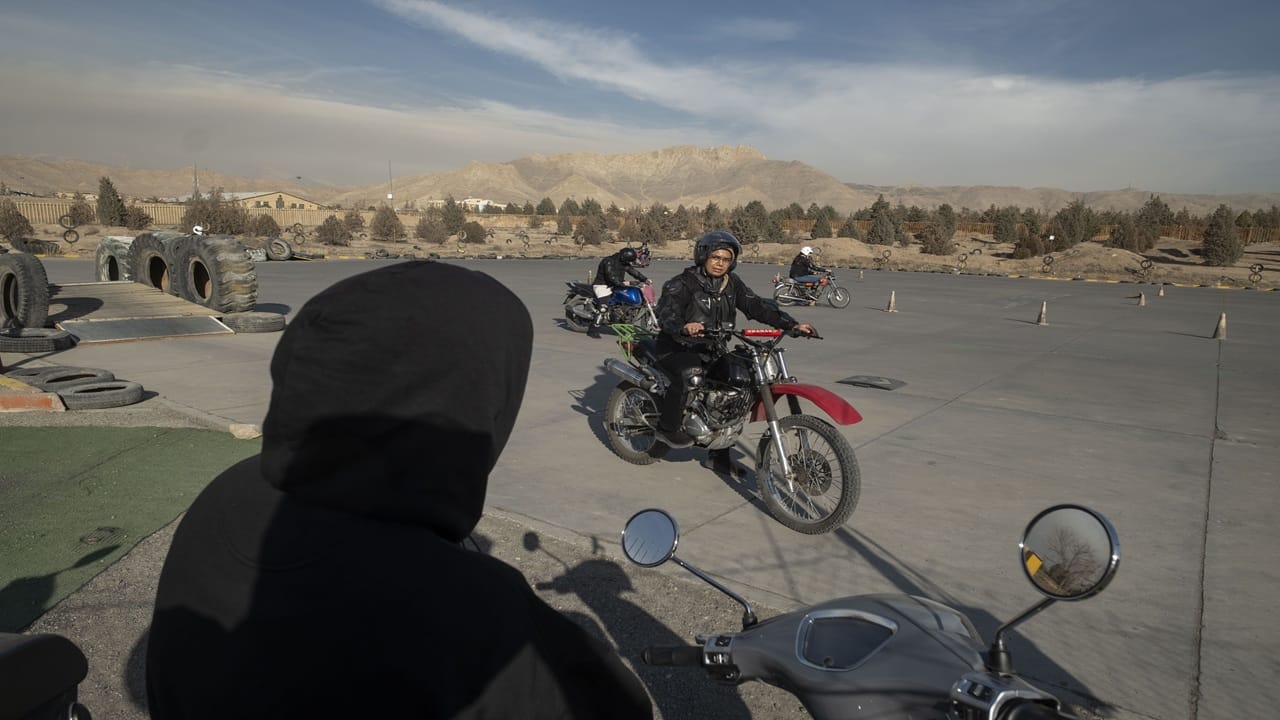
New Delhi: Iran’s government signed a resolution on Tuesday allowing women to legally drive motorcycles after obtaining a license. The move comes at the back of recent massive protests in Iran which began due as a reaction to the country’s economic woes but soon snowballed into a wider protest against dissatisfaction against the ruling regime. Social issues, like restrictive women’s rights in Iran also formed part of the protest. With the subsiding of the protests, the Iranian regime now looks to bring about changes in the country’s social structures slowly.
Welcome move after recent unrest
The latest resolution tasks the Police Command of the Islamic Republic of Iran with issuing motorcycle licenses to women following mandatory training and an examination. The exam will be organized under the direct supervision of traffic police and by female officers. In cases of personnel shortages, male officers may be assigned, according to a decree reported by several Iranian news outlets.
Iran’s First Vice President Mohammad Reza Aref signed the resolution, which the cabinet finalized last week, according to state-linked ILNA news agency.
What prevented women from driving two-wheeler vehicles in the past was a police regulation in Iran’s Farsi language specifically referring to only ‘mardan’ or ‘men’ as being able to obtain motorcycle licenses. The extremely specific gendered vocabulary in the rules made it difficult for women to demand their rights to gain licences.
In 2019, a branch of the Administrative Court of Justice in Isfahan, in central Iran, issued a ruling calling on the local Police Traffic Department to issue motorcycle driving licenses to “qualified women.” This came after a woman filed a complaint before the court when she was denied a motorbike license based on Article 20 of the law.
The current decree will now make the rule applicable across the country. In the past religious authorities in Iran also dissuaded women from riding bikes, claiming it was against the code of conduct of modesty that the regime has tried to establish in the country after the Islamic Revolution. The new legislation thus sparks the beginning of a change in Iran’s policies towards women’s rights and their share in the country’s public life.