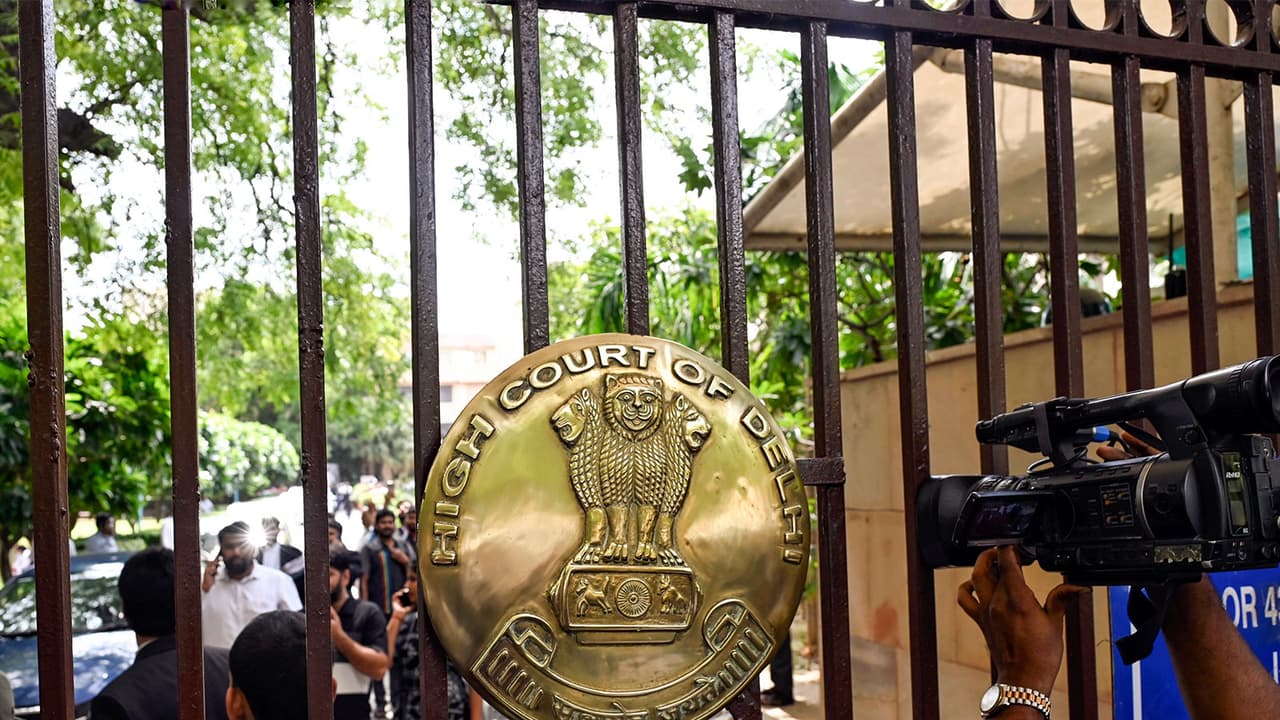
The Delhi High Court has deferred a hearing on a plea by a man seeking Rs 100 crore compensation for his wife’s death during 2025’s Nepal unrest. He alleges negligence by a Kathmandu hotel and a lack of support from the Indian government.
The Delhi High Court has renotified to February 9, 2026, a writ petition filed by a bereaved husband seeking accountability and compensation for the death of his wife, an Indian citizen who lost her life during violent civil unrest in Nepal. The matter could not be taken up on Thursday as the Bench scheduled to hear the case did not assemble. Justice Purushainder Kumar Kaurav was slated to hear the plea.
Plea Seeks Rs 100 Cr for ‘Preventable’ Death
The petition seeks Rs 100 crore as constitutional compensation from the Government of India, concerned constitutional authorities, and the management of a luxury international hotel in Kathmandu for the alleged “avoidable and wholly preventable” death of Late Rajesh Gola during the Gen Z Protest on September 9, 2025. The writ petition has been filed by her husband, Rambir Singh Gola, through Advocate and Supreme Court PIL activist Abhishek Choudhary.
Details of the Tragic Incident
Couple’s Trip and Hotel’s Alleged Negligence
According to the petition, the couple travelled to Nepal on September 7, 2025, for a religious pilgrimage to the Pashupatinath Temple. They were staying at a reputed five-star hotel, relying on the security and safety assurances extended by the establishment.
The plea states that as Kathmandu witnessed escalating violence marked by protests, arson, and widespread unrest, the hotel management allegedly continued to assure guests that the situation was under control. The petitioner claims he was discouraged from checking out and was persuaded to shift to a higher floor with assurances of enhanced safety arrangements, which, according to the plea, later proved to be tragically misleading.
Mob Attack and Failed Rescue Efforts
On the night of September 9, a violent mob allegedly stormed the hotel premises and set parts of the building on fire. The petition alleges that, as smoke engulfed the hotel and panic spread among guests, the emergency response mechanisms collapsed. It claims that no fire alarms were activated, evacuation protocols were not followed, and no assistance was extended, with hotel staff allegedly abandoning the premises.
The petitioner further alleges that frantic distress calls were made to the Indian Embassy in Kathmandu and the Ministry of External Affairs seeking urgent assistance. However, the plea claims that no consular intervention, rescue coordination, or emergency support was provided to Indian nationals trapped inside the hotel.
Faced with imminent danger and blocked escape routes, the petitioner and his wife allegedly attempted to escape using makeshift ropes. During the attempt, Late Rajesh Gola fell from the fourth floor of the hotel and sustained critical injuries. The petition alleges that she was subsequently denied timely and adequate medical treatment, was wrongly declared dead at a local hospital, and was abandoned in a mortuary without receiving necessary medical care, circumstances which the petitioner claims hastened her death.
Constitutional Questions and Petitioner’s Demands
Alleged Inaction and Right to Life Abroad
The Government of Nepal has reportedly registered the incident as a case of homicide.
The plea states that Rajesh Gola was the only Indian national to lose her life during the Nepal unrest, raising serious concerns regarding the safety obligations of international hospitality providers as well as the constitutional responsibility of the Indian State to protect its citizens abroad.
Despite the issuance of a detailed legal notice on September 22, 2025, the petitioner claims that no inquiry, compensation mechanism, or accountability process has been initiated by the concerned authorities.
The petition raises important constitutional questions, including whether the fundamental right to life under Article 21 of the Constitution extends to Indian citizens outside India and whether failure to provide consular protection amounts to a violation of that right.
Call for Judicial Inquiry and Systemic Reforms
Through the plea, the petitioner has sought a court-monitored judicial inquiry, fixation of responsibility on erring officials and institutions, disciplinary action against those found culpable, and an award of Rs 100 crore as constitutional compensation jointly from the Government of India and the concerned hotel management. The petition also seeks systemic reforms to ensure better protection and emergency response mechanisms for Indian citizens travelling overseas.
(Except for the headline, this story has not been edited by Asianet Newsable English staff and is published from a syndicated feed.)