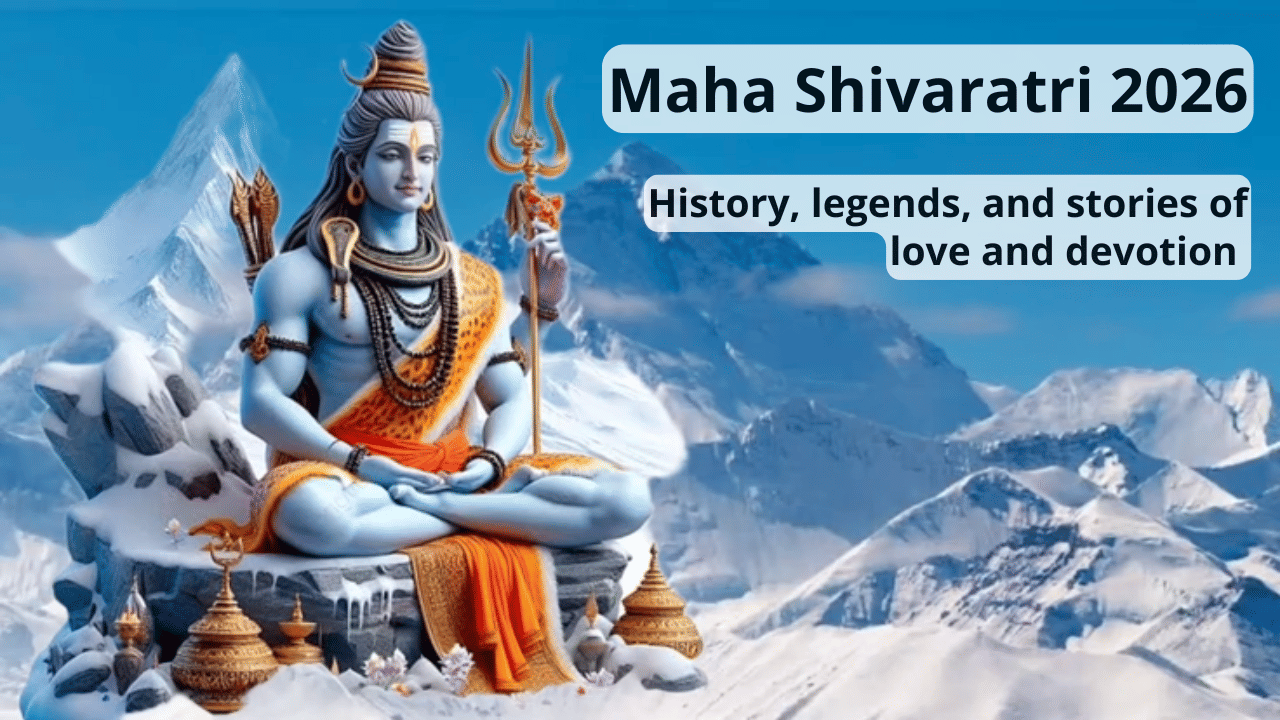
New Delhi: Maha Shivaratri, the grand night dedicated to Lord Shiva, whispers of timeless love and cosmic drama, drawing millions into its mystical embrace each year. Falling on the 14th day of the Krishna Paksha in Phalgun, this festival in 2026 graces us on Sunday, 15 February, just around the corner from now. Imagine the air thick with the scent of bilva leaves and incense, temples alive with chants of “Har Har Mahadev,” and devotees fasting through the night in eager anticipation. At its heart lies a captivating love story—of destruction, rebirth, and unyielding devotion—that binds Shiva and Parvati in eternal union, symbolising the perfect balance of masculine and feminine energies. This tale isn’t just a myth; it’s a reminder that true love triumphs over every obstacle, much like the festival’s promise of spiritual renewal for all who observe it.
Yet, beneath this romantic veil, Maha Shivaratri brims with profound legends that reveal Shiva’s boundless compassion. As we gear up for Maha Shivratri 2026, picture couples seeking blessings for their bonds, families gathering for midnight pujas, and the night sky echoing with drums and mantras— a spectacle that turns ordinary souls into devotees overnight. It’s more than a date on the calendar; it’s an invitation to witness divine romance play out, offering a sneak peek into why this “Great Night of Shiva” captivates hearts across India and beyond.
Maha Shivaratri 2026: History and legends
Delve into the ancient roots of Maha Shivaratri, and you’ll uncover a tapestry of myths from the Puranas and Shiva Purana, each illuminating why this night stands as Shiva’s favourite among all 12 Shivaratris in a year. Historically, it marks the triumph of austerity over chaos, observed since Vedic times as a night for jagran (staying awake), fasting, and lingam worship—rituals that echo through generations, especially potent during the Nishita Kaal around midnight on 15-16 February 2026. These stories aren’t dusty tales; they’re alive, urging even the uninitiated to grasp Shiva’s role as destroyer of evil and nurturer of love.
Celestial wedding of Shiva and Parvati
At the core of Maha Shivratri beats the love story of Lord Shiva and Goddess Parvati, a saga of rebirth, rejection, and redemption. Shiva, grieving Sati’s self-immolation at her father Daksha’s yagna – where she couldn’t stomach insults to her husband – retreated to Himalayan penance, shunning the world. Sati reincarnated as Parvati, daughter of Himalaya, vowing from childhood to wed Shiva. Undeterred by his ascetic trance, she braved scorching summers, freezing winters, and starvation, surviving on bilva leaves while chanting his name relentlessly.
Frustrated sages and devas enlisted Kamadeva, god of love, who shot flower arrows at Shiva – only for the enraged god to blast him to ashes with his third eye. Parvati persisted, her tapasya so intense it shook the heavens. Impressed, Shiva tested her via seven sages (Saptarishis), who confirmed her selfless love beyond beauty or status. Their celestial wedding, attended by Vishnu, Brahma, and all gods, happened just before Phalguna Amavasya – the night we now call Maha Shivratri. This union of Purusha (Shiva’s consciousness) and Prakriti (Parvati’s energy) birthed creation’s balance, reminding us that real love demands grit, not glamour.
Shiva’s Neelkanth Sacrifice in Samudra Manthan
Shift gears to high-stakes cosmic churn: the Samudra Manthan, where gods (devas) and demons (asuras) twisted the ocean of milk using Mount Mandara as rod and Vasuki serpent as rope, chasing Amrita nectar. Treasures like Lakshmi, Airavata elephant, and Kaustubh gem emerged, but so did Halahala – a poison so deadly it threatened all realms.
Panicked devas begged Shiva, who swallowed it whole to save existence, holding it in his throat as Parvati pressed his neck to stop it descending. His throat turned blue, earning ‘Neelkantha’ (blue-throated one), and gods danced through the night to keep him alert. Maha Shivratri honours this selflessness, urging us to confront our inner poisons with steady grace.
Infinite Shiva Jyotirlinga and Brahma-Vishnu’s Lesson
Ever wondered why temples glow with jyotirlingas on this night? Legend has it Brahma and Vishnu quarrel over supremacy until Shiva manifests as an endless pillar of fire (jyotirlinga) between them, challenging them to find its ends. Vishnu admits defeat after digging as a boar; Brahma lies, claiming victory with a false witness from Ketaki flower—earning Shiva’s curse: no temples for Brahma, and Ketaki banned from offerings. This reveals Shiva’s formless infinity, why Maha Shivaratri celebrates lingam puja as the path to moksha, and underscores humility as the true devotee’s key.
Humble hunter and Bilva leaves
Not all heroes wear divine halos – enter the tribal hunter Gurudruh (or Suswara), a meat-eater clueless about piety, prowling a forest on Shivratri eve to feed his starving family. Climbing a bilva tree near a hidden Shivlinga by a waterfall, he aimed at a doe drinking below. His quiver shake dropped three bilva leaves – Shiva’s favourite – plus water drops from his pot, mimicking puja’s three offerings unknowingly. The compassionate doe begged to see her fawns first; true to word, she returned with them, repeating the ritual thrice as the hunter’s heart softened from cruelty to mercy. Shiva appeared at dawn, granting moksha and proving: even inadvertent worship on this night overrides lifetimes of sin. It’s the ultimate underdog tale – devotion sneaks in anywhere, anytime.
These legends weave Maha Shivaratri’s magic, blending romance, sacrifice, and redemption into a festival ripe for 2026 celebrations.