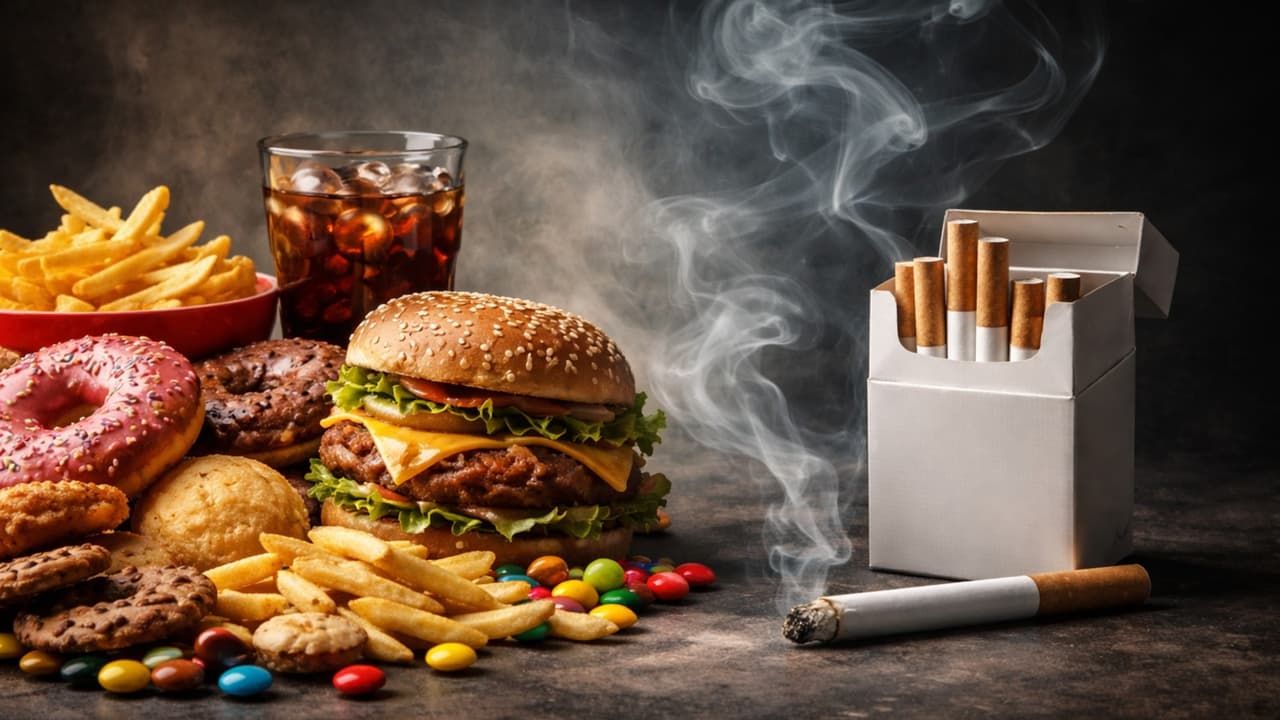
Is your favorite packaged food slowly becoming as poisonous as a cigarette? A study by top universities, including Harvard, has described ultra-processed foods as addictive, controlling the brain and compelling you to eat them again and again.
The packaged food we eat daily – chips, biscuits, cold drinks, instant noodles – is it just for taste, or is it a slow poison harming our body? A new study by scientists from Harvard, Michigan, and Duke Universities has raised a question that puts the entire food industry on trial. The research says ultra-processed foods (UPFs) should be treated not as food, but like cigarettes, because they are just as dangerous.
According to the study, there’s a shocking similarity between UPFs and cigarettes—both are designed to make people consume them repeatedly. Companies determine the amount of sugar, salt, and fat to trigger the brain’s reward system. This is why one biscuit isn’t satisfying, and one packet of chips doesn’t feel like enough.
Has This Food Become an Addiction?
Professor Ashley Gearhardt of the University of Michigan explains that many people say, “I know this food is harmful, yet I can’t stop.” This is the exact language used by people struggling with addiction. The study shows that UPFs affect the same part of the brain as cigarettes and alcohol.
What Are UPFs & How Are They Different From Home-Cooked Food?
Ultra-processed foods are those not made from ingredients you’d find in a home kitchen. They contain:
- Artificial flavors
- Preservatives
- Emulsifiers
- Artificial colors
Examples include soft drinks, packaged snacks, instant meals, and processed meats. Their purpose is not nutrition, but a long shelf life and higher sales.
Are “Low-Fat” and “Sugar-Free” Really Healthy?
The study also questions the marketing tactics of food companies. Labels like “low-fat” and “sugar-free” mislead consumers—just as cigarettes were portrayed as “safe” in the 1950s. Researchers call this “health washing.”
Has This Become a Global Threat?
Health experts are warning that the growing market for UPFs in countries with weak regulations could turn diabetes, heart disease, and obesity into an epidemic. Without strict rules, the burden on the health system could reach dangerous levels.
The study leaves a clear question—if cigarettes can have a warning, why not this kind of food? Even if UPFs are not fully considered an “addiction,” their harmful effects can no longer be ignored.