Two things were overdue in cricket: cleaning up grey areas that keep producing “that can’t be right” moments, and updating the Laws to match how modern cricket is actually played and officiated.
The Marylebone Cricket Club (MCC) has now done that with a wide-ranging refresh of the Laws of Cricket – 73 amendments, set to come into force from October. Here are the changes that will most visibly affect players, umpires and match situations.
1) No more “stumps saved you” after a wicket in the last over (multi-day cricket)
In multi-day cricket, if a wicket fell in the final over of the day, play could end immediately, leaving the remaining balls to be bowled the next morning. Under the updated Law, the over must be completed (conditions permitting), even if a wicket falls.
What it changes: new batters won’t get an automatic breather because the day ended. Those last few deliveries at stumps, often when bowlers are at their sharpest, stay live and meaningful.
2) Wicketkeeper movement rule becomes practical
Previously, the wicketkeeper had to be fully behind the stumps from the start of the bowler’s run-up. That created needless technical debates in an era where every movement is replayed in HD.
Now, the keeper needs to be fully behind the stumps by the time the ball is released.
What it changes: fewer petty no-ball controversies for tiny “early” movements that don’t actually offer an advantage.
3) Overthrow is defined more clearly
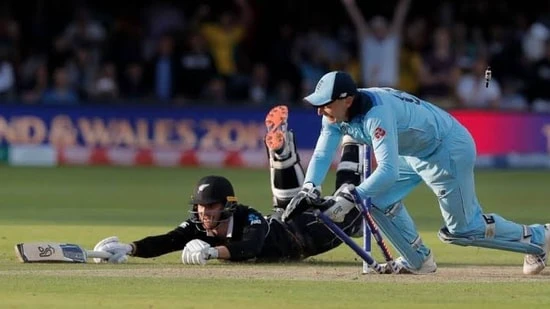
Overthrows have produced some of cricket’s messiest arguments – especially near boundaries. The MCC has tightened the language by defining an overthrow as a deliberate throw at the stumps to prevent runs or attempt a run-out.
What it changes: not every wild deflection or accidental ricochet will be treated like a classic overthrow scenario. The intent and action now matter more, which should reduce the “everything is an overthrow” confusion.
4) Deliberate short runs: captain gets a new tactical weapon
Deliberate short runs already attract a five-run penalty. The updated Law adds a sharp consequence: the fielding captain can choose which batter is on strike for the next ball.
What it changes: if a set batter tries to game the system with a deliberate short run, the fielding side can respond by putting the weaker batter on strike immediately – turning punishment into strategy.
5) “Ball is dead / settled” gets a cleaner, broader definition
Earlier, the ball was considered finally “settled” only when it was in the hands of the bowler or wicketkeeper. Now, the ball is treated as settled when it is in the hands of any fielder, or stationary on the ground.
What it changes: fewer awkward moments where players sprint an extra run while everyone else believes the play is clearly over. It gives umpires a clearer anchor for when a delivery has effectively ended.
6) Laminated bats are allowed in open-age cricket
Laminated bats – made by bonding multiple pieces of wood – were previously restricted to junior cricket. The revised Laws permit laminated bats in open-age cricket too.
What it changes: potentially more affordable bat options, especially in club and amateur cricket, without the MCC seeing a meaningful performance advantage in testing.
7) Ball sizes are standardised for women’s and junior cricket
Women’s and junior cricket have long dealt with inconsistent naming and tolerances around ball sizes. The updated Laws introduce clearer categories: Size 1, Size 2 and Size 3, with standardised margins for the smaller balls used outside men’s cricket.
What it changes: better consistency across competitions and fewer equipment grey zones.
The big picture
None of these tweaks are designed to reinvent cricket. They’re designed to make outcomes feel fair, reduce avoidable confusion, and ensure the Laws match the sport’s modern reality – where every frame is reviewed, every loophole is tested, and every ambiguity becomes a talking point.