New Delhi: In the long arc of India’s economic policymaking, some budgets merely balance books, while a rare few attempt to rebalance destiny. Union Budget 2026-27 belongs firmly to the latter category. It is not obsessed with headlines or instant applause. Instead, it makes a quieter but far more consequential bet — that India’s future power will be written in silicon, servers and sovereign data.
This is a budget that recognises a simple truth of the 21st century that nations that control compute, chips and data infrastructure will shape global economics, security and influence. By laying a strong foundation for AI data centres and a domestic semiconductor ecosystem, the Budget signals India’s intent to move from being a technology consumer to becoming a technology architect.
Data centres – New strategic infrastructure
Artificial Intelligence is often discussed in abstract terms — algorithms, models and innovation. But the AI’s real muscle lies in infrastructure — massive data centres, cloud platforms and high-performance computing capacity. Recognising this, the budget announces a tax holiday until 2047 for foreign companies providing cloud and AI data-centre services from India, provided they route operations through Indian reseller entities.
This is not a short-term incentive but a two-decade signal of policy certainty. It tells global technology giants that India is ready to host, process and protect the world’s data — on predictable and stable terms. In doing so, the government is positioning data centres not as mere commercial facilities, but as strategic national assets, akin to ports, highways and power grids.
Coupled with this are safe harbour provisions with competitive margins and automated approvals, reducing compliance friction and regulatory ambiguity — long considered the Achilles’ heel of India’s tech investment climate. With investments in Indian data centres already approaching $90 billion, the budget seeks to convert momentum into permanence.
Ashwini Vaishnaw: Engineering policy with purpose
At the centre of this quiet but consequential transformation stands IT and Electronics Minister Ashwini Vaishnaw, a rare policymaker who brings an engineer’s discipline to governance. Eschewing flashy announcements, Vaishnaw has pursued a methodical, ecosystem-first strategy — building policy scaffolding before inviting global capital to climb it.
From semiconductors to data centres, his stewardship reflects a belief that technology policy must be predictable, patient and nationally rooted. The long-term tax certainty for AI infrastructure, the calibrated expansion of the semiconductor mission, and the emphasis on domestic capability over cosmetic success stories reveal a technocrat guided by strategic nationalism. In Vaishnaw, India has found a minister who understands both silicon and sovereignty, balance sheets and national interest — a combination the digital age demands.
Semiconductors: From vulnerability to vision
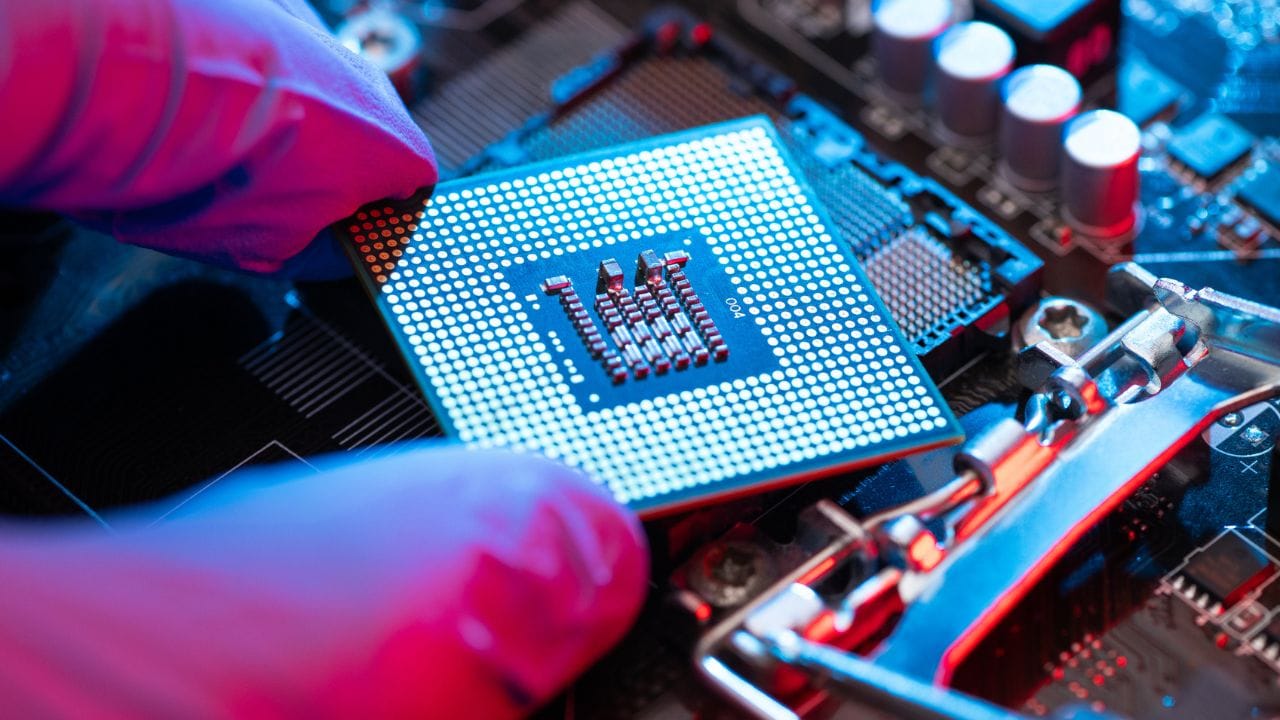
If data is the new oil, semiconductors are the refineries. Every AI application, every cloud service, every smart device ultimately rests on chips. Budget 2026-27 strengthens this foundation through India Semiconductor Mission 2.0, moving decisively beyond ecosystem signalling to ecosystem building.
The renewed mission focuses on chip design, semiconductor equipment manufacturing, specialty materials and talent development — areas where India must build depth, not dependency. While global chip fabrication remains capital-intensive and geopolitically sensitive, India’s strategy is clear — to insert itself meaningfully across the value chain rather than remain an import-reliant endpoint.
Further reinforcing this vision is the sharp increase in allocation for the Electronics Components Manufacturing Scheme, whose outlay has nearly doubled from Rs 23,000 crore to Rs 40,000 crore. This reflects not only industry confidence but also the government’s intent to create resilient supply chains that feed both AI infrastructure and consumer electronics manufacturing.
Strategic coherence, not policy silos
What distinguishes Budget 2026-27 is its strategic coherence. Data centres are not treated in isolation. Semiconductors are not reduced to slogans. Tax policy, infrastructure planning and industrial incentives speak to one another.
Instead of fragmented schemes, the budget offers a joined-up blueprint — attract global cloud players, anchor them in Indian jurisdictions, power them with domestic semiconductor capacity, and sustain them through predictable taxation and regulation. This is how digital sovereignty is built — not through protectionism, but through preparedness.
Crucially, the benefits of this architecture will not remain confined to metropolitan hubs. As data centres, electronics clusters and chip design ecosystems expand, they will generate high-skilled employment, regional development and downstream innovation across India’s emerging cities and industrial corridors.
Challenges ahead, resolve intact
Execution, of course, will be the real test. AI data centres are energy-intensive, skill-hungry and infrastructure-dependent. Semiconductor ecosystems demand long gestation periods and unwavering policy commitment. But if intent matters in policymaking, this budget leaves little room for doubt.
Budget 2026-27 does not promise miracles. It promises foundations — solid, strategic and future-facing. In doing so, it marks India’d transition from aspirational digital power to credible technological contender.