Rajpal Yadav
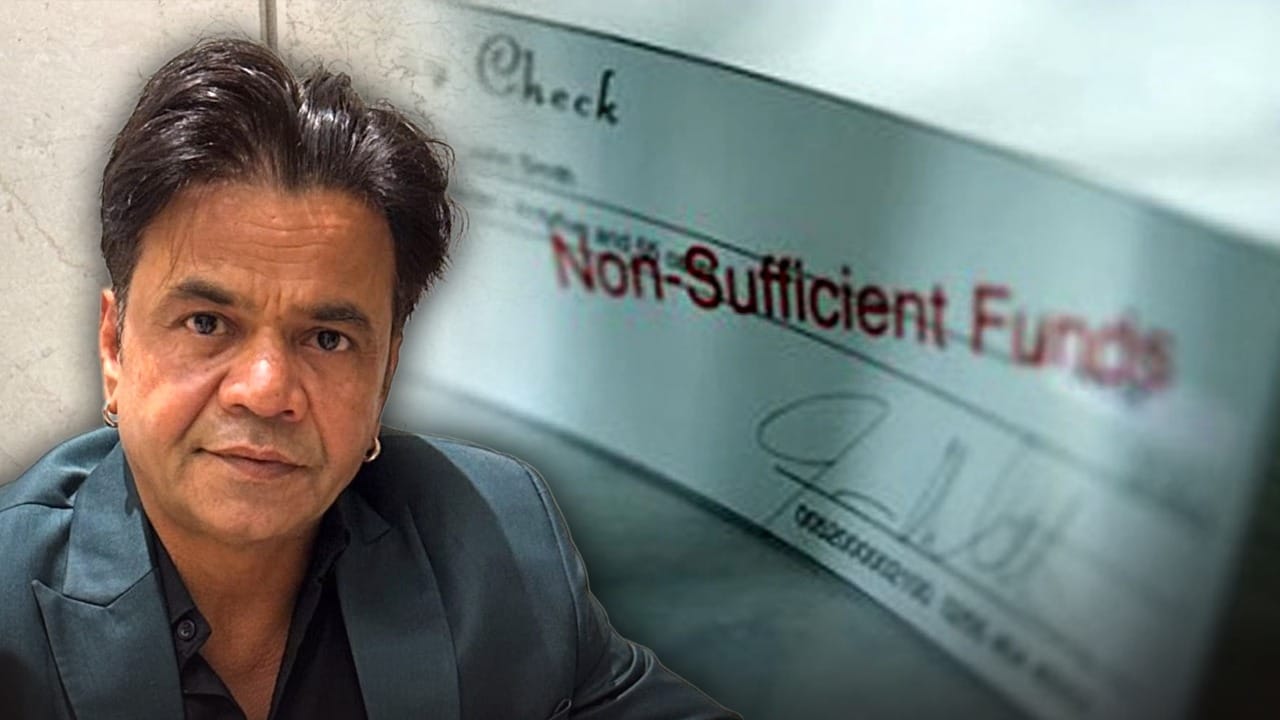
Rajpal Yadav is facing legal and financial difficulties these days. Delhi High Court has upheld his conviction in the check bounce case and sentenced him to three months in jail. This case was going on in the court for many years and finally the court gave its verdict against the actor.
In fact, Rajpal Yadav In the year 2010, he had taken a loan of ₹5 crore from Murali Projects Private Limited for the production of his first directorial film ‘Aata Pata Lapata’, but the film failed at the box office, after which he could not repay the loan on time. Over time, interest kept adding up and the outstanding amount increased to around ₹9 crore. This financial dispute later took the form of a check bounce case, which went on in the court for a long time. Today we will try to know what is a check bounce case? How many years can be punished for check bounce?
After all, what is check bounce?
When a person issues a check when there is not enough money in his account, the bank is unable to pay that cheque. This is called check bounce. In India, check bounce is considered a crime under law. In this case, action is taken against check bounce under Section 138 of the Negotiable Instruments Act, 1881. According to this law, if found guilty, a fine up to double the amount of the check can be imposed. There can be a jail term of up to two years. Or both fine and jail can be punished. In case the check bounces, a notice is first sent to the concerned person to make the payment within 15 days. If payment is not made within the stipulated time, the matter may reach the court.
What do NCRB figures say?
According to the National Crime Records Bureau (NCRB) data of 2024, only 18 cases were registered under the Negotiable Instruments Act across the country. Of these, 10 cases were reported in Jharkhand and 8 cases were reported in Uttar Pradesh. All the cases were related to check bounce only. No case was registered related to other financial documents like promissory notes or bills of exchange. Experts believe that this law is one of the oldest business laws in India, but now its use has become much less than before.
Read this also- SIP of ₹5,000 or investment of ₹1 lakh? What is the fastest way to make ₹20 lakh?