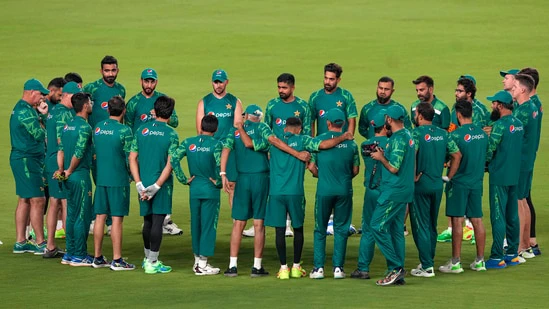
Pakistan have not pulled out of the ICC Men’s T20 World Cup 2026. They have entered the tournament, but their government has directed the team to boycott only the February 15 group match against India.
That distinction is everything. A full withdrawal would have been the cleanest “principles first” statement – consistent, costly, and unambiguous. A one-match boycott, instead, is engineered to maximum signalled: the loudest headline, the biggest audience, the most commercial weight.
The ICC has also warned that selective participation threatens the integrity of the competition and can carry broader consequences.
The case of the principles: leverage and domestic optics
The most plausible principles-based interpretation isn’t romantic. It is strategic.
Boycotting only India lets Pakistan project a hard line to domestic audiences while still competing for the trophy. It also acts as pressure on the ICC – because if one board can skip the marquee fixture, the tournament’s commercial centre is destabilised, and the precedent becomes the story.
In that sense, principles here function less as a pure ethical stand and more as political posture plus administrative leverage – a protest designed to be seen, not necessarily to be comprehensive.
The cricketing fear
If fear exists in this decision, it is unlikely to fear of playing itself. It is fear of consequence.
India’s recent T20I evidence makes the fixture unusually high-volatility stage. They have just beaten New Zealand 4-1 and ended the series with 271/5 in the fifth match.
A defeat to India is never just two points. It becomes a national mood swing, a media storm, a boardroom headache – and a referendum on everything from selection to leadership. In a tournament already wrapped in politics, that aftermath can feel bigger than the match itself.
The counterpoint
The simplistic “Pakistan are scared because they are weak” take doesn’t fully survive contact with Pakistan’s own build-up.
Pakistan have just swept Australia 3-0 in a T20I series, finishing with a 111-run win in the last game.
A side that has just flattened Australia rarely behaves like a team terrified of competition. Which is why the boycott reads less like dressing-room insecurity and more like institutional risk control: the fear is not losing to India once, it is losing control of the narrative.
The rivalry evidence
The last T20 World Cup meeting between the sides in 2024 is instructive because it shows how India can win even when they don’t bat big. India defended 119 and won by six runs, with Jasprit Bumrah’s spell defining the contest.
Losses like that linger – because they feel like control, not chaos. Now add India’s current ability to routinely post 200+ totals, and the fixture becomes an emotional minefield where one bad night can swallow the entire campaign.
Fear, the silent partner
Pakistan’s boycott looks primarily a political and administrative statement – a selective protest built to maximise symbolism while staying in the tournament.
But it would be naive to pretend cricket isn’t part of the calculation. The fear, if it exists, isn’t fear of playing India. It is fear of what losing to India does beyond cricket – perception, power and pressure.
That is why this boycott doesn’t read like purity. It reads like strategy.