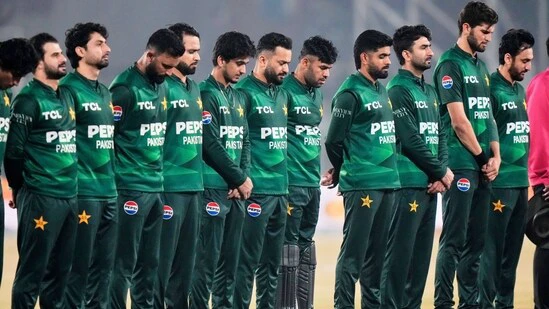
Pakistan cricket has an uncanny habit of dragging the sport into a parallel universe – even when Pakistan are playing, the spotlight often shifts from the cricket to the controversy around it.
Not every controversy is Pakistan’s doing, and corruption/security problems exist elsewhere too, But few teams have repeatedly left world cricket dealing with trust shocks, safety shocks, and governance shocks across eras.
And that’s the real damage: not one scandal, but the rhythm-breaking pattern. The game doesn’t just move on from those; it changes how boards schedule tours, how broadcasters price events, how fans interpret collapses, and how administrators design rules to protect the product.
The original wound: fixing turned unpredictable into untrustworthy
Pakistan’s reputation problem didn’t come from bad days with the bat and the ball. It came from years when match-fixing and spot-fixing allegations became a recurring headline, and senior-level inquiries and bans made it impossible to dismiss the issue as mere rumour.
That era created a permanent benefit of doubt deficit. When a team is already associated with corruption, every inexplicable over, every sudden collapse, every foolish fielding effort and every odd shot selection gets viewed through suspicion – even the cricket is perfectly legitimate. Trust is fragile; once cracked, it never fully returns to factory settings.
Lord’s 2010: when cricket most sacred stage got stained
If the early years built the narrative, Lord’s 2010 cemented it globally.
The spot-fixing scandal during the England-Pakistan Test didn’t just embarrass Pakistan cricket – it embarrassed the sports. Bans, court proceedings, and jail terms turned it into a public spectacle. The venue mattered: Lord’s is cricket’s cathedral, and scandals there don’t remain contained. They become the sport’s identity crisis.
The long-term effect was bigger than just three careers. It hardened a belief in parts of the cricket world that Pakistan’s chaos isn’t only stylistic – it can be structural.
2006 Oval forfeiture
Before Lord’s, there was another moment that made cricket look ungovernable: the Oval Test in 2006, where Pakistan refused to take the field after an umpiring decision involving alleged ball tampering, leading to a forfeiture.
Whatever side one takes on the dispute, the image was brutal: a Test match engine not with a handshake, but with administrative farce. When games conclude in confusion, fans don’t remember the best spells or partnerships – they remember the mess. And mess reduces confidence in the sport as a “serious product”.
2009 Lahore attack: the darkest disruption
Then came the event that wasn’t about cricketing ethics, but basic human safety: the March 2009 attack on the Sri Lankan team convoy in Lahore.
This wasn’t a scandal. It was a tragedy. And it reshaped cricket’s map overnight. Pakistan effectively lost “home” cricket for years, became a neutral-venue team, and watched a generation grow up without regular international matches in their own stadiums. Even when tours resumed later, they did so under extraordinary security frameworks – a reminder that sport still carried the scar.
This is the kind of disturbance that outlives news cycles. It changes policy, insurance, scheduling, and the willingness of teams to travel – often for reasons beyond cricket’s control, but with cricket paying the price anyway.
Betting, syndicates and the credibility tax
“Betting” is a broad word, and it is important to separate legal betting markets from illegal fixing syndicates. The problem Pakistan has faced – repeatedly – is the intersection: where players, agents, or intermediates become vulnerable to manipulation, and the game’s integrity becomes collateral damage.
Every time a fixing story returns, it imposes credibility tax:
- Sponsors get cautious
- Fans become cynical
- Broadcasters woot about reputational risk
- The team’s on-field volatility gets reinterpreted as something darker.
Even when reforms are implemented, perception lags behind reality.
A fragile system: governance instability becomes a storyline itself
Pakistan cricket has also been battered by administrative churn – frequent leadership changes, shifting priorities, and repeated resets in selection and team direction. When governance is unstable, performance becomes unstable – and when performance becomes unstable, controversy finds oxygen.
This kind of instability doesn’t need a scandal to cause damage. It quietly weakens planning, coaching continuity, domestic structures, and crisis management. Then when a real crisis hits, the system reacts emotionally rather than strategically – and that feeds the cycle again.
The latest flashpoint: when politics rewrites fixtures
Now add the most dangerous ingredient to a global tournament: selective participation.
A boycott of a marquee match doesn’t just affect points tables, it affects the meaning of the event. The World Cup brand is built on the assumption that every one plays the schedule, that rivalries happen because the tournament demands them, and that results come from cricket – not from political toggles.
The precedent is the real issue. Once the idea takes hold that fixtures can be politically vetoed, every future tournament becomes negotiable: group games today, knockouts tomorrow, and eventually the whole notion of a uniform competition starts to fray.
The uncomfortable conclusion
Pakistan cricket remains too significant to be dismissed: the talent pipeline is real, the fanbase is massive, and the rivalry quotient is unmatched. But world cricket also has a legitimate fatigue – because Pakistan’s disruptions have arrived in multiple forms across decades: integrity crises, match-day breakdowns, security trauma, and governance volatility.
The sport can survive one scandal. It can even survive one tragedy, painful as it is. What it struggles to survive is a pattern – because patterns change behaviour. They bake boards hedge, tournaments plan contingencies, and fans consume the game with suspicion instead of joy.
In the end, the cost isn’t only borne by Pakistan. It’s borne by cricket’s atmosphere itself – a game that keeps being asked to defend its credibility when it should be celebrating its cricket.