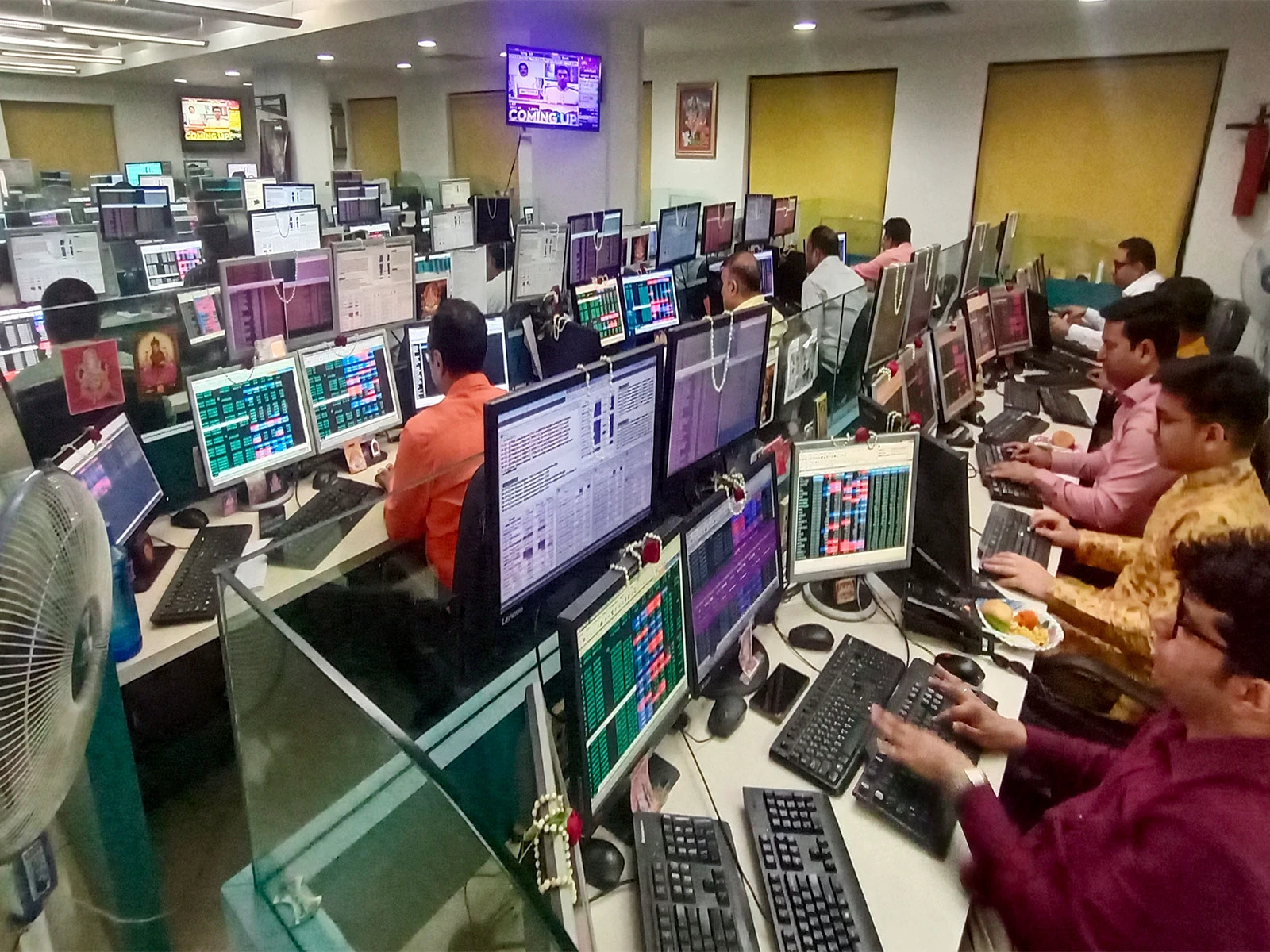
Indian stock indices nosedived as Union Finance Minister Nirmala Sitharaman presented the Budget for 2026-27 in the Parliament on Sunday.
Pre-Budget, the indices were largely steady, but they dipped as the Budget speech progressed and closed the session deep in the red.
Sensex closed at 80,722.94 points, down 1,843.43 points or 2.23 per cent, while Nifty closed at 24,825.45 points, down 593.45 points or 2.33 per cent.According to Ponmudi R, CEO of Enrich Money, a SEBI – registered online trading and wealth tech firm, initial optimism faded quickly as higher transaction costs driven by the increase in Securities Transaction Tax (STT) on equity derivatives–and the lack of strong measures to revive foreign capital inflows weighed on sentiment and near-term liquidity expectations.
“Selling pressure intensified across metals, PSU banks, and index heavyweights, while defensives such as healthcare and IT showed relative resilience. A softer rupee and muted FII participation further reinforced cautious positioning. While the Budget reaffirmed long-term intent through record infrastructure spending and a manufacturing push, the market response signalled near-term disappointment, with participants choosing to book profits and reassess risk amid fiscal and policy clarity gaps,” Ponmudi R added.
Market sentiment turned sharply negative during Finance Minister Nirmala Sitharaman’s Budget speech, particularly after the proposal to increase the Securities Transaction Tax (STT) on Futures and Options, which triggered aggressive selling across the market, said SBI Securities.
In an effort to discourage futures and options (F&O) trading, Finance Minister Nirmala Sitharaman has proposed to raise Securities Transaction Tax (STT) on such derivative trades.Anand James, Chief Market Strategist, Geojit Investments Limited, said on the face of it, this is equity positive as option trades become more expensive.
“Obviously, at a portfolio level, the hit on the derivative segment could lead to rebalancing, and drag the equity segment in the near term. But it is hard to say that the hike alone will dissuade the speculative interest tied to the derivatives market, especially the options,” Anand James said.
STT has been raised only on options and futures, and not on other assets. Other STT rates remain the same. The Government said that the total volume of options and futures transactions is more than 500 times the Indian GDP.
Therefore, the government believed there was justification for raising rates to curb purely speculative activity in options and futures.Securities Transaction Tax is a small levy charged by the government on every buy or sell transaction in the stock market, including shares, futures, and options. While it may appear modest, STT directly increases trading costs, particularly for frequent traders, hedgers, and arbitrageurs.
The government proposed to raise the STT on Futures to 0.05 per cent from the present 0.02 percent. STT on options premium and exercise of options are both proposed to be raised to 0.15 percent from the present rate of 0.1 per cent and 0.125 per cent, respectively.