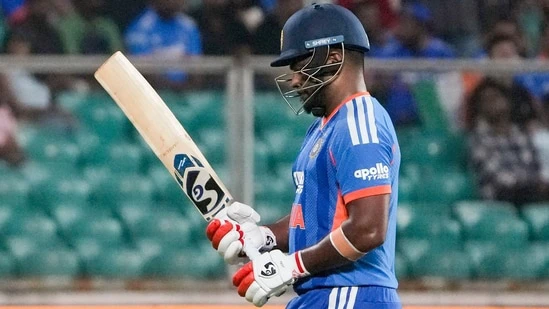
Sanju Samson’s T20I audition has started to feel like an exam. Five against New Zealand haven’t delivered the innings that changes the conversation, and the timing is brutal: India open their ICC Men’s T20 World Cup 2026 campaign in Mumbai on February 7, against the United States, leaving almost no runway for one more chance.
That is why Aakash Chopra’s critique on ESPNcricinfo landed like a selection warning rather than an expert’s post-mortem. Chopra wasn’t just talking about a bad patch. He was talking about a pattern – the one thing elite batters try hardest to deny opponents.
“I think now this is twice in about 12 months. It all started with that England series. Very rarely do you find a top class batter developing a pattern, especially in the shortest format of the game. He got dismissed five times in the same fashion – short ball caught in the deep. Here also, if you see his dismissals versus pace, there is an eerie pattern to it,” Chopra said.
The key word is “eerie” because it suggests planning: bowlers don’t need a genius blueprint if the batter is building it for them. Chopra went deeper, literally, into Samson’s trigger, arguing that he is setting up deep in the crease early, without the front-foot movement that would keep his bat path and contact options open.
“You go deep inside the crease even before the ball is bowled. You try and play the ball, but the front foot doesn’t go anywhere. As a result, your bat actually closes every single time you play. He got lucky with an outside edge once in Thiruvananthapuram. In the previous game again, he closed the bat a bit too early, so again a pattern has developed,” he added.
In T20, technique and selection are never separate conversations. If Samson’s setup is making him predictable against pace, India have to ask a cold question: is the upside big enough to carry the downside into a World Cup? The answer is getting complicated by the player standing right behind him.
Ishan Kishan’s maiden T20I century in the series finale powered India to 271 for 5, and turned the wicketkeeper-opener debate into a form-and-impact contest. When a reserve is scoring like a first choice, then this kind of change in discussions is bound to happen.
None of this means Sanju Samson can’t turn it around. Patterns can be broken quickly – one technical tweak, one innings that resets confidence. But the calendar doesn’t care. Chopra’s warning is simple: the opposition has found a repeatable way in, and India may not have time to wait for Samson to find a replaceable way out.