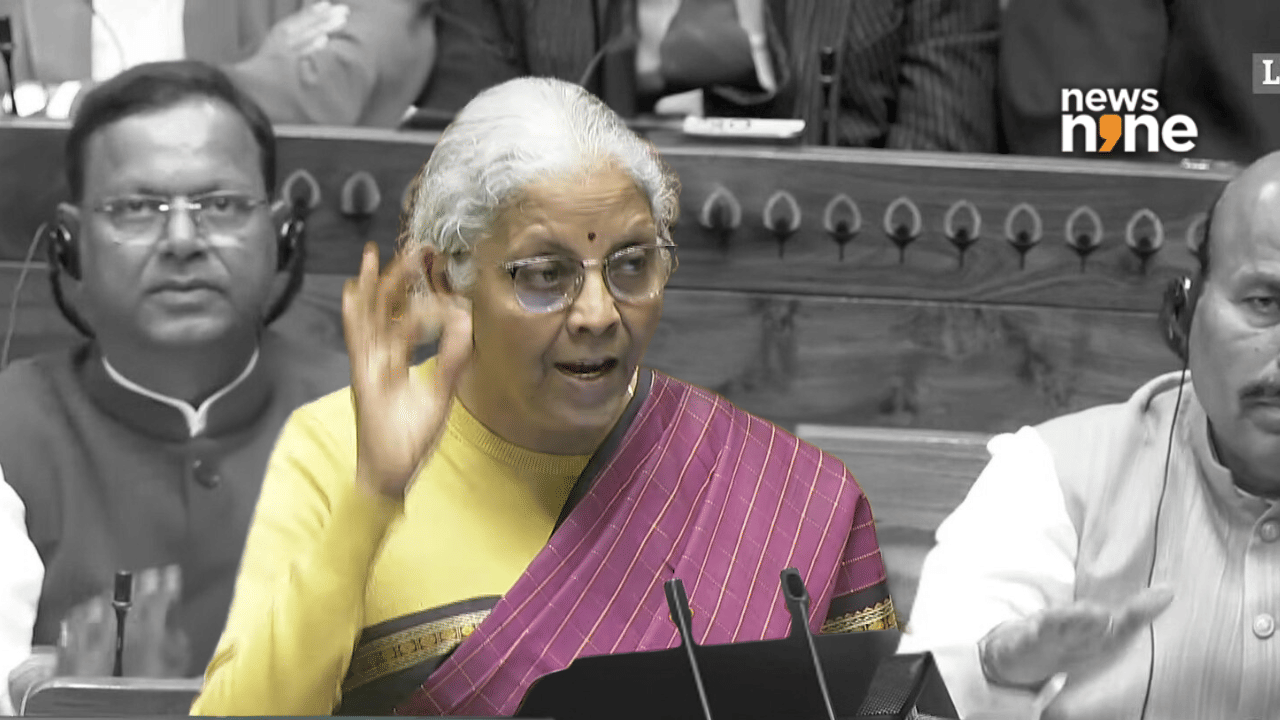
New Delhi: Finance Minister Nirmala Sitharaman on Sunday presented her ninth consecutive Union Budget, placing strong focus on semiconductors, artificial intelligence, electronics manufacturing, data centres, and IT services. For India’s technology and telecom ecosystem, Budget 2026 reads like a clear attempt to build long-term domestic capability rather than chase short-term wins.
Soon after the announcements, technology companies, manufacturers, consultants, and policy experts began reacting to what many see as a capability-building budget. From safe harbour tax reforms and semiconductor mission 2.0 to a tax holiday for cloud firms using Indian data centres, industry voices say the direction is largely aligned with where India’s digital economy is headed.
Electronics, semiconductors, and manufacturing draw early support
One of the biggest takeaways is the expansion of the Electronics Components Manufacturing Scheme to ₹40,000 crore and the start of India Semiconductor Mission 2.0.
Sunil Bharti Mittal, Founder and Chairman of Bharti Enterprises, called it “a bold Budget that combines growth with inclusion,” adding that the strong emphasis on skilling and sustained investments in science, innovation, and research will strengthen domestic capabilities and advance import substitution in critical sectors. He also said bolstering infrastructure and logistics with a focus on energy efficiency and impetus to the data centre ecosystem will reinforce confidence in India’s digital economy.
Sanjay Chitkara, Co-CSMO, LG Electronics India, said the budget “reinforces India’s ambition to become a global high-tech manufacturing hub through higher capital investment, Semiconductor Mission 2.0, and expanded support for electronics component manufacturing.” He added that measures such as MSME funding and improved infrastructure will strengthen supply chains and enhance industry competitiveness.
Tadashi Chiba, MD and CEO of Panasonic India, said, “The Government’s consistent focus on infrastructure continues to be central to India’s growth agenda. The Union Budget 2026–27, with capital expenditure increased to ₹12.2 lakh crore, reaffirms infrastructure as the backbone of India’s economic expansion. The continued focus on strengthening India’s manufacturing ecosystem through ECMS and the exemption of basic customs duty on select electrical appliances, including microwaves, is a timely measure that will improve cost efficiencies, encourage domestic value creation, and boost market adoption.”
Sanjeev Agarwal, Executive Director and Chief Manufacturing Officer at Lava International, called the ECMS expansion “an encouraging move to strengthen India’s electronics manufacturing ecosystem,” while pointing out that timely and effective implementation will be key to turning policy intent into outcomes.
Arijeet Talapatra, CEO, TECNO India, said the focus on semiconductors and advanced manufacturing “opens the door to large-scale, future-ready employment” and gives the smartphone industry what it needs to build long-term value.
Data centre tax holiday seen as long-term signal
Another headline measure is the tax holiday till 2047 for foreign companies that provide cloud services using Indian data centres.
Naveen Aggarwal, Office Managing Partner Delhi NCR at KPMG in India, said India’s data centre infrastructure push “gets a fresh fillip with a tax holiday available to foreign cloud service providers till 2047,” signalling long-term policy certainty and strengthening India’s positioning as a global hub for cloud and hyperscale compute.
Rohit Kumar, Founding Partner at The Quantum Hub, said the focus on compute, semiconductors, and data infrastructure is “directionally right,” and that the taxation measures could reduce litigation and improve investor confidence.
IT services safe harbour reforms welcomed
The budget also proposes clubbing digital services under a single Information Technology Services category with a common safe harbour margin of 15.5 percent and raising the eligibility threshold to ₹2,000 crore.
Siddhartha Tipnis, Partner, Deloitte India, said this marks “one of the most consequential tax certainty reforms for India’s IT services industry in the last decade,” sharply reducing transfer pricing risk and compliance friction.
Rohan Lobo, Partner and GCC Industry Leader at Deloitte India, added that the rationalisation is a decisive move towards predictability and scale for global capability centres.
AI positioned as economy-wide enabler
Several experts pointed to the budget’s framing of AI as a horizontal enabler across sectors.
S Anjani Kumar, Partner, Deloitte India, said Budget 2026 treats AI as a force multiplier for better governance, highlighting use cases ranging from multilingual Bharat-VISTAAR for agriculture to AI-driven risk assessment at ports.
Amit Kumar Tyagi, CEO, TrueReach AI, described the budget as a “clarion call for the ‘Intelligence-First’ era,” pointing to the tax holiday for cloud services and the IndiaAI Mission’s plan to provide subsidised compute.
Industry reactions suggest Budget 2026 is being viewed as a long-horizon technology and manufacturing play, focused more on building foundations than announcing quick fixes.