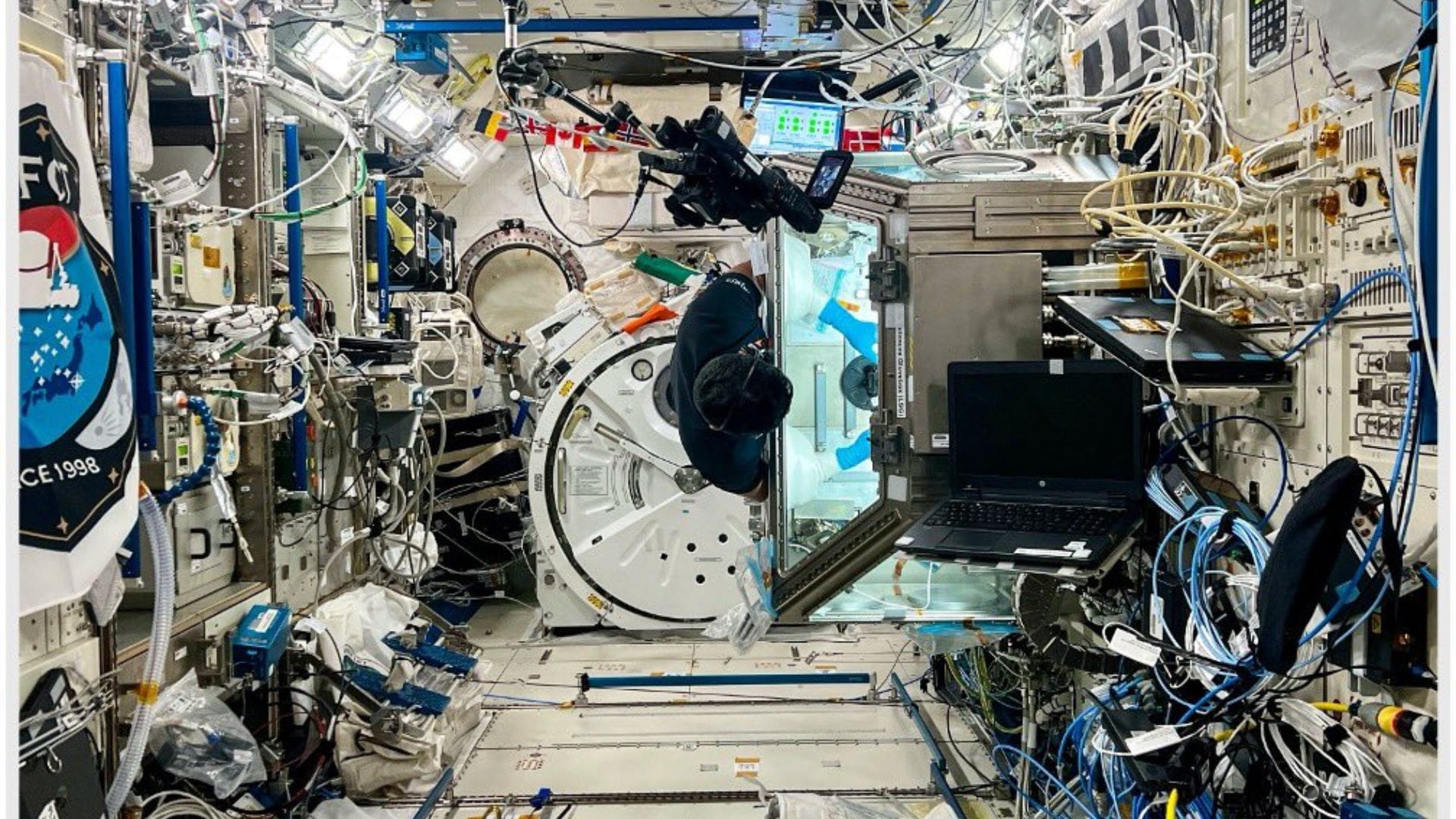
New Delhi: ISRO has announced the Indian Microgravity Experiments (IMEx-2026), inviting proposals from the Indian research community to conceptualise, develop and demonstrate scientifically meaningful microgravity experiments. The opportunity is for a wide range of microgravity disciplines, including but not limited to material science, space biology, biotechnology, space agriculture, pharmacology, drug research, fluid physics, thermal transport, combustion, fire safety, in-space manufacturing and processing. Principal investigators from start-ups, industries, academic institutions and national research laboratories can apply. Subsequently, selected experiments will be considered for ISRO-enabled flight opportunities in LEO, including the Bharatiya Antariksh Station.

The experiments selected for the Gaganyaan programme. (Image Credit: ISRO).
ISRO will be providing mentoring, technical guidance and engineering coordination to the selected experiments. ISRO has selected five experiments to be conducted over the course of the Gaganyaan programme. These include investigating the formation of kindey-stones in fruit flies, how enzymes work in microgravity, the crystallisation of nutraceuticals in microgravity, a heat spreader to mitigate hotspots in space, and to explore interfacial instability in microgravity conditions. Both the present Chairman V Narayanan, and the former Chairman, S Somanath have highlighted the need for better proposals for experiments from Indian scientists for the Gaganyaan programme.
ISRO requires better experiments
At the National Space Science Symposium (NSSS) 2024 in Goa, former ISRO Chairman S Somanath had said, “We must create a technology-science roadmap for the zero gravity environment in space. This is another competence we need to develop in the Indian Science Community. This has also not grown too big, because when we looked at the experiments we want to do in the Gaganyaan mission, at least five of them have now been shortlisted. They are not very exciting experiments for me. Maybe some of you may be doing it for the first time. What is important for us is to find out very unique science experiments that we can do in a human spaceflight, in a zero gravity environment. This is very important. Let us look at how we can create this ecosystem which will work on zero gravity science, let it be in biological sciences, medicine discovery, or material sciences where interaction and measurements are required, in low gravity conditions.”
During the curtain-raiser for NSSS 2026 in Shillong, ISRO Chairman V Narayanan had said, “So, let us concentrate, focus on science. My humble suggestion is please do a literature survey. So much work is done, we are ignorant about even published literature, and let us frame proper experiments. Don’t do the work in the last minute, simply bringing some experiment and pushing it through, we are not going to allow. So, let us do a systematic job.”