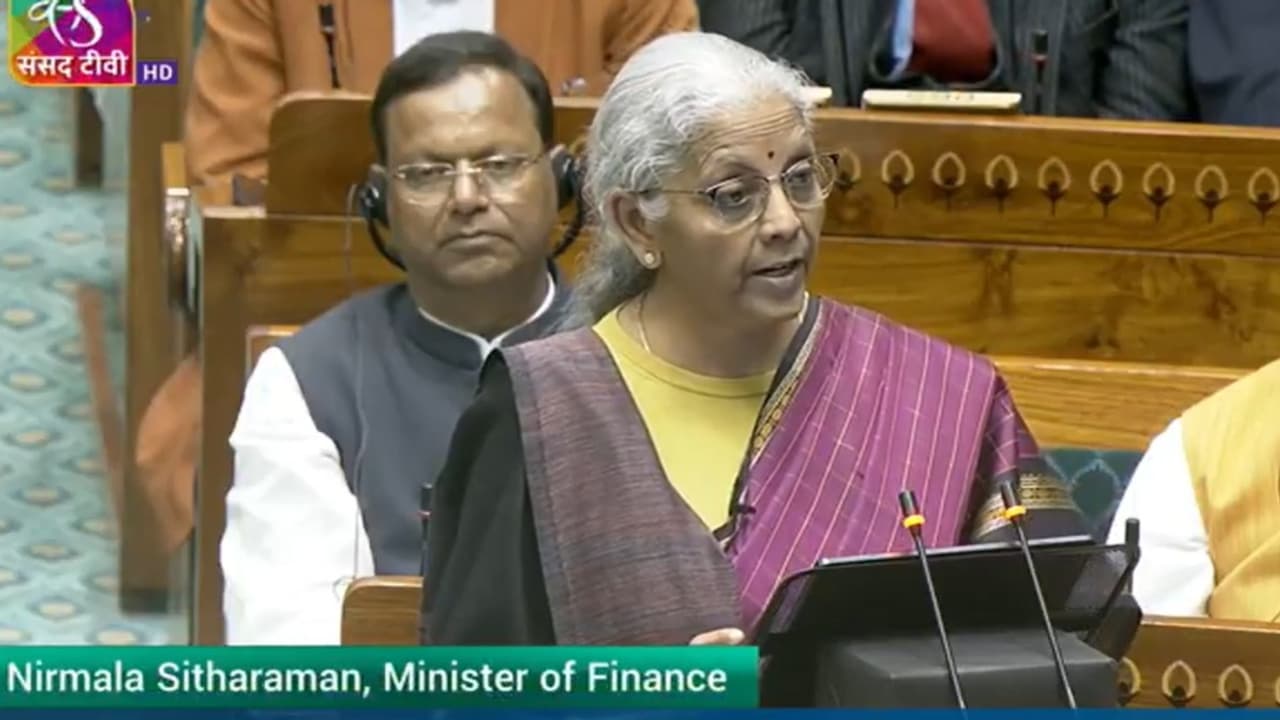
On February 1, 2026, Finance Minister Nirmala Sitharaman presented her ninth Union Budget for 2026–27 amidst global economic uncertainty. The budget outlines the government’s financial plans and priorities.
Union Finance Minister Nirmala Sitharaman on Sunday (February 1, 2026) presented her ninth consecutive Union Budget in Parliament, creating history once again. The Union Budget for 2026–27 lays out how the government plans to earn and spend money in the coming financial year, while also signalling its priorities for an economy navigating global uncertainty.
With this, Sitharaman not only extended her record-breaking run but also placed herself firmly among India’s longest-serving finance ministers when it comes to Budget presentations.
A Budget watched closely amid global uncertainty
This year’s Budget arrives at a time when the global economy is far from stable. Ongoing geopolitical tensions, trade disruptions and lingering inflationary pressures have made governments across the world cautious.
In India, the focus has been on whether the Budget would offer relief or fresh support to sectors facing external shocks—especially export-oriented industries that were hit by US tariff hikes last year. From businesses to households, expectations were high as Sitharaman rose to present the government’s financial roadmap.
Economic Survey set the tone
Just days before the Budget, on January 29, Sitharaman tabled the Economic Survey 2025–26 in Parliament. The Survey struck a reassuring note, stating that India’s economy remains resilient despite a fragile global backdrop.
According to the Survey, strong domestic demand continues to be the backbone of India’s growth story, helping the economy withstand external pressures better than many global peers.
Growth outlook remains optimistic
The Economic Survey projected India’s potential growth at around 7 per cent, reflecting confidence in the country’s medium-term prospects. It also estimated that GDP growth in FY27 could remain between 6.8 per cent and 7.2 per cent.
This optimistic outlook is backed by ongoing structural reforms, stable macroeconomic conditions and continued government focus on infrastructure and development spending.
Here’s a closer look at the key quotes and major proposals from Finance Minister Nirmala Sitharaman’s Union Budget 2026 speech:
- The Finance Minister announced that the government will set up a high-level banking committee to closely examine how India’s banking system can better support the country’s long-term goal of becoming a Viksit Bharat.
- Highlighting the massive infrastructure push, she pointed out that public capital expenditure has grown sharply, from just Rs 2 lakh crore in 2014–15 to Rs 11.2 lakh crore in 2025–26. This momentum will continue, with Rs 12.2 lakh crore proposed for FY 2026–27 to fuel growth and job creation.
- Small businesses received a major boost, with the Budget laying out a three-part plan for MSMEs. This includes a Rs 10,000 crore SME Growth Fund to help promising firms scale up, a Rs 2,000 crore top-up to the Self-Reliant India Fund, and improved liquidity support to ease cash flow pressures.
- To secure critical raw materials for future industries, the government plans to create rare earth mineral corridors in Odisha, Kerala, Andhra Pradesh and Tamil Nadu, strengthening India’s supply chain in strategic sectors.
- The Finance Minister also unveiled ‘Bio Pharma Shakti’, a Rs 10,000 crore initiative spread over five years, aimed at turning India into a global hub for bio-pharmaceutical manufacturing, especially for biologics and biosimilars.
- Explaining the broader vision behind the Budget, she said it is guided by three key responsibilities (kartavyas), keeping economic growth strong, building capabilities to meet people’s aspirations, and ensuring every region and community has fair access to resources.