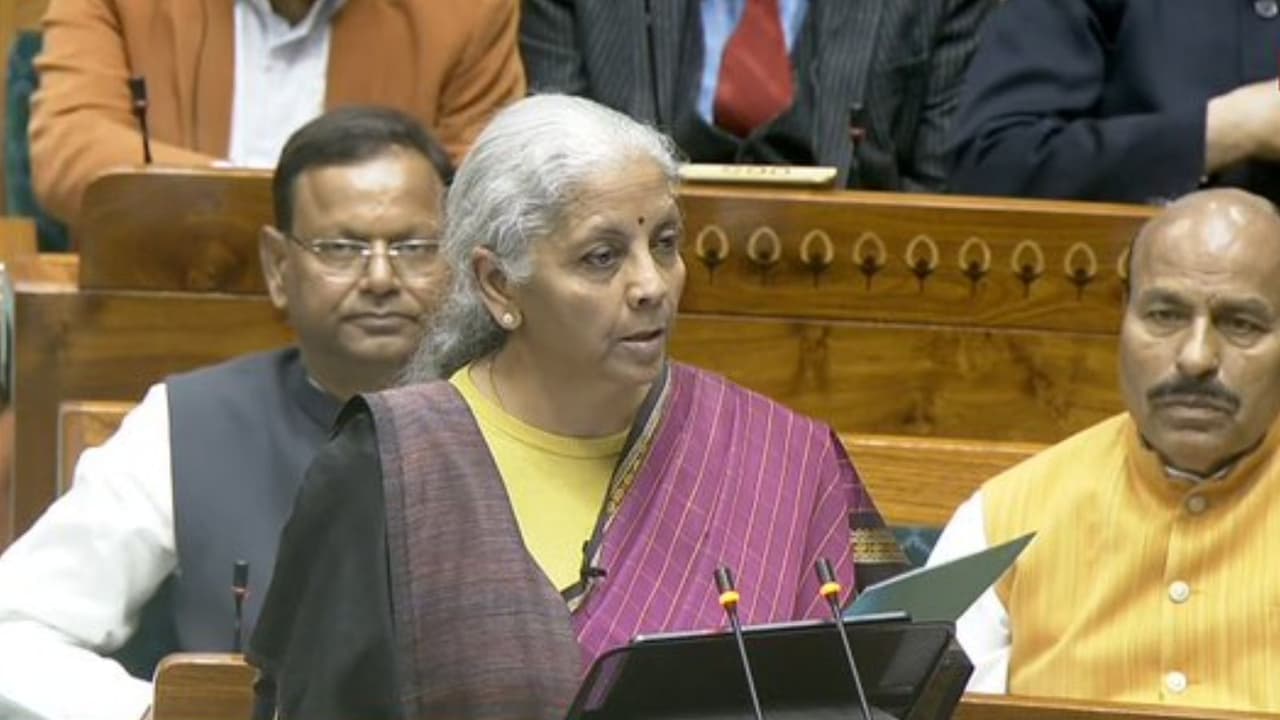
Union Finance Minister Nirmala Sitharaman, in the Union Budget 2026–27, proposed the Mahatma Gandhi Gram Swaraj Initiative to strengthen khadi, handloom and handicrafts, aiming to boost rural livelihoods and village-based self-reliance.
Union Finance Minister Nirmala Sitharaman, while presenting the Union Budget 2026–27, announced a series of measures aimed at strengthening India’s traditional industries and boosting rural livelihoods. Among the key proposals is the launch of the Mahatma Gandhi Gram Swaraj Initiative, which seeks to revitalise khadi, handloom and handicrafts, while promoting self-reliance at the grassroots level.
The Finance Minister also proposed the establishment of mega textile parks in challenge mode, with a special focus on value addition in technical textiles, signalling the government’s intent to modernise the textile sector alongside preserving traditional crafts.
Mahatma Gandhi Gram Swaraj Initiative Explained
The Mahatma Gandhi Gram Swaraj Initiative is envisioned as a comprehensive programme to strengthen village-based economic systems, in line with Mahatma Gandhi’s philosophy of Gram Swaraj, or village self-governance. The initiative aims to empower rural artisans, weavers and craftspeople by improving production capacity, market access and institutional support for khadi, handloom and handicrafts.
By reinforcing traditional industries, the initiative seeks to generate sustainable employment, reduce rural distress and promote locally produced goods, thereby aligning with the broader vision of Atmanirbhar Bharat.
Boost For Khadi, Handloom And Handicrafts
Under the proposed initiative, khadi and handloom sectors are expected to receive targeted support to modernise operations without compromising their traditional character. The focus will be on improving quality, design innovation and branding, enabling artisans to compete in both domestic and global markets.
Handicrafts, which form a vital source of income for millions of rural families, are also expected to benefit through better infrastructure, skill development and organised supply chains.
Mega Textile Parks In Challenge Mode
In addition to supporting traditional sectors, Sitharaman announced plans to set up mega textile parks in challenge mode. These parks are expected to encourage competition among states and private players to develop world-class textile infrastructure.
The proposed parks will also focus on value addition in technical textiles, an emerging segment with applications in healthcare, agriculture, defence and infrastructure. This move is expected to enhance India’s competitiveness in the global textile value chain.
Nirmala Sitharaman stated, “A textile expansion and employment scheme to modernise textile clusters. Aim for Samarth 2.0 to promote skilling in the textile sector. Propose to set up mega textile parks in challenge mode. To launch the Mahatma Gandhi Gram Samaj initiative to support Khadi and handicrafts”