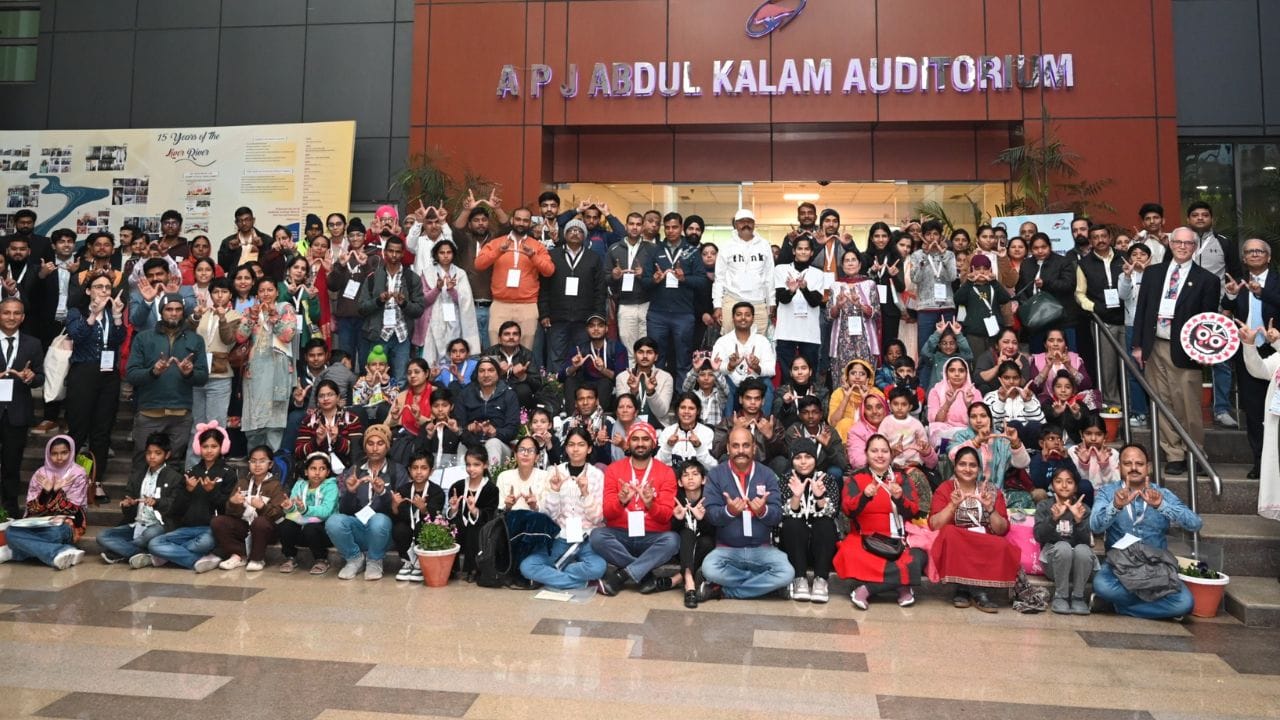
New Delhi: The Institute of Liver and Biliary Sciences (ILBS), New Delhi, today hosted a dedicated Wilson Disease Patient Advocacy Program as part of “Wilson India 2026,” a single‑topic, two‑day international conference endorsed by the Asia Pacific Association for the Study of the Liver (APASL). The advocacy program brought together patients, families, clinicians, and international experts with the shared goal of strengthening the collective voice of the Wilson disease community in India.
Wilson disease is a hereditary copper overload disorder that can lead to liver cirrhosis and neurological manifestations, affecting approximately 1 in 30,000 children and young adults. As a liver‑centric university and referral center for complex liver diseases, ILBS manages nearly 25–30 new Wilson disease cases each year.
The conference, hosted by the Department of Pediatric Hepatology under the leadership of Prof. Seema Alam, featured around 85 experts and 110 delegates from across the globe, who deliberated on emerging diagnostic tools and novel therapeutic strategies for this rare but debilitating disease, of children and adults.
The seminal part of the meeting was the Patient Advocacy Program, which was presided over and launched by Prof. Vinod K. Paul, Member, NITI Aayog, who underscored the critical need for rare disease advocacy, timely diagnosis, and equitable, affordable lifelong treatment for Indian patients with Wilson disease. He informed that the very expensive medicine, Trientene, needed for these patients is now available in India by the efforts of the GoI and Phrama industries of India for 100th of the cost of the medicine imported from overseas.
Prof Shiv K. Sarin, Director ILBS, highlighted this initiative by the GoI as a big boon for the patients with Wilson Disease. He stressed on developing precise, context‑appropriate tools for early detection and optimal management of Wilson disease, particularly in resource‑constrained settings.
Claire Stapleton, a nurse from the United Kingdom and co‑founding member of the Wilson Disease Global Alliance (WDGA), called for empowering patients and families to share their lived experiences in a safe, inclusive environment. She outlined the principles and value of organized patient advocacy and drew attention to the specific clinical, social, and socioeconomic challenges faced by Indian families, helping to define key advocacy priorities for the country.
International experts Dr Michael Schilsky (Yale School of Medicine) and Dr Aftab Ala (King’s College London) engaged in an interactive session, addressing numerous questions from parents and caregivers on diagnosis, long‑term treatment, and prognosis. A key highlight of the program was a series of moving testimonies from young patients and their families, who shared their diagnostic journeys, struggles with treatment adherence, and the impact of Wilson disease on education, employment, and everyday life, thus powerfully illustrating the urgent need for sustained support, awareness, and policy‑level action.