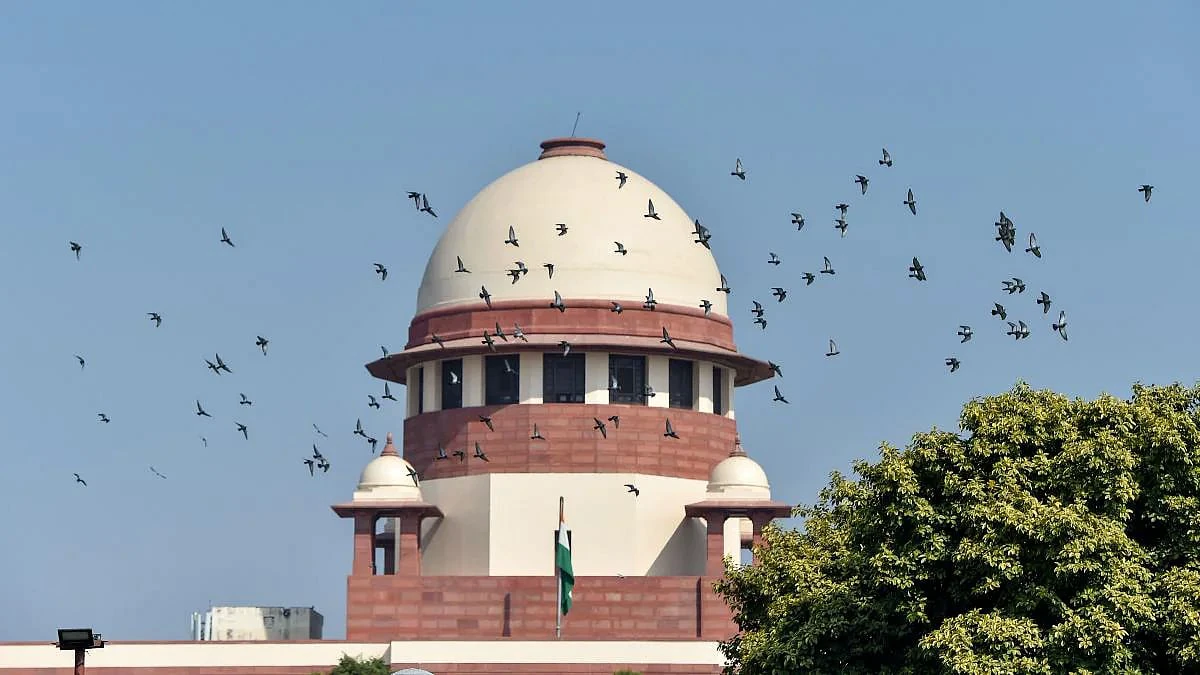
The issue of changing one’s faith to benefit from the reservation system has once again come under the scrutiny of the Supreme Court, with a bench asking the Haryana government to explain how minority certificates are issued to those claiming to have converted.
The petitioners, originally belonging to the Jat community in Haryana, sought directions from the court to admit them to the Buddhist minority category in a postgraduate medical course in Uttar Pradesh, on the strength of certificates issued by a Sub-Divisional Officer identifying them as Buddhist.
Court questions conversion-based claims
In oral observations, Chief Justice of India Surya Kant, who was on the bench with Justice Joymalya Bagchi, deprecated what appeared to be a fraudulent attempt to claim minority benefits through conversion when the petitioners were originally from a prosperous, landed community in the state. The Haryana government must now explain the norms adopted by the SDO to issue such certificates and whether a candidate who appeared in the qualifying NEET-PG examination in the general category could subsequently use conversion to press a claim for a minority seat.
Recurring dilemma in reservation policy
Such questions, which surface periodically in the context of attempts to exploit quotas in education and employment, highlight a persistent conundrum: how can governments reconcile the conflict between limited opportunities available to society as a whole and constitutionally mandated quotas for historically deprived communities? There have been earlier cases involving converts to Christianity from Hinduism being denied reservation benefits, on the ground that they no longer belonged to historically disadvantaged sections.
Earlier rulings reinforce constitutional intent
In the case of a woman who claimed Scheduled Caste identity in Puducherry despite her father having converted to Christianity, and who sought an SC certificate as a practising Hindu, a bench of Justices Pankaj Mithal and R. Mahadevan ruled in 2024 that accepting such a claim purely for reservation benefits would amount to a fraud on the Constitution. It would also go against the very object of reservation.
Expanding quotas and rising incentives
Today, the debate on quotas has gained fresh momentum against the backdrop of major political parties calling for a caste census and the Union government, after initial reluctance, favouring it in the upcoming national census. Making economic backwardness a separate reservation category has entered mainstream discourse after a Supreme Court bench upheld the 103rd Constitutional Amendment, introducing a 10 per cent EWS quota. With an expanding reservation framework, the incentive to find a place in one group or another has only grown stronger. The apex court has also taken the view that the 50 per cent cap on reservation can be breached.
Addressing the root cause
At the root of these pressures, however, lies a systemic failure to deliver capability-building education and skills, supported by good health, to millions. A future-focused policy should expand public education to cover everyone rather than parcel out identity-based benefits. Such an approach would eliminate the incentive for some to cynically claim religious conversion solely for immediate gains.