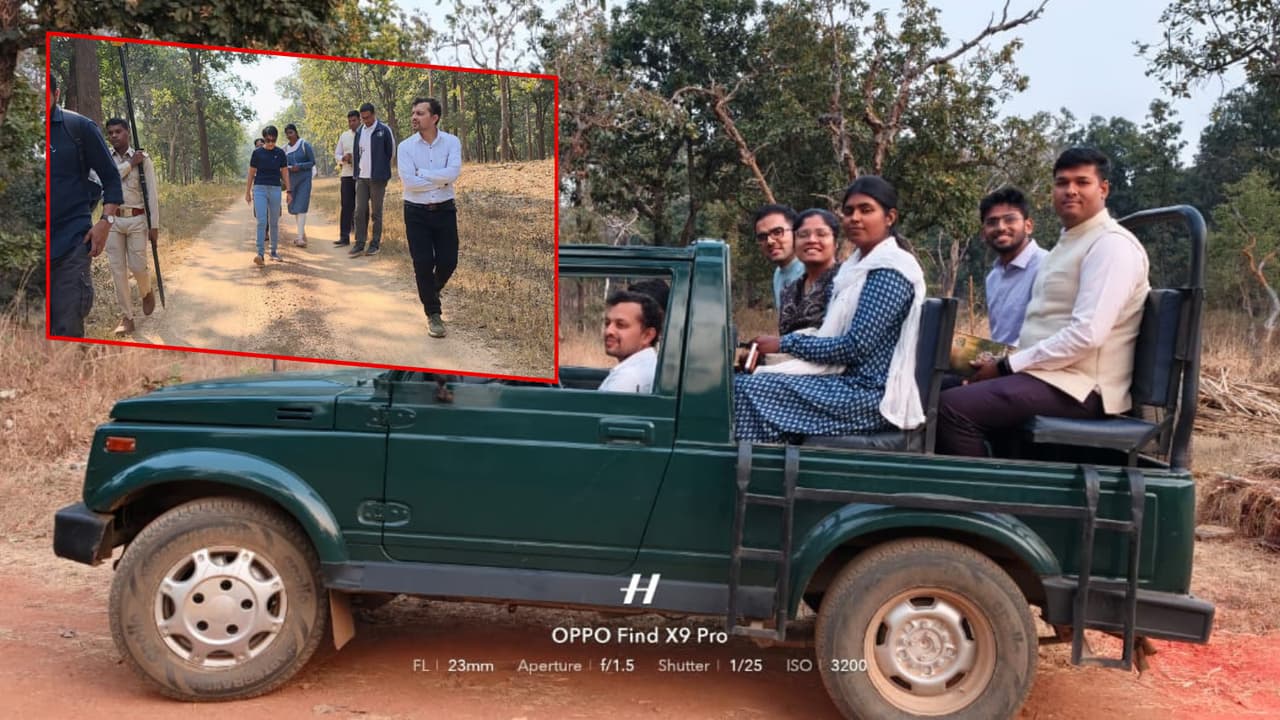
DGPS Forest Survey Training: Trainee IFS officers were given practical training in DGPS survey and wildlife management at Baranwapara Sanctuary. Know how forest conservation is being strengthened with modern technology, digital tools and ‘Gaj Sanket’ app.
Forest and wildlife conservation is no longer limited to traditional methods only. Amidst the changing challenges, technology, data and scientific management have become the biggest needs of today. With the aim of implementing this thinking at the ground level, a special practical training program was organized for trainee Indian Forest Service (IFS) officers at Baranwapara Wildlife Sanctuary in Chhattisgarh, in which they were introduced to the intricacies of modern DGPS survey and wildlife management.
Trainee IFS officers came face to face with modern technologies
During this training program organized at Baranwapara Sanctuary adjacent to Raipur, trainee officers were given detailed information on important aspects related to IT based forest management, digital survey technology and wildlife conservation. The objective of this training was to practically introduce the future Forest Service officers to the modern techniques and management processes used at the field level, so that they can take more accurate and effective decisions in future.
Also read: UP Electricity Bill Hike: Electricity shock in February, consumers will be forced to pay 10% more bill
Message of adopting technology for protection of forest wealth
During the program, Forest and Climate Change Minister Kedar Kashyap, while addressing the trainee officers, said that only proper use of modern technologies can strengthen the protection and conservation of forest wealth. He called upon the officers to continuously develop their skills and make sustained efforts for the conservation of the rich forest heritage of Chhattisgarh. He also wished all the trainee officers best wishes for their bright future.
DGPS survey will provide accurate and reliable data
In the training session, Chief Conservator of Forests (Wildlife) and Regional Director Stovisha Samajdar highlighted in detail the functioning and utility of DGPS technology. He said that DGPS based survey makes demarcation, survey and management of forest areas much more accurate. The data collected through this technology proves to be extremely useful in long-term conservation planning and policy making.
Elephant monitoring will become easier with ‘Gaj Sanket’ app
In this sequence, Deputy Director of Udanti-Sitanadi Tiger Reserve, Varun Jain informed the trainee officers about ‘Gaj Sanket’ mobile application. He said that this digital tool plays an important role in monitoring elephants, tracking their movements, human-elephant conflict management and quick information sharing. During the training, practical aspects related to field usage, data entry and management of the app were also explained to the officers.
Field based training said to be very important
At the conclusion of the training program, Divisional Forest Officer, Balodabazar, Dhammasheel Ganveer said that such technical and field based training is extremely necessary for the future forest service officers. He stressed that digital tools, modern technology and scientific management methods prove helpful in making forest and wildlife conservation more effective.
Direct observation of the sanctuary’s conservation work
Superintendent of Barnavapara Sanctuary, Krishanu Chandrakar informed the trainee officers about the geographical, ecological and conservation related features of the sanctuary. The officers were also taken on a tour of the Wild Buffalo Conservation Centre, Blackbuck Relocation and Conservation Centre, Grassland Development Area and other important places. Through this field visit, the trainee officers got an opportunity to understand and experience the conservation work closely.
Also read: Big shock to land buyers in UP! Registry rules changed from February 1