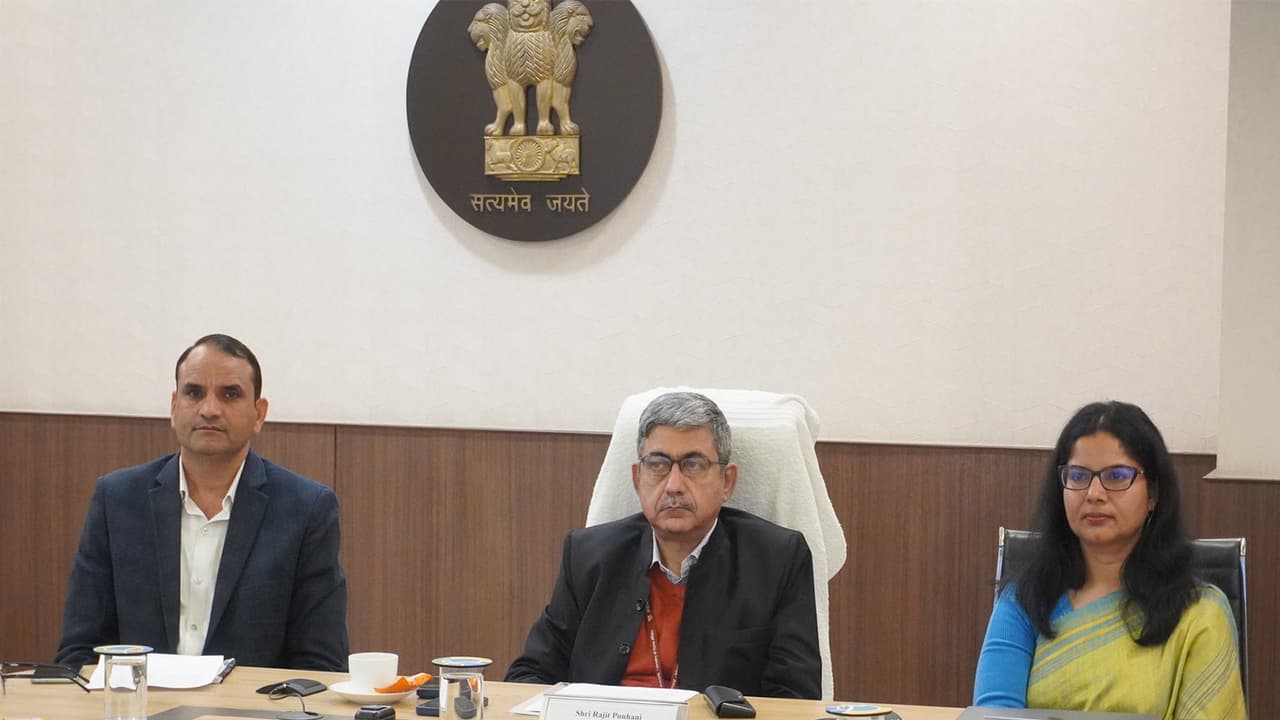
FSSAI, with WHO, launched a pioneering online training programme on Food Safety Risk Assessment. The initiative, inaugurated by CEO Rajit Punhani, includes a digital portal to bolster India’s food regulatory framework with global expertise.
The Food Safety and Standards Authority of India (FSSAI) launched a Comprehensive Online Training Programme on Food Safety Risk Assessment, along with a dedicated digital training portal, marking a significant milestone in strengthening India’s science-based food regulatory framework.
According to a release, the training programme was formally inaugurated by Rajit Punhani, Chief Executive Officer, FSSAI, on Thursday. It is the first-of-its-kind pilot training programme jointly developed by FSSAI and WHO (World Health Organisation), bringing together global expertise to design a structured curriculum ranging from basic to advanced levels of food safety risk assessment, a release said.
The training framework is aligned with international risk analysis principles while being tailored to India’s regulatory requirements, ensuring both global relevance and national applicability.
Addressing Modern Food System Challenges
As food systems grow increasingly complex due to emerging contaminants, antimicrobial resistance, technological innovations, and changing dietary patterns, building institutional capacity for risk assessment is essential to protect public health and ensure credible regulatory decision-making.
Comprehensive Curriculum and Training Methodology
A core component of the training is Dietary Exposure Assessment, developed with WHO’s technical support and delivered by JECFA (Joint Food and Agriculture Organisation (FAO)/WHO Expert Committee on Food Additives), JEMRA (Joint FAO/WHO Expert Meetings on Microbiological Risk Assessment), and JMPR (Joint Meeting on Pesticide Residues) experts. This module links hazard data with India-specific food consumption patterns to generate country-relevant scientific evidence.
Additional modules cover Microbiological Risk Assessment, Antimicrobial Resistance, and Toxicology, delivered by distinguished Indian experts from WHO committees, FSSAI Scientific Panels, and national institutions.
The programme combines conceptual learning with case studies, scenario-based exercises, and data interpretation, the release said.
Digital Portal for Continuous Learning
The newly launched digital training portal will serve as a long-term institutional platform for structured learning, hosting training modules, expert sessions, and future programmes.
Official Remarks and Global Collaboration
Addressing the inaugural session, CEO Rajit Punhani emphasised that risk assessment is central to modern food regulation and that investment in scientific human resources is critical for strengthening consumer confidence and regulatory credibility. He noted that the programme will be institutionalised as a regular regulatory practice.
WHO officials reaffirmed their commitment to supporting India in strengthening food safety risk assessment capacity and highlighted that India is the first country where such a comprehensive capacity-building programme has been initiated by WHO in collaboration with a national food authority. They also underlined the importance of global collaboration in addressing shared challenges, the release said.
Strengthening India’s Food Safety Ecosystem
By nurturing a skilled cadre of risk assessors and embedding continuous learning within regulatory practice, FSSAI aims to institutionalise risk assessment capacity building and strengthen the food safety ecosystem not only in India but also at regional and global levels.
The event featured senior officials from the World Health Organisation (WHO), international experts, members of scientific committees, and food safety regulators, underscoring the initiative’s global relevance and collaborative nature. (ANI)
(Except for the headline, this story has not been edited by Asianet Newsable English staff and is published from a syndicated feed.)