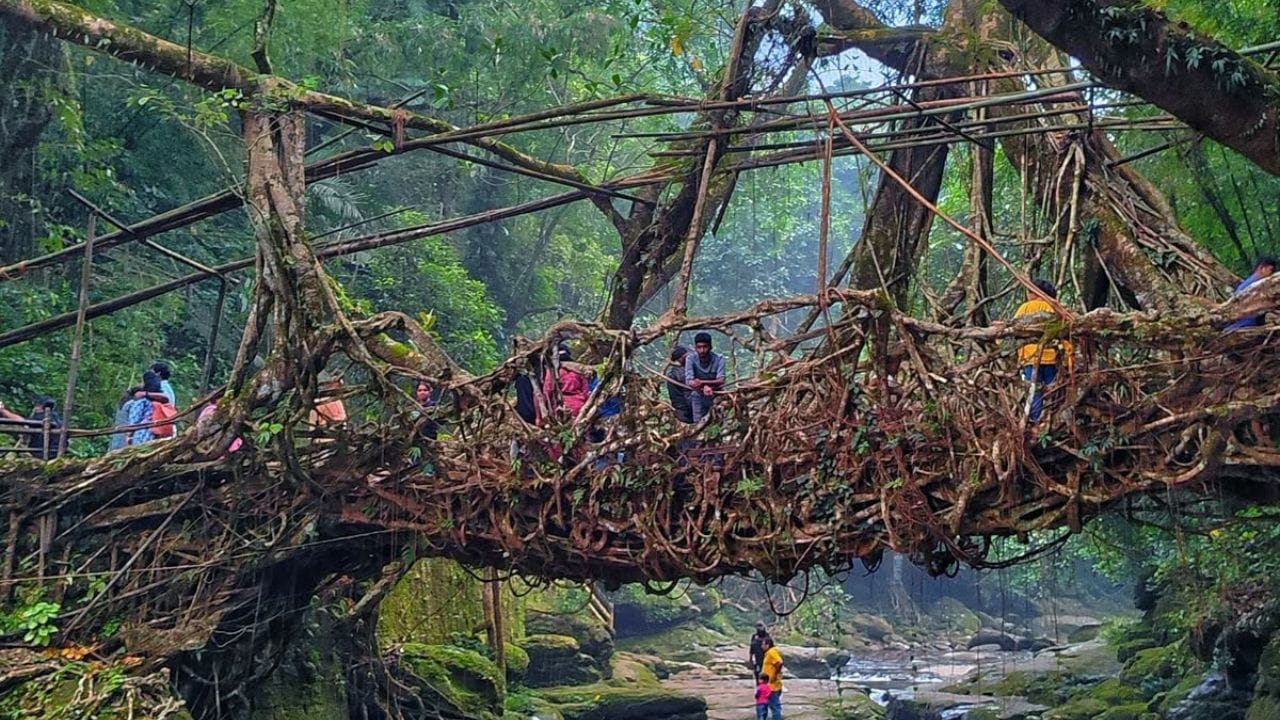
New Delhi: Meghalaya has taken an important step by considering securing a global recognition for its most extraordinary traditional culture. The living root bridges, also known as Jingkieng Jri, have been nominated for inclusion on UNESCO’s World Heritage List, with India submitting a nomination dossier for the 2026-27 evaluation cycle.
As per the Permanent Delegation of India to UNESCO, the dossier titled “Jingkieng Jri/Lyu Chrai Cultural Landscape, Meghalaya” was formally submitted in Paris by India’s ambassador and Permanent Representative to UNESCO, Vishal V Sharma, to Lazare Assomo Eloundou, Director of the UNESCO World Heritage Centre.
India nominates Meghalaya’s living root bridge for UNESCO
The nominated cultural landscape stretches across the southern slopes of the Khasi and Jaintia Hills, reflecting a unique heritage where nature, community practices and spiritual beliefs exist in harmony.
Meghalaya’s living root bridges stand apart from conventional structures — they are nurtured rather than constructed. Formed by guiding the aerial roots of rubber fig trees across streams and valleys, these natural bridges take decades to develop and can endure for centuries with proper care.
At the core of this practice is an indigenous worldview rooted in respect for nature and devotion to Mei Ramew, or Mother Earth. These bridges embody sustainable living, collective community effort and an enduring commitment to environmental guardianship.