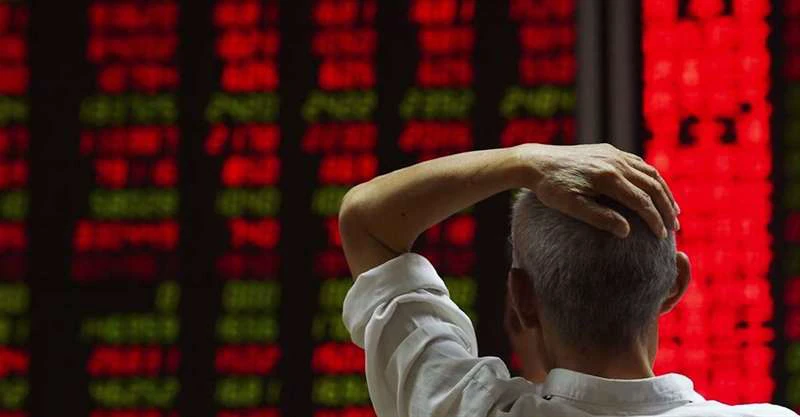
The Nifty 50 declined 0.57 per cent to 25,272.5, while the BSE Sensex slipped 0.52 per cent to 82,107.2 as of 9:15 a.m. IST. Market breadth remained weak, with 13 of the 16 major sectoral indices trading in the red.
Broader markets also came under pressure, with the Small-Cap and Mid-Cap indices falling about 1 per cent each, reflecting risk aversion among investors.
Metal stocks were the biggest laggards, as the metal index dropped 3.3 per cent. This came after a sharp rally of 8.5 per cent over the previous three sessions, driven by higher base metal prices amid ongoing geopolitical tensions.
Investor focus is now firmly on the Union Budget scheduled for Sunday, for which markets will operate in a special trading session. Budget-related expectations and positioning are keeping traders cautious.
Adding to the pressure, crude oil prices surged to a five-month high on Thursday amid concerns that global supplies could be disrupted if the U.S. attacks Iran, a key crude producer within OPEC. Higher oil prices are negative for net importers like India and can worsen inflation and fiscal dynamics.
Meanwhile, the rupee opened little changed after sliding to a record low against the USD in the previous session, further dampening sentiment in equity markets.
Pre-Market Update at 7:47 AM: The Indian stock market is expected to open on a cautious note on Friday, January 30, 2026, amid mixed global cues and ahead of the Union Budget 2026. Gift Nifty signals a weak start, while selling pressure in U.S. technology stocks overnight has weighed on sentiment, even as most Asian markets traded higher.
On Thursday, domestic equities extended their rally for the third consecutive session after the Economic Survey 2026 projected that the Indian economy would remain on a strong footing despite geopolitical challenges. The Sensex rose 221.69 points, or 0.27 per cent, to close at 82,566.37, while the Nifty 50 gained 76.15 points, or 0.30 per cent, to end at 25,418.90. Market experts believe that trading may remain range-bound in the run-up to the Budget, with stock-specific action dominating.
Asian markets traded mostly higher on Friday after U.S. President Donald Trump said he would announce his pick for the next Federal Reserve chair. Japan’s Nikkei 225 rose 0.25 per cent and the Topix gained 0.58 per cent. South Korea’s Kospi jumped 1.23 per cent, while the Kosdaq advanced 0.99 per cent. However, Hong Kong’s Hang Seng index futures indicated a lower opening.
Gift Nifty was trading around the 25,464 level, at a discount of nearly 71 points from the previous close of Nifty futures, indicating a negative start for Indian benchmark indices.
U.S. stock markets ended mostly lower overnight, dragged down by sharp selling in technology stocks. The Dow Jones Industrial Average gained 55.96 points, or 0.11 per cent, to close at 49,071.56, while the S&P 500 slipped 9.02 points, or 0.13 per cent, to 6,969.01. The Nasdaq Composite declined 172.33 points, or 0.72 per cent, to settle at 23,685.12.
Among major technology stocks, Microsoft shares slumped 10 per cent, Tesla declined 3.45 per cent, Salesforce fell 6.09 per cent, Oracle dropped 2.2 per cent, Adobe slid 2.6 per cent, and Datadog plunged 8.8 per cent. Apple shares rose 0.72 per cent, while Nvidia gained 0.52 per cent.
On the geopolitical front, U.S. President Donald Trump said Russian President Vladimir Putin agreed to not fire on Kyiv and other towns for a week due to extreme cold weather. Trump said he personally requested the pause, citing humanitarian concerns amid severe winter conditions.
In political developments, a U.S. government shutdown was averted after President Donald Trump and Senate Democrats reached a tentative deal. According to Bloomberg, discussions included negotiations over placing new limits on immigration raids that had triggered a nationwide outcry.
Economic data from the U.S. showed that initial jobless claims fell marginally last week. New applications for unemployment benefits dropped by 1,000 to a seasonally adjusted 209,000 for the week ended January 24. The prior week’s figure was revised higher to 210,000, while economists had expected around 205,000 claims.
Apple reported record earnings for the December quarter, supported by strong iPhone sales, especially in Greater China. The company posted revenue of USD 143.8 billion, up 16 per cent year-on-year, surpassing analysts’ estimates of USD 138.48 billion. Net profit stood at USD 42.1 billion, and gross margin was reported at 48.2 per cent. Apple expects revenue growth of 13 to 16 per cent in the March 2026 quarter, compared with analysts’ expectations of around 10 per cent, and guided for a gross margin of 48 to 49 per cent.
Gold prices resumed their rally after recording their first decline in nearly two weeks. Gold rose 1.3 per cent to USD 5,447.18 per ounce, while silver prices advanced 2.4 per cent to USD 118.43 per ounce.
The U.S. dollar was on track for a second straight weekly decline. The dollar index rose 0.2 per cent to 96.35, trimming its weekly fall to 1.1 per cent. The euro slipped 0.2 per cent to USD 1.194, the yen weakened 0.17 per cent to 153.39 per dollar, and sterling declined 0.1 per cent to USD 1.3791.
Crude oil prices eased after rising more than 3 per cent in the previous session. Brent crude slipped 0.10 per cent to USD 70.64 per barrel, while U.S. West Texas Intermediate crude fell 0.32 per cent to USD 65.22 per barrel.