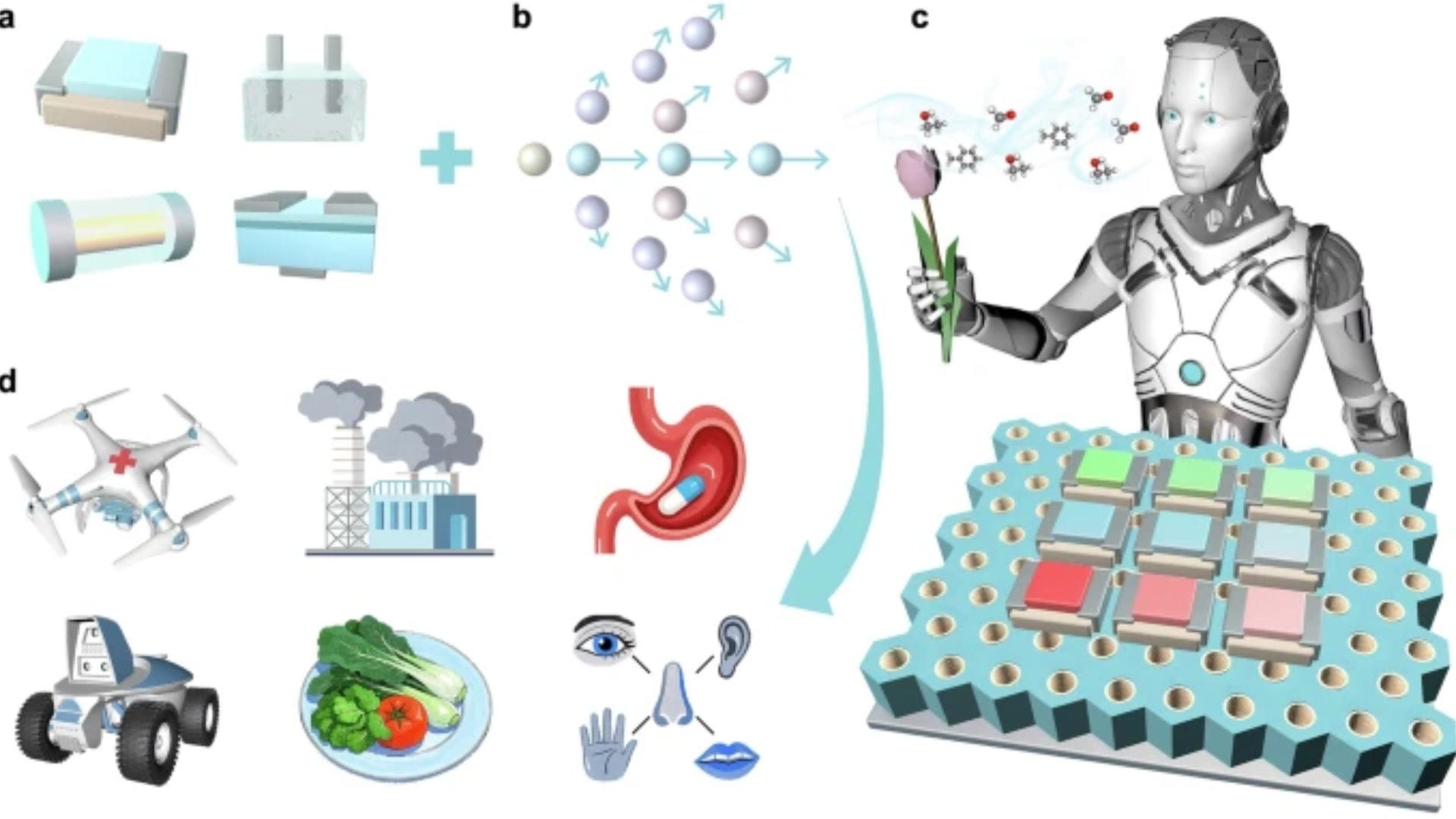
New Delhi: Scientists want to include odour sensing abilities in robots for a wide range of potential applications. The electronic noses mimic biological olfaction using sensor arrays to sample and process gases. Recent advancements include better electromechanical and optical sensors, as well as improved metal oxide semiconductors and field-effect transistors. The range of sensors vary in sensitivity, selectivity and power use, making them suitable for use in a variety of robotic applications. Robots can navigate complex settings using algorithms for locating gas sources, and by leveraging gradient tracking as well as probabilistic models. Applications range from search and rescue with robots finding toxic leaks, to monitoring environments for pollutants, even at trace levels.
These sensors in electronic noses can detect volatile compounds through mechanisms such as resistance changes or light interactions. The metal oxide semiconductors offer high sensitivity, but need selectivity improvements through the use of filters. Electrochemical sensors provide low power use and good selectivity for healthcare applications. Optical sensors are stable and reliable in a variety of conditions. Field-effect transistors can be miniaturised for portable robots. Gas source localisation algorithms are inspired by biology and can benefit from teamwork in teams of multiple robots, with the capability of handling turbulence and wind changes. Such robot teams could build gas maps and track plumes of emissions such as methane or carbon dioxide effectively.
Challenges and future directions
There are some challenges though. Sensor drift over time has to be accounted for, as well as interference from humidity and temperature. Power and size limits still limit applications in mobile robots. Future work in the field is oriented on hybrid sensors, and using machine learning for better integration, while integrating with other senses such as vision. Electronic noses can be used in healthcare to detect diseases via breath, and in homes for safety monitoring. A paper describing the research has been published in Nature.