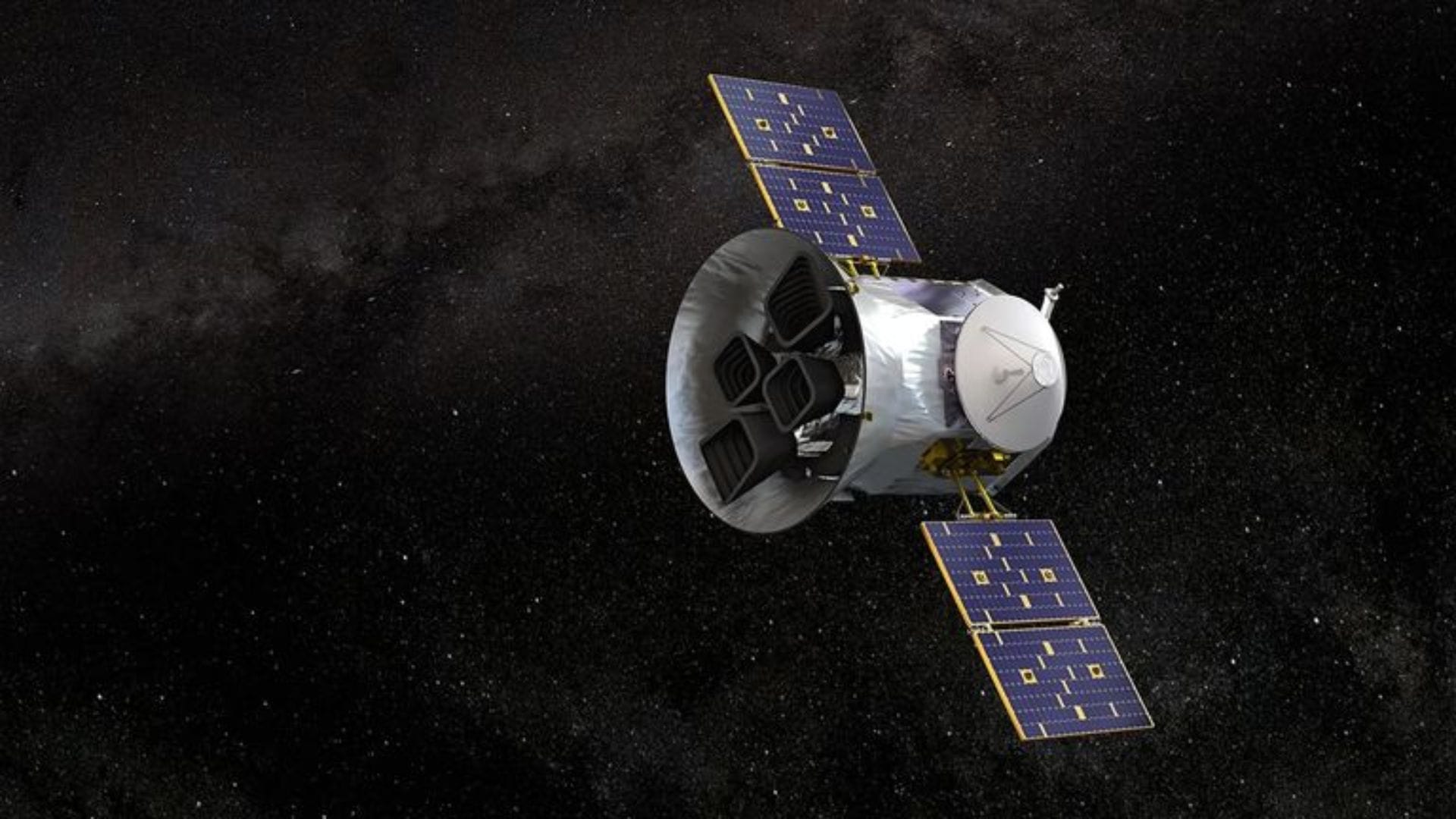
New Delhi: Humans have discovered over 6,000 exoplanets so far, that are worlds in orbits around stars other than the Sun. Over half of these were found by NASA’s Kepler mission, which retired in 2018, and the ongoing Transiting Exoplanet Survey Satellite (TESS) spacecraft. Despite these successes, vast amounts of archived data from both missions remained unexplored and publicly accessible. Researchers around the world continue to analyse the data with various methods to identify additional exoplanets. NASA has now released an open-source artificial intelligence tool that sifts through the transit signals, or tell-tale dips in light from the host star caused by the exoplanets passing in front of it.
The model, previously used to validate Kepler discoveries has now been trained on TESS data as well, and has been dubbed ExoMiner++. In its first application to the TESS observations, it flagged 7,000 promising exoplanets candidates, that require confirmation through follow-up observations. TESS surveys almost the entire sky with a focus on nearby stars, while Kepler peered a smaller region of the sky more intensely. The data from both the missions were compatible, allowing for the ExoMiner++ tool to perform effectively across both datasets. The software is freely available on GitHub, enabling any scientist to apply it to TESS’s expanding public archive, and accelerate discoveries with limited resources.
Accelerating Exoplanet Discoveries
By sharing the tools openly, NASA is enabling independent verification and deeper data exploration. The approach is suitable for the large volume of data gathered, which makes deep learning particularly valuable. Future improvements will enable the model to detect transit signals directly from raw data as against relying on pre-identified lists. Upcoming missions, such as the Nancy Grace Roman Space Telescope will provide tens of thousands of additional transit observations, that NASA plans to release publicly. The ExoMiner++ algorithm is expected to discover exoplanets from this data as well.