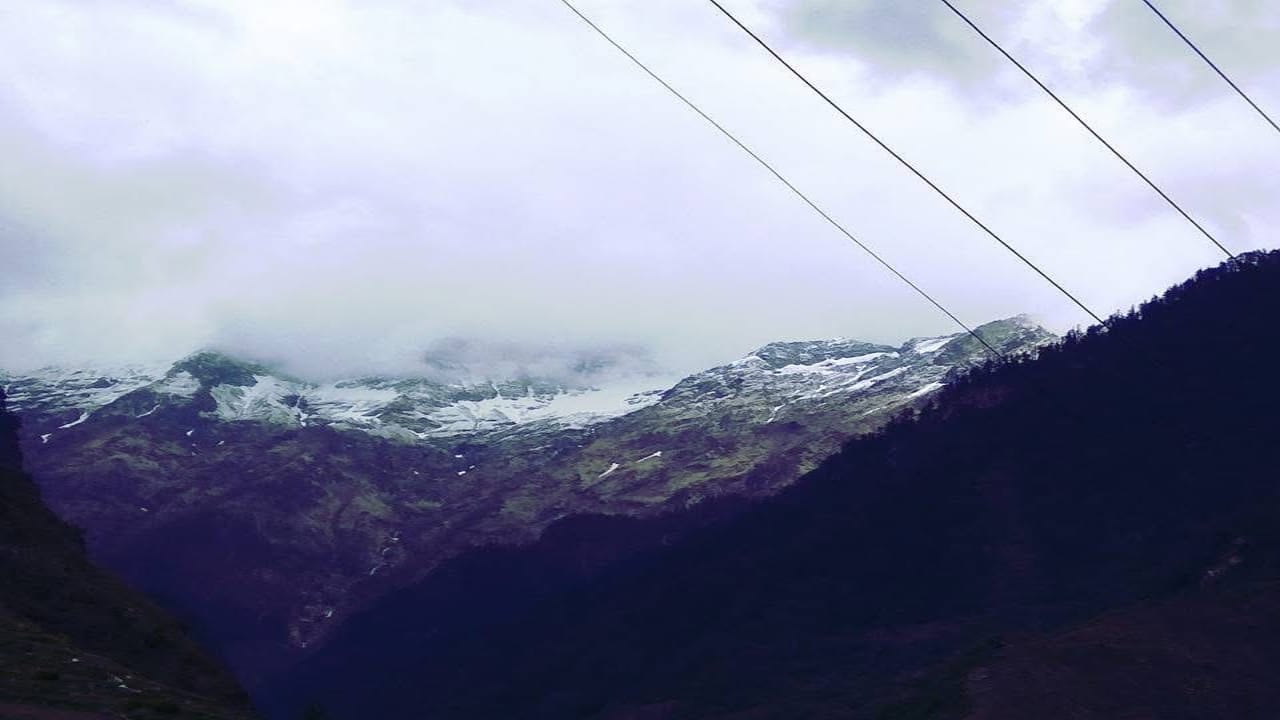
Pithoragarh: The widespread snowfall in Uttarakhand’s high Himalayan regions during January has brought new hope for the formation of seasonal glaciers.
Experts and locals believe that if one or two more snowfalls occur in the coming weeks, glaciers could develop in the high‑altitude valleys, proving vital for water resources and agriculture.
Snowfall has started again in Auli, Uttarakhand, as the weather turns colder in the higher hills. The weather department has issued an alert for rain and snowfall on January 27 and 28. Travelers are advised to stay updated on local conditions. pic.twitter.com/WgDrYFvVHH
— Kumaon Jagran (@KumaonJagran) January 27, 2026
Thick snow cover in Himalayan valleys
This year, the Panchachuli range and the Darma, Vyas, and Malla Johar valleys in Munsyari and Dharchula are covered in a thick layer of snow. Prolonged sub‑zero temperatures have slowed the melting process, allowing snow to accumulate. Environmentalists say this is favorable for seasonal glacier formation.
Importance of seasonal glaciers
Local experts explain that seasonal glaciers melt gradually during summer, ensuring a continuous supply of water to rivers, streams, and natural sources. This benefits the Gori Ganga, Kali River, and their tributaries, improving water availability for drinking, irrigation, and hydropower projects.
The slow melting also helps maintain soil moisture, which is crucial for agriculture and horticulture. Farmers in Munsyari, Darma, and border areas expect better conditions for apple orchards, kidney beans, and other cash crops. Villages that often face water shortages in summer may also find relief.
Climate challenges remain
However, experts caution that the survival of seasonal glaciers depends entirely on weather conditions. A sudden rise in temperature or heavy rainfall in February and March could cause rapid melting. Locals recall that until a few years ago, snowfall began as early as November, leading to a higher number of seasonal glaciers.
The melting of these glaciers in May and June traditionally boosted river levels and ensured good crop production. But climate change has disrupted snowfall cycles, reducing glacier numbers significantly. Environmentalist Dhirendra Joshi noted that delayed snowfall makes glacier formation difficult, stressing the need for consistent snow events.
Positive signs this year
Despite these concerns, the current snow cover in Pithoragarh’s high Himalayan regions is being seen as a positive sign. If snowfall continues at regular intervals, experts believe seasonal glaciers could return, strengthening water security and supporting livelihoods in the region.
Impact on local communities
For residents, the snowfall has already brought optimism. Farmers are hopeful of better yields, while villagers expect relief from summer water shortages. Hydropower projects could also benefit from steady water flow, ensuring energy supply for the state.