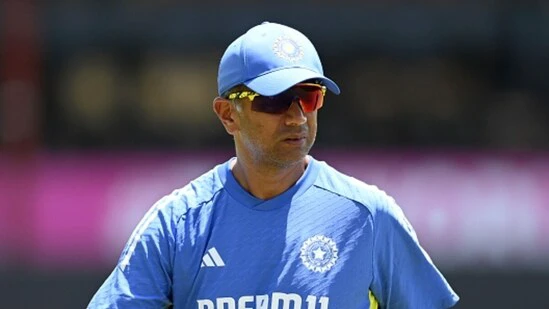
India hasn’t lost a T20I series in almost three years – last going down to the West Indies in August of 2023. The winning streak is one of the reasons making India a formidable force at the upcoming home World Cup. However, as Dravid understood the hard way, the batting great offered a word of caution for the Men in Blue.
As the ghosts of November 19, 2023, still linger, Dravid reminded this team that one bad match is all it takes to bring a spotless campaign to a screeching halt. He was ready to step down as India’s head coach after overseeing India’s finest World Cup runs – winning 10 matches in a row – before Rohit Sharma convinced him otherwise. Dravid continued for another six months and finished on a high. However, he still hasn’t forgotten how India, against all odds, emerged second-best to Australia, and reminds that irrespective of how strong the Indian team is, one bad day in the office can undo everything.
India is playing T20 cricket at a different level than most teams. They have had an 80% success rate over the last few years, which is amazing given the format’s many ups and downs. They clearly start as favourites, and they will make it to the semi-finals, but as I have learned to my bitter disappointment, it’s about the better team on the day. Anybody can play a good knock and upset you.” Dravid said at a special event celebrating ‘The Rise of the Hitman’ by author R. Kaushik.
Dravid’s praise for Rohit
Dravid wasn’t the only man responsible for India’s win. Rohit Sharma led a revolution that took India to a podium finish in the West Indies. It all began after India’s painful exit from the 2022 T20 World Cup in Australia, losing to England by 10 wickets. Rohit, the then-captain, realised something had to give, and led from the front to spark a batting evolution which the team is still reaping the benefits of.
“There was a feeling that we were slightly behind in white-ball cricket and needed to push the envelope a little more. Run rates were going up, risk-taking was increasing, and we needed to adapt to that reality,” Dravid added.
“What was brilliant was that Rohit took the lead immediately. He took responsibility for setting the tempo himself, rather than asking others to do it. When your leader stands up and says, ‘I will do this, even if it comes at the cost of my average or my personal numbers,’ it becomes much easier to pass that message through the team.
“I thought Rohit managed the transition into leadership really well. The team never felt that he had changed, and that is a rare and important quality in a leader.”