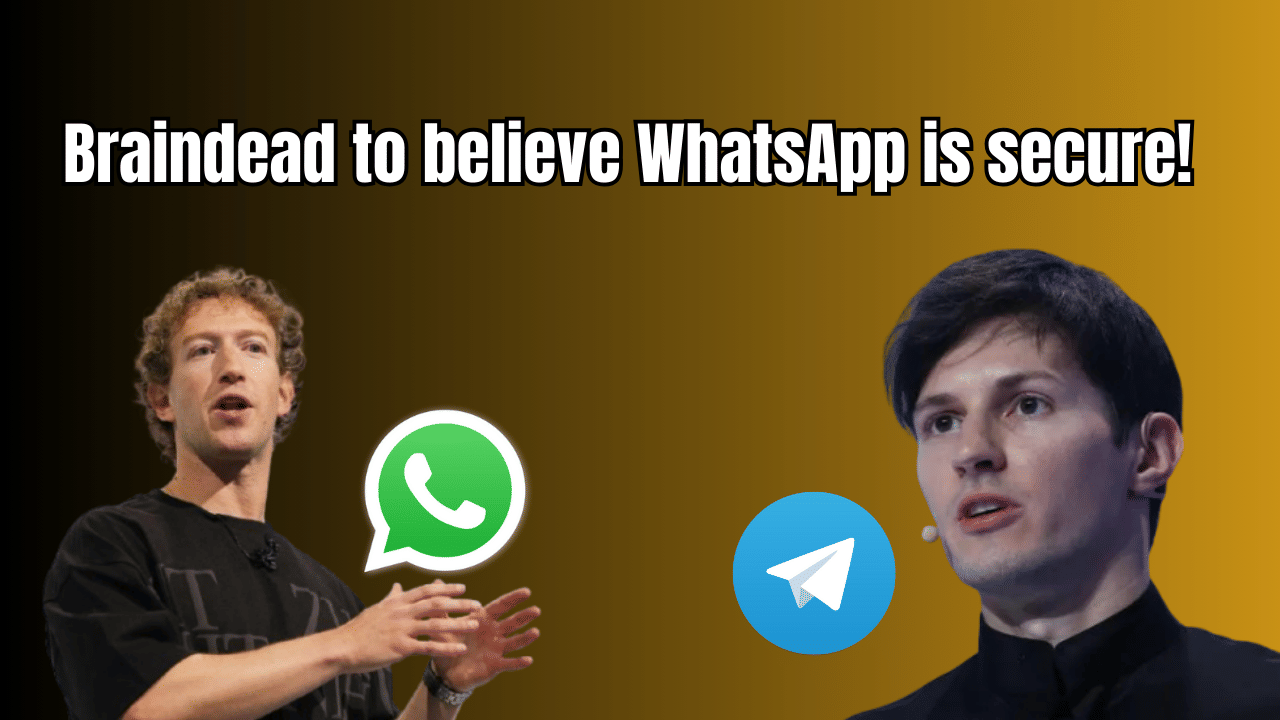
New Delhi: Questions around WhatsApp’s privacy are once again in the spotlight, after Telegram founder and CEO Pavel Durov made sharp remarks about the messaging platform’s security claims. Durov reacted to a recent Bloomberg report that talks about a new lawsuit filed against Meta Platforms, the parent company of WhatsApp.
His comments come shortly after remarks by Elon Musk, who also claimed that WhatsApp is not secure. Musk even raised doubts about Signal, another popular encrypted messaging app, and encouraged users to switch to X Chat instead. The case has been submitted in a US District Court in San Francisco and accuses Meta of misleading users about how private and secure WhatsApp really is.
What Pavel Durov says
You’d have to be braindead to believe WhatsApp is secure in 2026. When we analyzed how WhatsApp implemented its “encryption”, we found multiple attack vectors. https://t.co/BC1TWFAIlc
— Pavel Durov (@durov) January 26, 2026
In a post on X, Durov said, “You’d have to be braindead to believe WhatsApp is secure in 2026. When we analysed how WhatsApp implemented its “encryption”, we found multiple attack vectors”. The language was unusually blunt, even for him. He claimed that Telegram had earlier studied WhatsApp’s encryption system and found several weaknesses. According to Durov, WhatsApp was never as secure as users were made to think.
The lawsuit at the centre of the debate challenges WhatsApp’s claim of end-to-end encryption. WhatsApp tells users that this system ensures only the sender and receiver can read messages. However, the people who filed the case argue that Meta stores and analyses user communications and can access message content. The lawsuit has been brought by a group of plaintiffs from several countries, including India, Brazil, Australia, Mexico and South Africa. It also refers to unnamed whistleblowers.
Meta takes on this
Meta has denied all allegations. A company spokesperson said the lawsuit is “frivolous” and described the claims as completely false. Meta insists that WhatsApp has been using the Signal protocol for end-to-end encryption for nearly a decade and that it cannot read users’ private messages.
Despite Meta’s response, the report and the strong reactions to it have reopened old concerns about how much users can trust big technology companies when it comes to privacy. Durov has often presented Telegram as a more transparent option, arguing that users should trust systems that can be independently checked rather than taking companies at their word.
For regular users, this public clash between tech leaders points to a bigger issue: trust. While companies continue to say their encryption works exactly as promised, lawsuits, whistleblower claims and criticism from rival CEOs are making many people question what “secure messaging” actually means and whether any platform fully deserves their confidence.