
For decades, Indian opposition parties, particularly Congress and its allies such as the Rashtriya Janata Dal (RJD), Samajwadi Party (SP), Aam Aadmi Party (AAP), Nationalist Congress Party (NCP), and Trinamool Congress, have operated under the assumption of a reliable Muslim vote bank.
This “secular” bloc was seen as a counterweight to the Bharatiya Janata Party (BJP), mobilized through appeals against communal polarization, promises of protection, and historical loyalty tied to Congress’s role in India’s independence and early nation-building. Leaders like Rahul Gandhi, Lalu Prasad Yadav, Akhilesh Yadav, Arvind Kejriwal, and Mamata Banerjee positioned their parties as natural guardians of minority interests, expecting near-monolithic support in Muslim-concentrated areas.
However, recent electoral trends reveal cracks in this edifice. The All India Majlis-e-Ittehadul Muslimeen (AIMIM), led by Asaduddin Owaisi and his family, has expanded beyond its Hyderabad base, capturing significant Muslim votes in key pockets.
This shift is not merely about vote splitting but signals deeper disillusionment with tokenism, inadequate representation, and perceived compromises by so-called secular parties.
 Owaisi’s AIMIM has expanded beyond its Hyderabad base, capturing significant Muslim votes in key pockets.As polarization intensifies, Muslims appear to be prioritizing tangible community-focused leadership, development, and assertive advocacy over passive reliance on anti-BJP alliances. This evolution challenges the opposition’s strategy and forces a reassessment: Is unconditional Muslim loyalty still viable, or must Congress and allies adapt by offering genuine empowerment rather than symbolic gestures? The AIMIM’s gains underscore a maturing political agency among Muslim voters, who are diversifying choices amid evolving priorities. Ignoring this risks permanent fragmentation and weakened opposition fronts.
Electoral Shifts in Key States
AIMIM’s recent performances demonstrate its growing ability to breach traditional vote banks in Muslim-influenced regions. In the November 2025 Bihar assembly elections, AIMIM secured five seats primarily in the Seemanchal region (encompassing districts like Kishanganj, Araria, Purnea, and Katihar), areas with substantial Muslim populations.
Contesting independently outside the Mahagathbandhan (RJD-Congress-Left alliance), AIMIM’s wins and vote share (around 1.91% statewide) split minority votes, enabling the NDA (BJP-JD(U)) to gain an edge in several Muslim-majority constituencies. Congress performed relatively better locally but overall faced routs, while RJD lost ground.
In Delhi’s February 2025 assembly elections, AIMIM polled 16.6% in the Mustafabad constituency (North East Delhi), a seat with approximately 40% Muslim population. This vote share split opposition support, primarily from AAP, allowing BJP candidate Mohan Singh Bisht to defeat AAP’s Adeel Ahmad Khan by over 17,500 votes. The outcome highlights how AIMIM’s presence in high-Muslim areas can tip close contests toward BJP.
Maharashtra’s recent municipal corporation elections (results around January 2026) saw AIMIM win approximately 126 seats across various civic bodies, marking a sharp rise. Notable gains included 21 seats in Malegaon and 33 seats in Chhatrapati Sambhajinagar (formerly Aurangabad), directly eroding the traditional support base of Congress and NCP in these Muslim-concentrated urban pockets. Strong showings also emerged in Nanded, Dhule, and other areas, reflecting localized mobilization on issues like representation and local governance.
Beyond these, AIMIM maintains a stronghold in Telangana, winning seven seats in the 2023 assembly elections, concentrated in Hyderabad and surrounding Muslim-majority segments led by figures like Akbaruddin Owaisi. The party has expanded efforts in Uttar Pradesh (contesting assembly and local polls with pockets of influence but limited wins), Karnataka (drawing blanks in the 2023 assembly despite targeting the 13% Muslim population), and parts of Andhra Pradesh and Madhya Pradesh through targeted outreach.
These forays indicate a strategic broadening, siphoning votes from Congress, SP, and regional allies in minority belts while capitalizing on perceived neglect.
Breaking the Monolith
These results dismantle the long-held myth of Muslims as a predictable bloc voting en masse for “secular” parties like Congress, SP, RJD, or AAP. Voter preferences are diversifying, driven by local grievances, leadership quality, and issue-specific advocacy rather than blanket insecurity narratives. In highly polarized environments, even secular parties exhibit shifts toward softer Hindutva appeals to broaden their base.
Rahul Gandhi frequently invokes a “cultural Hindutva” or inclusive Hindu traditions in parliamentary addresses and public engagements, emphasizing temple visits and cultural heritage to counter BJP dominance.
Similarly, Mamata Banerjee’s Trinamool Congress, which has long relied on over 30% Muslim support in West Bengal, has invested in temple projects, including the Jagannath Dham in Kolkata, developments in Digha, and initiatives in North Bengal.
Such moves reflect pragmatic outreach to Hindu voters, potentially diluting exclusive minority focus and alienating segments seeking uncompromised advocacy.
This evolution shows Muslim voting is no longer monolithic or loyalty-driven; it responds to visible representation gaps and policy delivery.
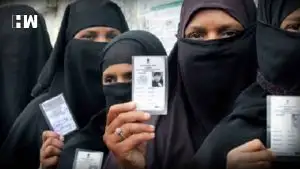 Muslim voting is no longer monolithic or loyalty-driven; it responds to visible representation gaps and policy deliveryQuest for Alternatives
Muslim voters increasingly prioritize substantive representation, economic development, education, employment, and targeted issue advocacy over reliance on insecurity alone. Long-term association with Congress and allies has yielded diminishing returns-token ministerial berths, unfulfilled promises on socio-economic upliftment, and inadequate pushback against polarization. AIMIM positions itself as an alternative offering articulate, community-centric leadership that directly addresses Muslim-specific concerns, from waqf properties and personal laws to urban development in minority areas and political empowerment.
This choice is natural: communities worldwide seek representatives who mirror their aspirations and negotiate assertively. In AIMIM’s case, successes in civic polls and assembly pockets stem from grassroots work on local issues like sanitation, jobs, and education access in Muslim-dominated neighborhoods. Disillusionment with tokenism-such as alliances that sideline minority MLAs or fail to deliver on promises-pushes voters toward parties that foreground community interests without diluting them for broader coalitions.
Beyond Labeling
Dismissing AIMIM as BJP’s “B team” or an indirect enabler of the ruling party is a convenient but ineffective deflection. It avoids confronting the substantive offerings of articulate leadership, consistent community focus, and gaps in outreach by Congress, RJD, AAP, SP, and NCP.
These parties must introspect: Have they become more Hindu-centric in practice, engaging in competitive Hindutva to woo majoritarian sentiments? Rahul Gandhi’s cultural invocations and Mamata’s temple-building suggest adaptations that risk signaling reduced priority for minority exclusivity.
If secular parties mirror BJP’s emphasis on Hindu identity-albeit framed differently-Muslim voters will naturally migrate toward alternatives.
Voting blocs are not eternal.
In Uttar Pradesh, Dalits were once loyal to Bahujan Samaj Party (BSP) for its community representation and empowerment rhetoric. Over time, as BSP’s relevance waned amid alliances and leadership issues, Dalit votes fragmented toward newly formed party like Azad Samaj Party (Kanshi Ram), BJP, SP, and others. Muslim votes could follow a similar trajectory if current allies fail to deliver authentic empowerment.
The rise of AIMIM cannot be brushed aside as a BJP ploy or dismissed as a vote-cutter phenomenon; it is, above all, an indictment of the opposition’s hollowed-out secular stance.