free trade agreement
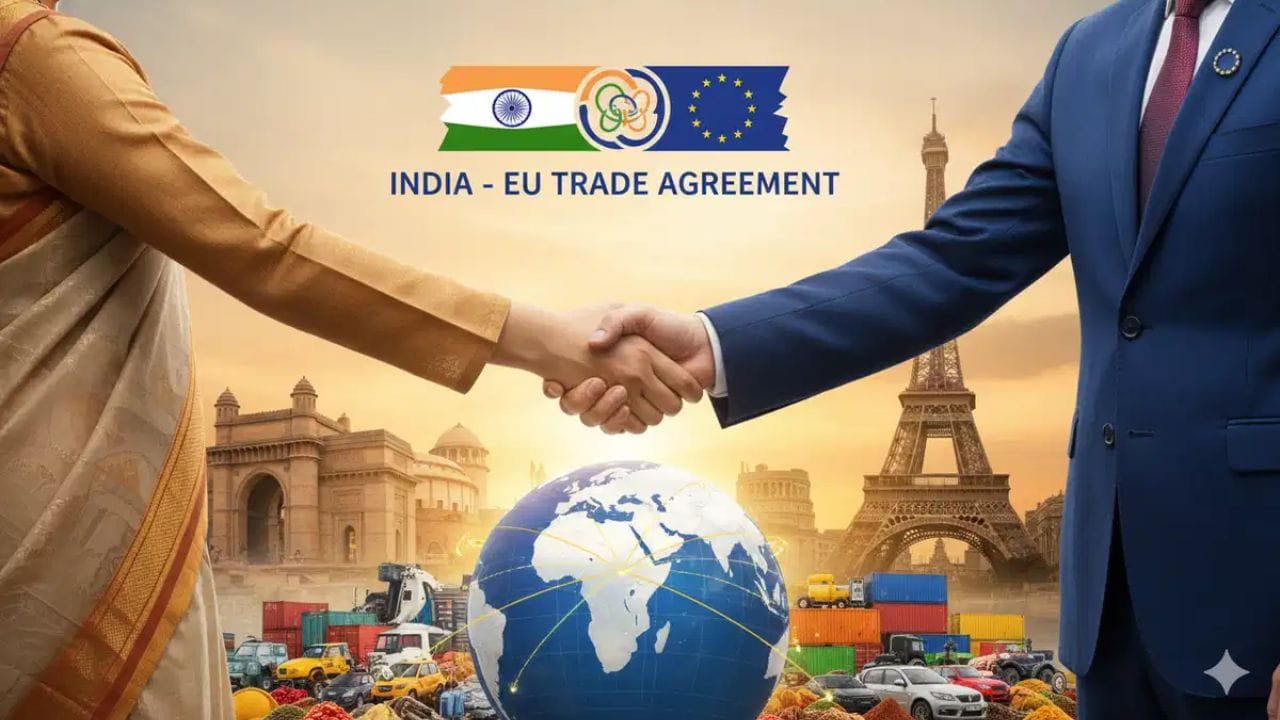
The long running Free Trade Agreement (FTA) deal between India and the European Union is now at its last stage. The agreement between the two parties is almost finalized and now all that remains is to be signed, which is likely to happen today i.e. on January 27. After this deal, India’s dependence on big trade partners like Russia, America and China may reduce to some extent. Let us know what benefits India can get from this agreement.
Negotiations on FTA between India and the European Union started in 2007, but the talks repeatedly got stuck on issues like market access, labor law, intellectual property rights and rules and regulations. Amidst disruptions in global trade and an environment of increasing protectionism, talks resumed in 2022, and have seen momentum in the last one year.
According to officials, the biggest change this time is political will. Both New Delhi and Brussels are now considering this economic partnership as very important strategically with the aim of strengthening the supply chain and reducing dependence on China.
tariffs on cars
According to officials and Reuters reports, the biggest issue of this proposed agreement is the reduction in import duty on European cars. At present, the tax on cars completely manufactured in India ranges from 70% to 110%. Under the plan, import duty on a limited number of cars made in the European Union with a price above 15,000 euros can be immediately reduced to 40%, which can gradually be reduced to 10%. According to sources, in the initial phase about 2 lakh petrol-diesel cars can come under the scope of this reduction, although the final number is still under discussion.
To protect domestic investment, electric cars will be kept out of this exemption for the first five years. For European companies like Volkswagen, Mercedes-Benz and BMW, this step can open up India’s auto market, which was considered safe till now, to a great extent.
What does India want from this agreement?
India wants its labour-based industries to get better entry into the European market. This includes sectors like textile, readymade garments, leather, gems and jewellery, engineering products and processed food. These sectors were dealt a major blow when the European Union withdrew the exemption given under its General Preference Scheme (GSP) in the year 2023. Reduction or elimination of tariffs under FTA may provide an opportunity to Indian exporters to compete strongly in a large and expensive consumer market.
Apart from this, India also wants easier rules for pharma and chemical sector, greater access to IT and professional services, easier movement of skilled workers and relief from double social security payments in two countries. Sensitive sectors like farming and dairy have currently been kept out of the agreement, so that the interests of domestic farmers can be protected.
What benefit will the European Union get from this?
For the European Union, this deal will provide an opportunity to establish a strong hold in India, one of the fastest growing major economies of the world. European wines and liquors, which currently attract import duty of 150% to 200%, are expected to see gradual tax reduction and easing of certification rules. Apart from this, luxury cars, machinery, chemicals, medical devices and electronics can also get the benefit of lower tariff.
As well as goods, the European Union wants clear rules on the services sector, government procurement, intellectual property rights, labor and environmental standards. Besides, strong investment security is also its big priority. This agreement is expected to increase European investment in manufacturing, clean energy and digital infrastructure in India.
Also read- Will the tension of TDS end in the budget, will we get relief from tax complications?