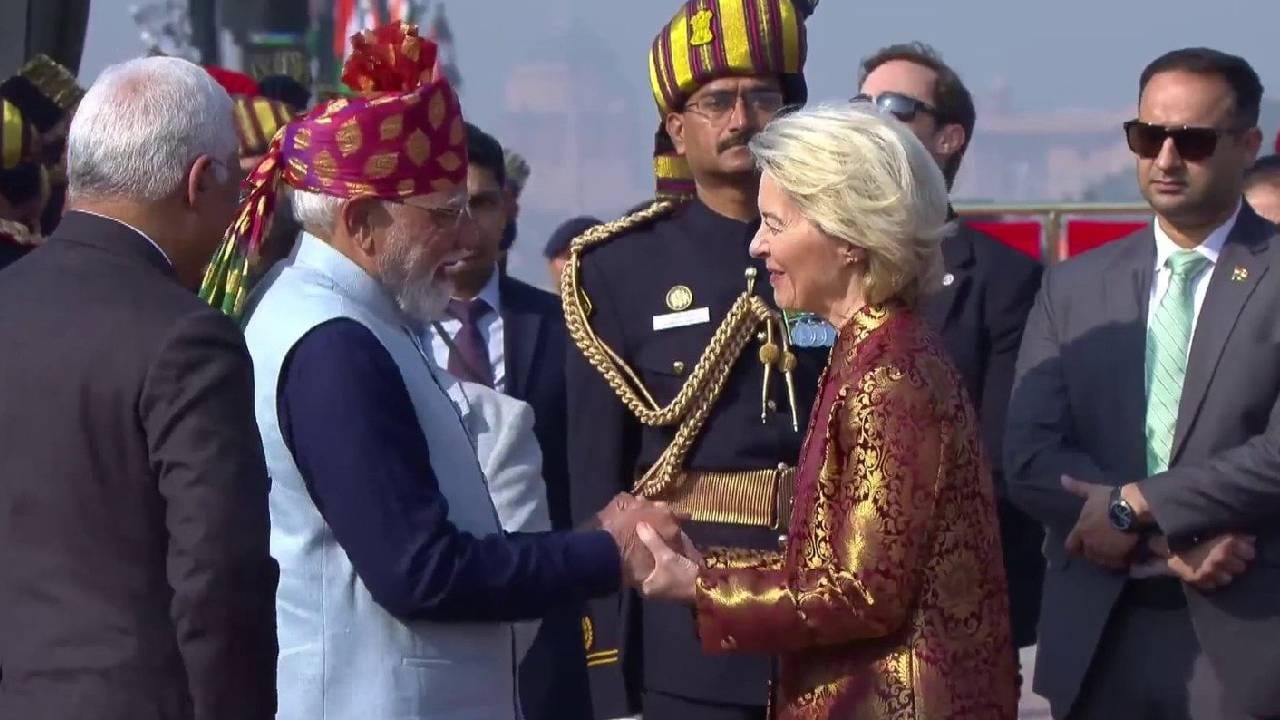
New Delhi: The global order is under visible strain. Threats of war persist, supply chains are disrupted, climate shocks are intensifying, and trust in multilateral institutions is weakening. In this fragile and fragmented world, partnerships built on shared values, strategic balance, and mutual respect matter more than ever. One such partnership—often understated but increasingly significant—is that between India and the European Union (EU).
What started several decades ago with hesitant steps, India–EU relations today are no longer defined by development assistance or limited economic engagement. Indeed, they reflect a mature, equal partnership between two major global actors who believe in democracy, pluralism, the rule of law, and a rules-based international system. Significantly, at a time when these values are being openly challenged, this convergence carries strategic weight far beyond bilateral ties.
It is striking that though India and the EU represent together nearly a quarter of the world’s population and a substantial share of global GDP, the partnership has been at a subsurface level. There was always the promise of great potential, and a shared belief that global challenges—climate change, digital disruption, pandemics, and security threats—require cooperation rather than confrontation. It has taken a long time and many structured discussions to arrive at what can be termed a timely and strategically important understanding.
From Transactional Ties to Strategic Trust
Over the past two decades, India–EU relations have steadily expanded from trade and development cooperation to include strategic dialogue, security, technology, and innovation. The EU has begun to realise that India is a much- needed stable partner in the Global South, one who the world has come to respect for its political maturity and economic rigour. India sees the EU as a strong partner who brings formidable strength in manufacturing, innovation and environmentally friendly technologies.
This convergence of pluralistic economies is crucial in a multipolar world. India values strategic autonomy, and the EU respects diverse development pathways. The core strength of this partnership lies in its complementarity and convergence. India is slowly and surely building its innovation capability. Europe has a mature innovation ecosystem. Europe has proven Lab to Fab capability. India has excellent fundamental research competencies and the capacity to scale the technologies couple with cost advantages and speed, to enable affordability and deployment of technologies across the world.
Climate Cooperation: From Commitments to Co-Creation
Climate change is perhaps the most urgent test of global cooperation—and a defining area of India–EU engagement. India’s commitment to clean energy expansion and net-zero targets aligns with the EU’s ambitious climate agenda. Together, they can move beyond pledges to practical solutions. Countries like Germany have successfully implemented the climate change transition, thereby offering great learnings, while European technology and finance can support India’s renewable energy expansion, green hydrogen initiatives, electric mobility, and climate-resilient infrastructure.
Digital and Technology Governance: Shaping Global Norms
Another emerging frontier is digital governance. As the economies, societies and work places are reshaped by the fast developments in artificial intelligence, data flows, and digital platforms, India and the EU share concerns about privacy, ethical AI, cyber security, and digital inclusion.
India’s success with digital public infrastructure—from digital identity to payment systems—offers valuable lessons globally. The EU’s regulatory leadership in data protection and AI ethics complements this experience. Together, they can help shape global digital norms that balance innovation with accountability, offering an alternative to both unregulated tech dominance and state-controlled digital authoritarianism.
Economic Resilience and Trade in Uncertain Times
Economic resilience is the cornerstone of this partnership and tops the list of strategic priorities. The COVID-19 pandemic and ongoing geopolitical tensions exposed the risks of excessive dependence on concentrated supply chains.
In fields such as pharmaceuticals, semiconductors, critical minerals, and advanced manufacturing, a stronger partnership can reduce vulnerabilities while supporting growth. Technology sovereignty notwithstanding, it is an imperative to strategically align on the strengths that each partner brings and curate meaningful frameworks to counteract aggressive advancements by hegemonic countries.
For India, deeper economic ties with the EU also support its long-term goals of manufacturing expansion, job creation, and integration into global value chains.
Beyond Economics: Global and Regional Stability
India and the EU also converge on broader geopolitical concerns. Both support a free, open, and inclusive Indo-Pacific, respect for international law, and peaceful resolution of disputes. Their coordination in multilateral forums—from climate negotiations to global health governance—helps bridge divides between developed and developing countries.
This bridging role is critical at a time when global consensus is increasingly difficult to achieve. India brings the voice of the Global South; the EU brings institutional experience and normative influence. Together, they can help stabilise a fractured international system.
Let’s make no mistake, we still have to deal with some differences—on regulatory standards, market access, trade frameworks, and access to some critically important subsectors of the economy. The natural progression of continued dialogue, skilful negotiations and mindful agreements will underscore the partnership between two large, diverse democracies. Both countries and their leadership are seized by the enormity of this moment, the need for dialogue rather than disengagement, for courage rather than timidity, and for real action rather than complacency.
In an era of shifting power balances and eroding trust, the India–EU relationship offers a compelling model: partnership without dominance, cooperation without coercion, and shared values without imposed uniformity.
In a fragile world, this partnership is seeking to make a difference, heralding a promise of a better future, and taking one firm step at a time towards a shared goal of a stable, inclusive and resilient global order
It’s a partnership the world needs more than ever before!