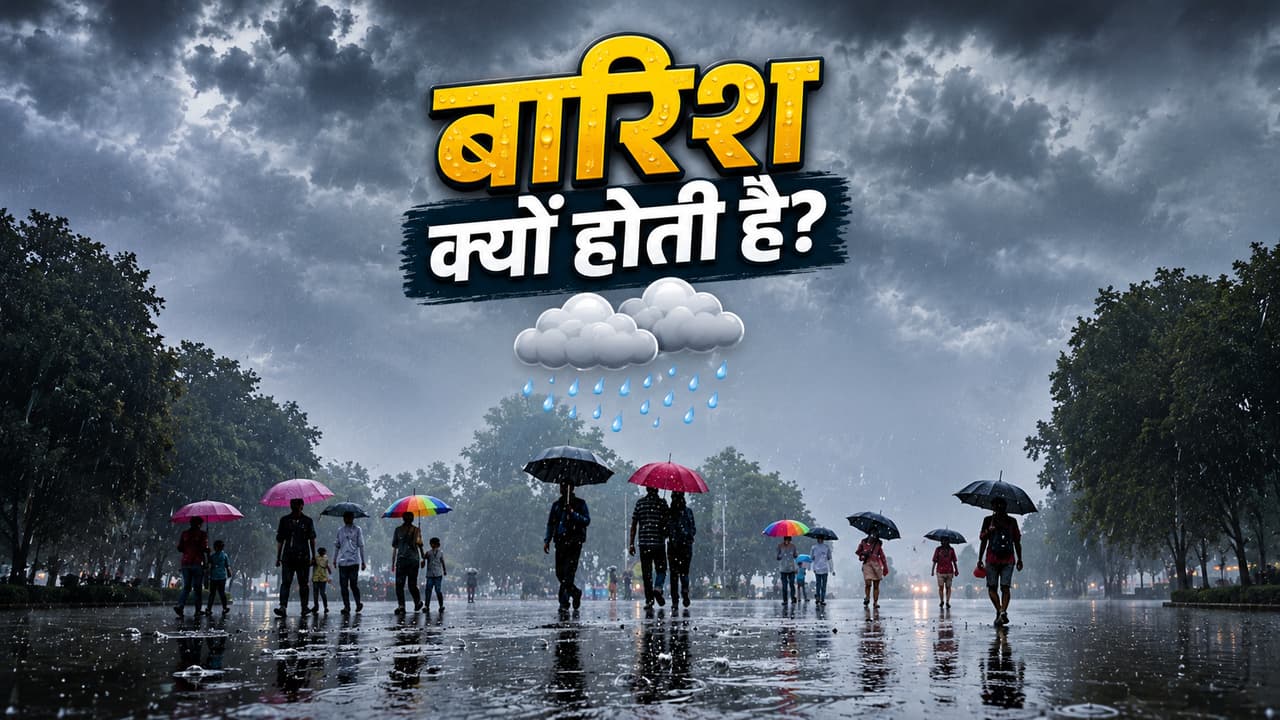
Why Rain Happens: Rain is a routine and important process of nature. This fills rivers, ponds and lakes, recharges groundwater and provides water for agriculture. If there is no rain, everything from drinking water to crops will be in trouble. Rain does not happen suddenly. The water cycle process works behind this. This goes on continuously.
Rain starts from the Sun. Due to the heat of the sun, the water of sea, rivers, lakes and ponds gets heated and turns into water vapor. This process is called evaporation. Not only water, trees and plants also release moisture into the air through their leaves. This is called transpiration. Together, these two increase the amount of water vapor in the environment.
How are clouds formed?
Water vapor rises up because it is light. The air temperature is lower at altitude. When cold air meets water vapor, it begins to condense into small water droplets or ice particles. This process is called condensation. This is the process in which a gas or vapor (such as water vapor) cools and turns back into water. Millions of tiny droplets come together to form clouds. These droplets are very light in the beginning, so the wind keeps them aloft.
When does it start raining?
With time, the small droplets present inside the clouds collide with each other and start becoming larger. When their weight increases so much that the air cannot support them, then they start falling on the earth and this is called rain. If the temperature above is low, then this water also falls in the form of snow or hail.
Why does monsoon cause more rain in India?
Most of the rainfall in India is caused by the south-west monsoon. In summer the land becomes very hot, while the sea remains cool. Due to this temperature difference, air pressure changes and moist winds from the sea come towards India. When these winds collide with mountains or cold air, the water vapor present in them falls together as rain. This is the reason why most parts of the country receive good rainfall between June and September.
Is climate change affecting rainfall?
According to science, due to climate change the rainfall pattern is changing in many parts of the world. Somewhere it is raining heavily, somewhere there is drought for a long time. Rising temperatures may cause more moisture to accumulate in the climate, leading to heavy rainfall in some areas.
Why is rain necessary?
Rain is not just a part of the weather, but also the basis of life. It provides drinking water, provides water to agriculture, fills rivers and lakes, recharges groundwater level, provides life to forests and wildlife, and helps in electricity supply.
Content Source: India Meteorological Department, World Meteorological Organization, National Aeronautics and Space Administration, National Oceanic and Atmospheric Administration, United States Geological Survey