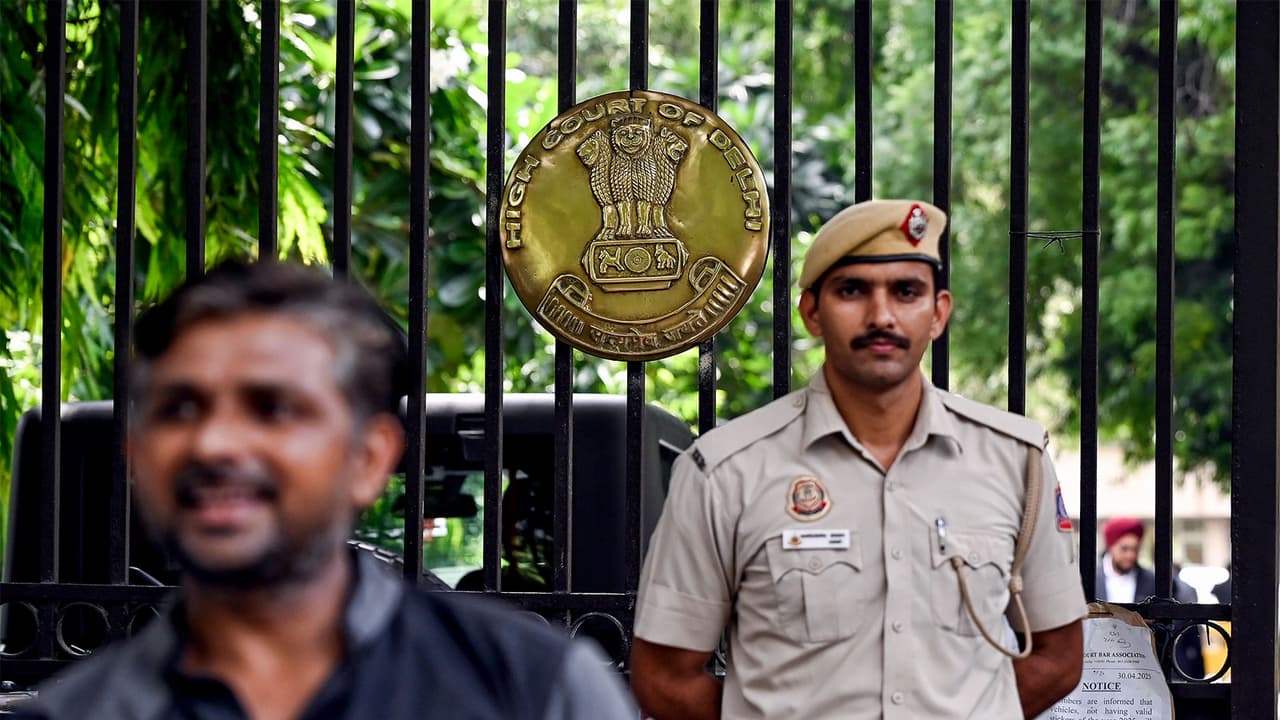
The Delhi High Court dismissed a plea by former NSE chief Chitra Ramkrishna challenging provisions of the Prevention of Corruption Act. The court held that the NSE performs a public duty, thus making her a ‘public servant’ under the act.
A Division Bench of Justices Navin Chawla and Ravinder Dudeja held that the NSE discharges a public duty and that Ramkrishna, as its MD and CEO during the relevant period, cannot be wholly separated from the functions performed by the exchange in which the public at large has a significant interest. The Bench also rejected Ramkrishna’s challenge to the sanction granted for her prosecution under the Prevention of Corruption Act.
“We have rejected your submission on the sanction order. We do not find any merit in the present petition. The same, along with applications, is accordingly dismissed,” the Court observed while pronouncing the order.
Ramkrishna’s Challenge to ‘Public Servant’ Definition
Ramkrishna had approached the High Court contending that the definitions of “public duty” and “public servant” under the Prevention of Corruption Act were unconstitutional and overly broad, arguing that they improperly brought officials of private bodies such as the NSE within the ambit of the anti-corruption law. She had also questioned the validity of the prosecution sanction granted against her.
The High Court, however, declined to accept these contentions, effectively clearing the way for the criminal proceedings against her to continue.
Background of the NSE Investigation
The case arises out of the CBI’s investigation into the alleged irregularities at the National Stock Exchange, including the co-location matter. The CBI has alleged that Ramkrishna abused her official position during her tenure as the head of the country’s largest stock exchange.
The Enforcement Directorate is also investigating the matter under the Prevention of Money Laundering Act based on the CBI case. Ramkrishna is presently on bail in both the CBI and Enforcement Directorate cases.
Earlier, while hearing the matter, the High Court had reserved its judgment after considering Ramkrishna’s challenge to the statutory provisions and the validity of the prosecution sanction. With Today’s verdict, the Division Bench has upheld the applicability of the Prevention of Corruption Act to the facts of the case and dismissed all the pleas raised by the former NSE chief. (ANI)
(Except for the headline, this story has not been edited by Asianetnews Editorial staff and is published from a syndicated feed.)