
Caterpillar is losing momentum as investors weigh rich valuations, tariffs and execution risks.
- Caterpillar transformed from a traditional construction and mining equipment maker into a beneficiary of AI infrastructure as demand for data center power systems surged.
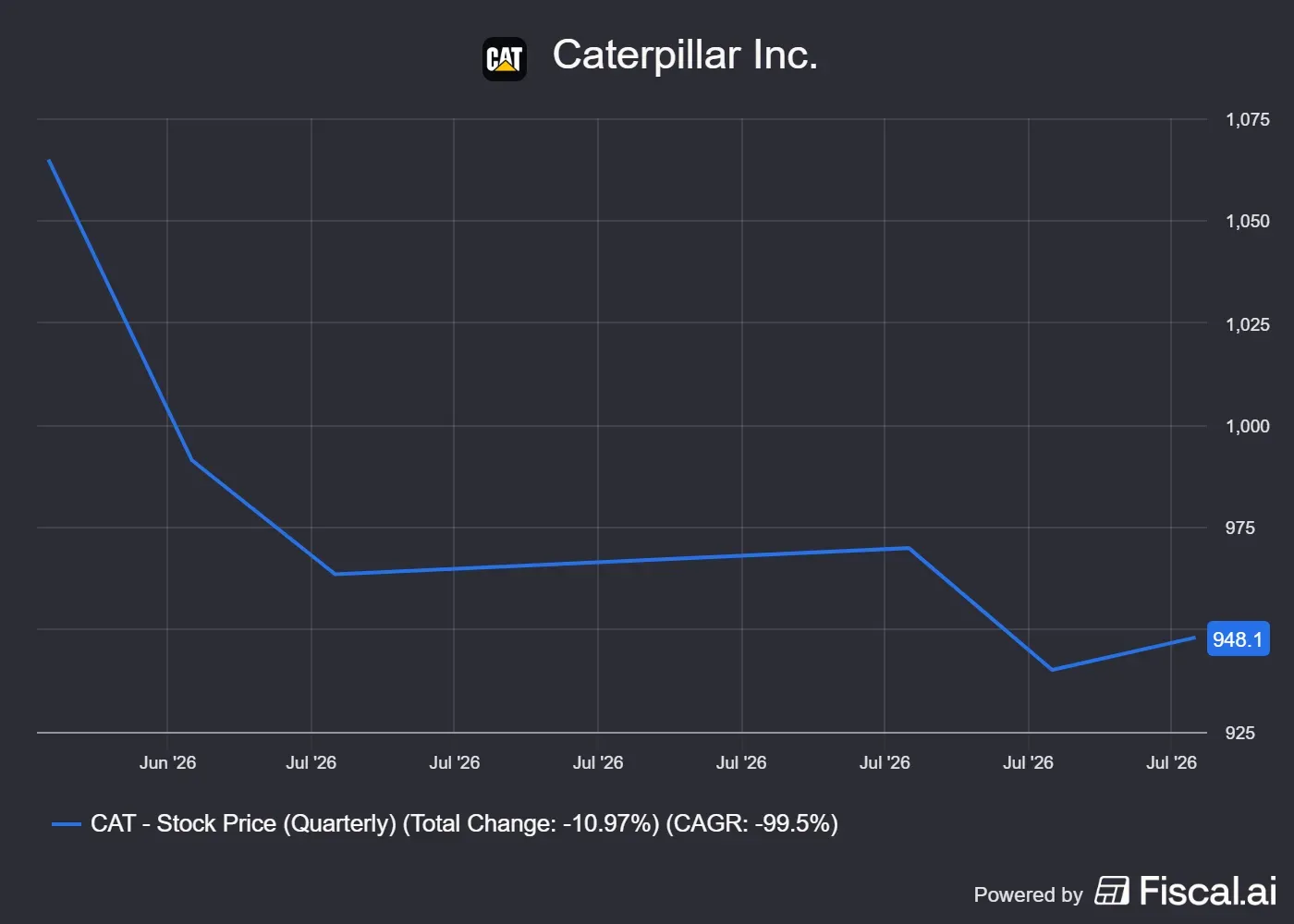
- After peaking near $1,064, Caterpillar shares have fallen more than 11% over the past seven trading sessions.
- Concerns have also grown over an expected $2.4 billion tariff hit, insider sales of about $87 million, and investor Michael Burry’s new short position.
Caterpillar Inc. (CAT) stock is on track for a second straight weekly loss as investors reassess whether the industrial giant’s AI-driven rally can withstand mounting concerns over valuation, tariffs and execution, with the recent pullback suggesting enthusiasm is cooling after shares soared this year on booming demand for data center power equipment.
Caterpillar: An Accidental AI Star
Founded over a century ago, Caterpillar built its business by making construction, mining, and heavy equipment that helped develop roads, buildings, and other infrastructure. For years, its performance largely depended on economic growth, commodity prices, and infrastructure spending, making it a traditional industrial stock rather than a fast-growing technology company.
The rise of artificial intelligence changed that story. As AI data centers expanded rapidly, demand for reliable electricity surged. With power grids struggling to keep up, many operators turned to on-site power generation, boosting demand for Caterpillar’s engines and turbines used for backup and primary power.
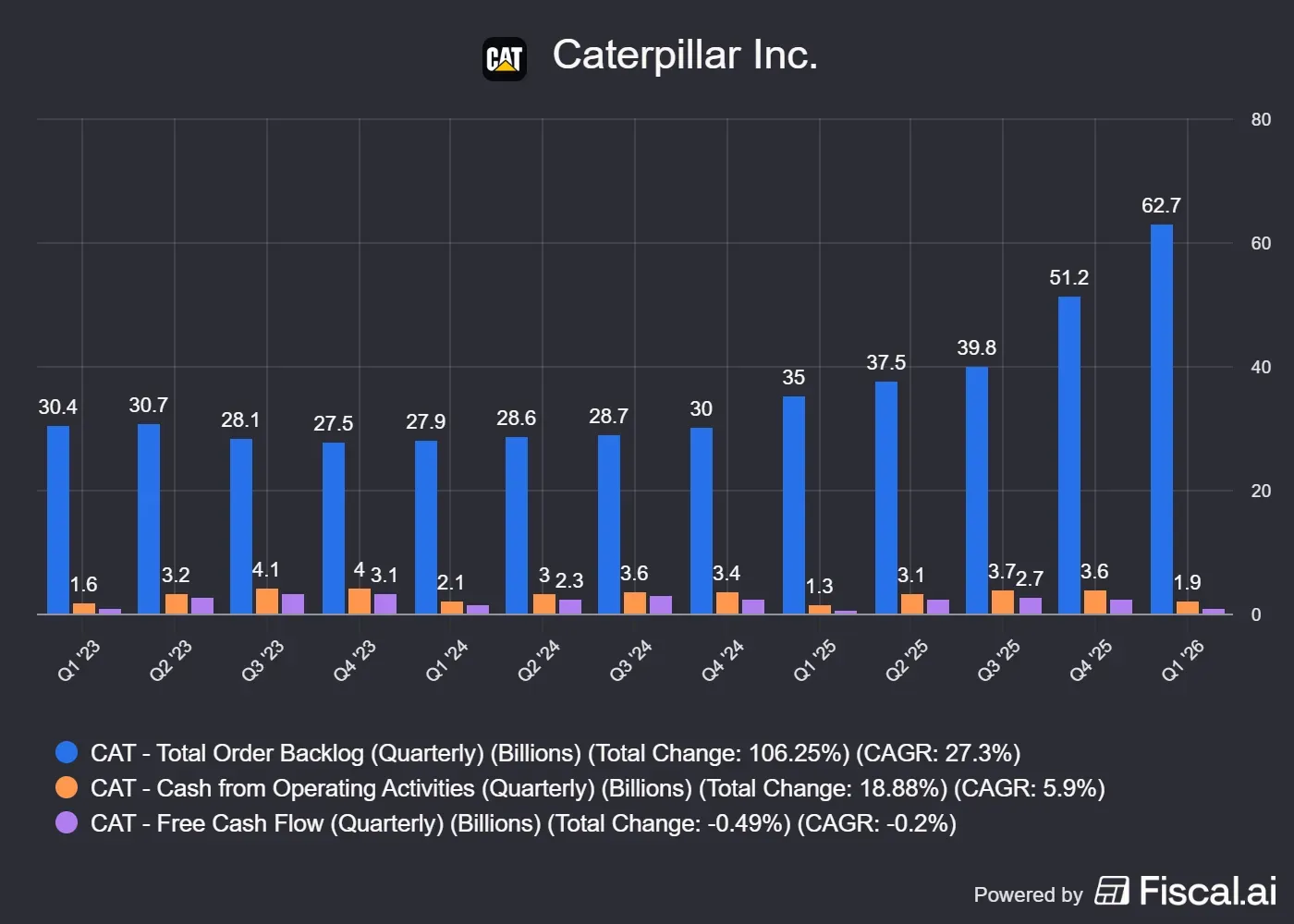
The company reported fiscal first-quarter (Q1) 2026 revenue of $17.4 billion, up 22% year-on-year, while its order backlog reached a record $63 billion. CEO Joe Creed said demand from data centers and other critical infrastructure projects continued to support growth, and the company expects its power generation business to triple by 2030.
The strong outlook and AI boom have attracted investors, sending the stock up more than 64% so far this year, outperforming the broader market and even big tech companies that have poured billions into expanding their AI infrastructure.
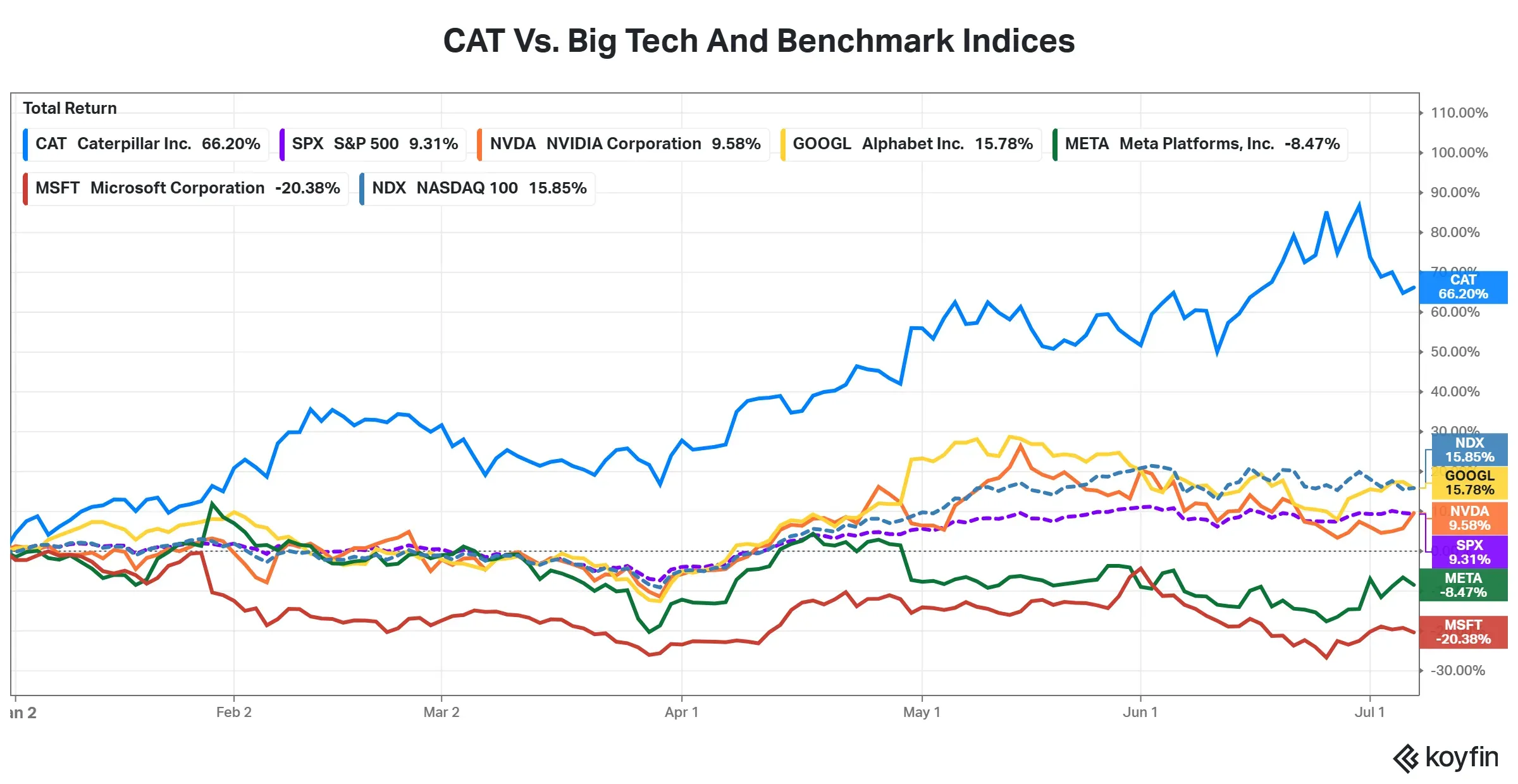
Caterpillar’s stock traded over 1% higher in Thursday’s premarket.
CAT Rally Loses Sheen
Over the past seven trading sessions, Caterpillar’s strong rally has lost momentum, with the stock falling more than 11% and slipping back to around $920 after peaking near $1,064. While demand from AI-related projects remains strong, investors are increasingly focused on execution risks, margin pressure and cash flow generation.
While the AI boom pushed Caterpillar’s valuation higher, the company still faces the realities of running a large industrial business. It expects tariffs and higher raw material costs to add about $2.4 billion in expenses in 2026, while turning its record $63 billion backlog into revenue and cash flow remains a complex task.
Investor caution has also grown after company insiders sold about $87 million worth of stock over the past three months. Adding to the pressure, famed investor and hedge fund manager Michael Burry recently disclosed a short position in Caterpillar, signaling his belief that the stock’s AI-driven rally may have gone too far.
Caterpillar “has always done great for me on the long side in the past,” Burry wrote in a Substack post announcing a short position at $1060.98.
Burry said his short position reflects a broader bearish view on AI infrastructure stocks, comparing the enthusiasm to the final stages of the dot-com bubble in 1999 and 2000.
Challenges Begin To Surface For Caterpillar
Caterpillar’s biggest challenge now is delivering on its record $63 billion order backlog. Manufacturing large engines and power systems takes time, skilled workers, and a huge investment, while expanding production capacity also requires additional cash.
The company generated $1.9 billion in operating cash flow during Q1, helping fund share buybacks and dividends, but maintaining that performance could become more difficult as costs rise.
Investors are also watching how quickly Caterpillar can convert its backlog into revenue and profits. Any delays in data center construction, regulatory approvals for power projects, or weaker demand from its traditional construction and mining businesses could slow that process.
Strong demand for data center power equipment pushed Caterpillar’s valuation far above its historical average, with investors pricing the company more like a fast-growing technology firm than a traditional industrial business. The company now trades at a forward price-to-earnings (P/E) multiple of 37.
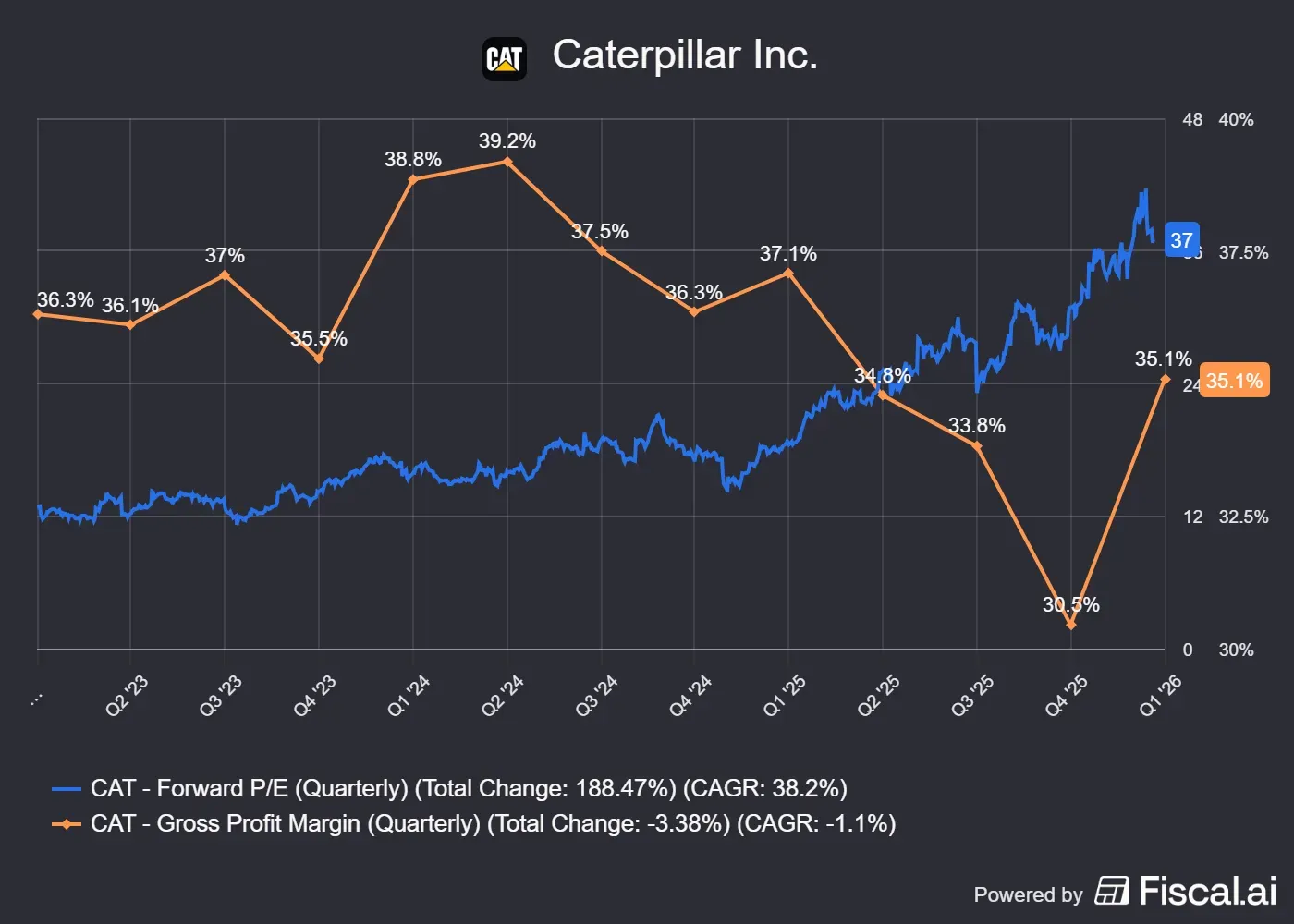
This leaves little room for disappointing results, making the stock more vulnerable to a sharp pullback. The coming quarters will be key as investors watch backlog execution, tariff costs and the performance of the company’s power segment to see whether the AI-driven gains can be sustained.
What CAT Retail Traders Are Saying
On Stocktwits, retail sentiment around the stock remained in ‘neutral’ territory. The stock saw a 55% slump in message volume over the past week, with a 0.2% gain in watchers.
A user said, “So they don’t make semiconductor chips or anything close and they get a few more genset sales to help power data centers and that justifies this kind of p/e? It doesn’t take a genius to figure out that this is overvalued. It’s just common sense which isn’t common anymore.”
Another user sounded optimistic, saying, buy this golden dip before close…most of the AI stocks are reversing..,it might rally back to 1000 easily…near term 1100…imo.”
CAT stock has gained over 135% in the last 12 months.
For updates and corrections, email newsroom[at]stocktwits[dot]com.<