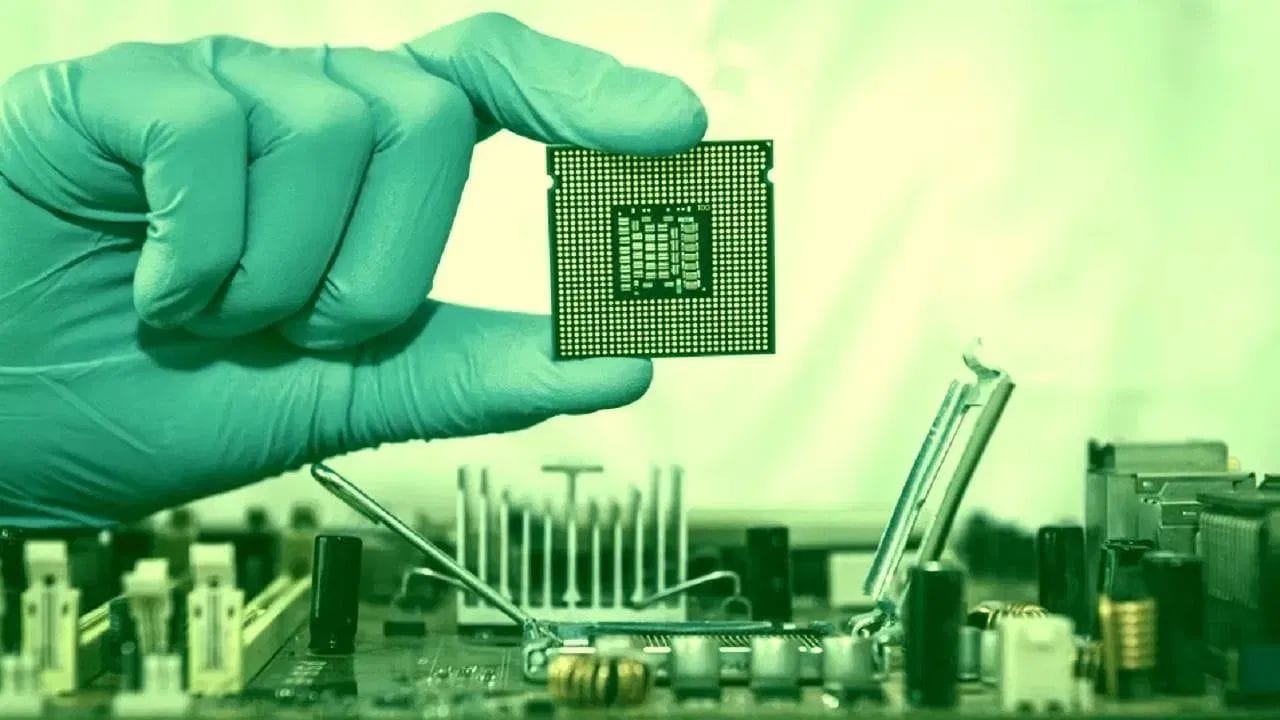
Semiconductor
When Finance Minister Nirmala Sitharaman is going to present the Union Budget 2026, India’s semiconductor dream is standing at a crucial juncture. The government announced many policies, some projects also got approval, but now the real test is whether India will be able to implement these plans on the ground quickly and consistently or not.
IT Minister Ashwini Vaishnav says that India’s aim is to join the top-4 semiconductor manufacturing countries of the world by 2032. He told that from 2026, four companies will start commercial production, which include companies like Micron, Tata, Keynes and CG Semi.
Thousands of crores of rupees are being invested in these projects. More than Rs 22,500 crore is being spent on Micron’s unit in Gujarat, while Tata and Taiwanese company PSMC together are going to set up a big plant worth about Rs 91,000 crore in Dholera. Apart from this, many plants are also proposed in Assam, UP, Odisha and Punjab.
Role of budget is important
Industry experts say that the upcoming budget will decide whether the India Semiconductor Mission (ISM) will remain just a subsidy scheme or become a strong, long-term industrial strategy. According to Sujay Shetty of PwC India, India’s domestic chip demand could be around 10% of the world’s total demand in the next five years. This means that the country itself has a big opportunity to increase manufacturing. But for this the government will have to continue the incentive scheme, otherwise companies may turn to other countries.
Why is subsidy and support necessary?
Setting up a semiconductor factory is a very expensive task. Experts believe that instead of concessions like electricity and water, it is more important that the government provide direct capital subsidy, so that the companies get initial relief. Besides, there is a need to provide more support to design related startups because India has very strong design talent.
Lack of infrastructure and skills
Another big problem is that in many states the infrastructure needed for semiconductors like land, water, electricity and logistics is still weak. Experts say that the central government should form clusters with the states, where the entire supply chain can be developed. Apart from this, it is also very important to prepare engineers, technicians and skilled workforce. For this, there is a need for a strong partnership between industry and university. Overall, Budget 2026 could prove to be a litmus test for India’s semiconductor mission. The world will be watching whether India will just make announcements or will actually take concrete steps towards becoming a strong global chip hub.