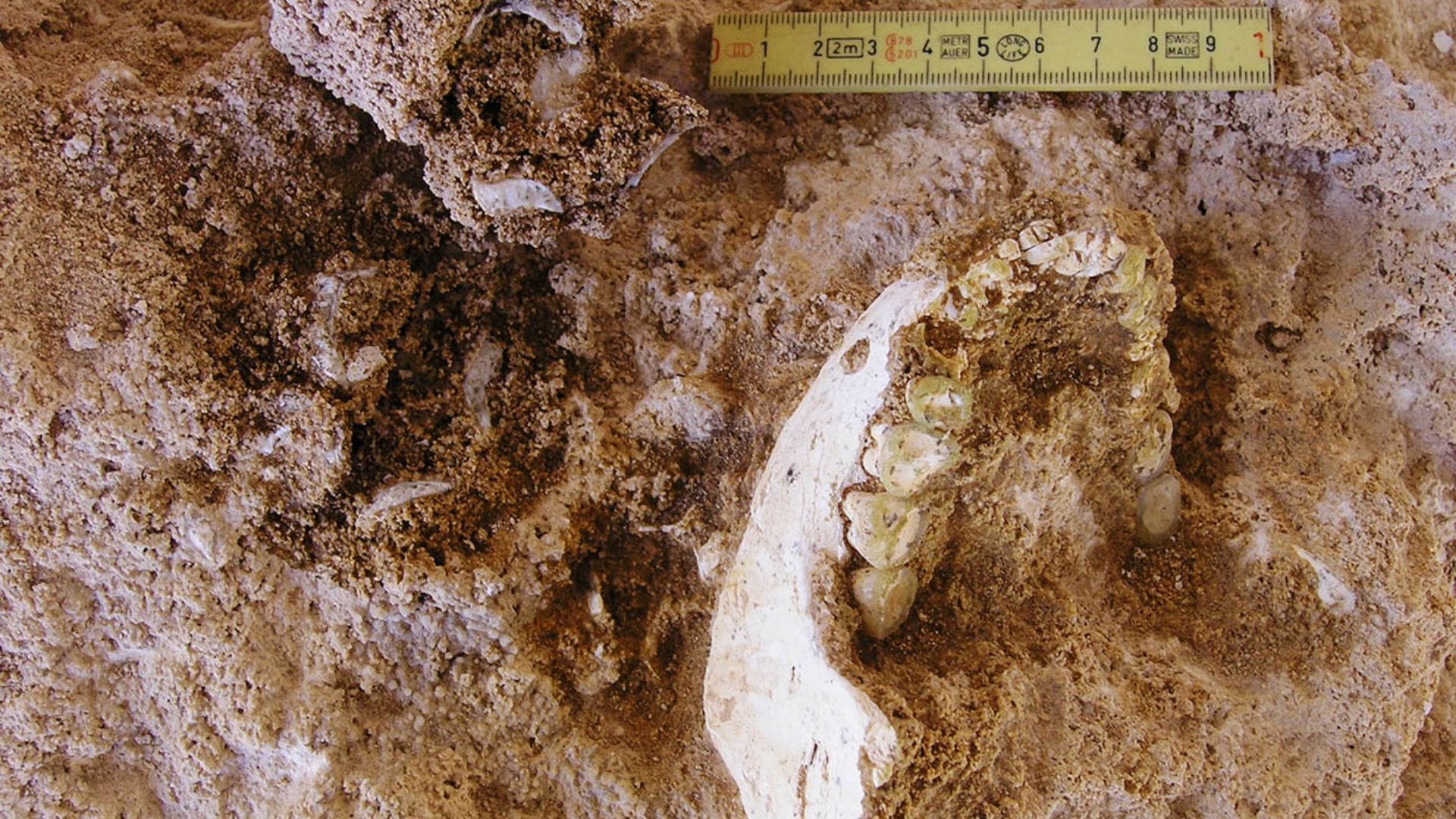
New Delhi: Remains of an early hominin along with tools have been unearthed in a quarry in Casablanca, Morocco. The jawbones, teeth and vertebrae are 773,000 years old, and provide insights into where are distant ancestors lived, what they looked like, and what tools they used at a critical juncture in human evolution where Homo sapiens split from the ancient lineage we share with Neanderthals and Denisovans. Fossil from the period are rare, with any evidence helping anchor the evolution of humans.
The timelines based on paleogenetic research, which estimate the duration of time necessary for differences in DNA to build up over time indicate that our species and Neanderthals shared ancestors between 765,000 and 550,000 years ago. An ancestral population gave rise to modern Homo sapiens in Africa by around 315,000 years ago. These remains were unearthed in 1960 at Jebel Irhoud, another site in Morocco. In Eurasia, the human lineage split again, leading to Neanderthals and Denisovans. The identity of the last common ancestor of Homo sapiens, Neanderthals and Denisovans has long eluded scientists. Rather than imagining one progenitor species, a growing number of researchers believe that the populations in different regions mated intermittently, and contributed to the ancestry of these three big-brained humans.
Remains from the time of the split are scarce
Fossils from the critical period around 800,000 years ago, when the lineages leading to modern humans, Neanderthals and Denisovans diverged are rare, especially in Africa, the cradle of Homo sapiens. The Grotte a Hominides near Casablanca has yielded jawbones, teeth, vertebrae and a bitten femur, that has been dated to around 773,000 years ago using paleomagnetism. These remains show a mosaic of traits, some archaic and similar to Homo erectus such as tapered molars, and others more modern, such as small wisdom tooth roots. Researchers propose they represent a population close to the last common ancestor of Homo sapiens, Neanderthals and Denisovans, while relegating the Homo antecessor remains discovered in Spain to a side branch. The discovery of mixed features may also reflect normal variation among big-brained hominis. There are expected to be more remains in Casablanca that may clarify the picture.