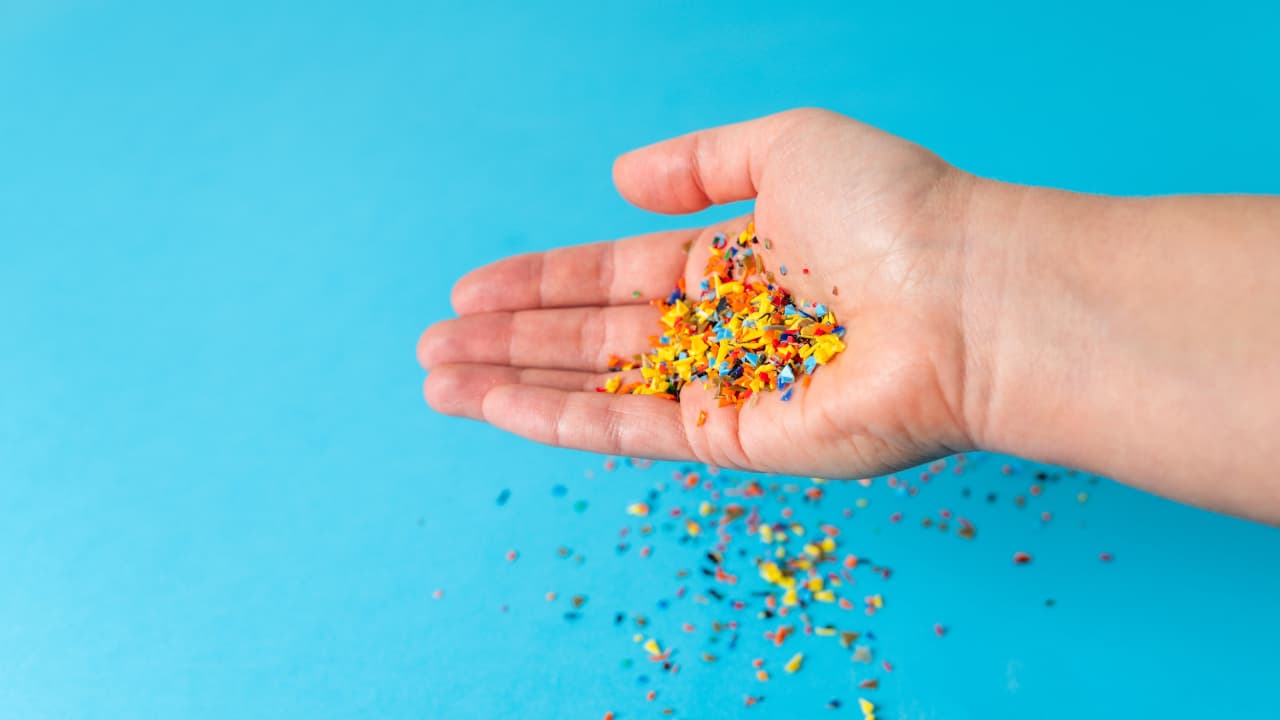
A new study by the University of Vienna shows airborne microplastic emissions are much lower than previously thought, with land sources contributing most. Despite lower numbers, health and environmental risks remain significant.
A recent study presents a somewhat more encouraging perspective on the increasing issue of microplastic pollution. Even though plastic contamination continues to be a major global problem, researchers now suggest that the amount of microplastic particles entering the air may be significantly less than previously thought.
The research, conducted by scientists at the University of Vienna, shows that global microplastic emissions might be between 100 and 10,000 times lower than earlier estimates. Earlier predictions were mainly based on computer models of human activities or measurements taken from a single small area of the world. This limited approach made it hard to determine the actual extent of the problem. The research was published in the journal Nature.
Studying Real World Data
To gain a better understanding, the research team analyzed nearly 2,800 measurements of microplastics from 283 different locations across the globe, collected over a ten-year period, from 2014 to 2024. These real-world data were then compared with existing models to create a more accurate estimate of the annual number of microplastic particles released into the atmosphere.
On land, microplastics mainly come from daily activities such as driving, where tyres and brake pads wear down, releasing tiny plastic fragments into the air. Larger plastic items breaking up in soil, streets, and waterways also add to the problem. In the oceans, microplastics are released into the air when waves break and bubbles burst at the sea surface, sending plastic-contaminated sea spray into the atmosphere.
Ocean Contribution
Although scientists once believed the oceans were the main source of airborne microplastics, this new study suggests that land-based sources emit about twenty times more particles. However, the numbers are still very large. Researchers estimate that around 610 quadrillion microplastic particles enter the air from land each year, with an additional 26 quadrillion coming from the oceans.
Plastic Everywhere
Microplastics have now been found almost everywhere on Earth. Studies have found them at every depth of the ocean, including at the bottom of the Mariana Trench, the deepest known point on the planet. Despite this, scientists still do not fully understand how these particles move through the atmosphere or how long they stay suspended in the air.
Measurements of airborne microplastics can vary greatly from one place to another. In some coastal areas of China, levels range from nearly zero to very high concentrations. Similar differences are seen in how quickly microplastics return to the ground, with some urban areas showing much higher daily deposits than nearby suburbs or rural areas. These significant local differences have made it very challenging to estimate global emissions accurately.
New Estimates
By using a much larger and more diverse set of data, the Vienna team calculated average concentrations of 0.08 microplastic particles per cubic metre of air over land, and just 0.003 particles over the sea. When these figures were applied to global models, the resulting estimates were much lower than earlier predictions.
Health Concerns
However, the researchers say that this does not mean microplastics are harmless or that the issue is no longer a concern. Many measurements still lack detailed information about the size, shape, and chemical composition of the particles. These factors are important, as health risks depend not only on the number of particles but also on their size, what they are made of, what toxic substances they carry, and how long people or animals are exposed to them.
There are also still large uncertainties in the new estimates, especially at a regional level, where pollution levels can vary greatly from one town to another. Scientists also warn that plastic use is expected to increase in the future, which could lead to higher microplastic emissions unless action is taken.