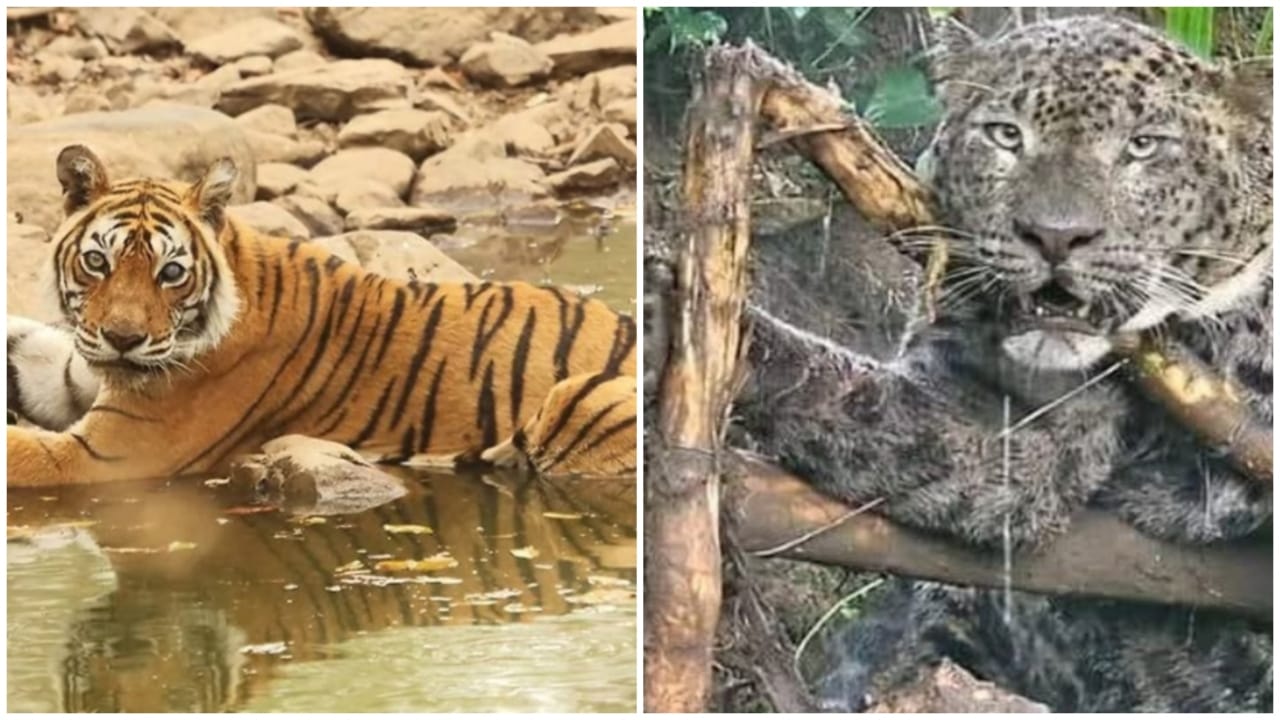
Ramnagar: The nature of human-wildlife conflict in Uttarakhand has shifted dramatically in recent years. Traditionally, attacks on humans were linked to old or injured tigers and leopards. But now, young tigers aged 3 to 7 years are increasingly involved in such incidents.
Data from the Corbett Tiger Reserve shows that since 1998, 45 people have lost their lives in tiger-related incidents in the reserve and surrounding areas. Alarmingly, most recent cases involve young tigers. In January 2026 alone, three people were killed by tigers aged between 2 and 6 years.
This trend reflects growing pressure on forests
Wildlife experts say this trend reflects growing pressure on forests. Dr. Dushyant Sharma, Senior Medical Officer at Corbett, revealed that in the past five years, 68 tigers, 40 leopards, 10 elephants, and 5 bears were rescued from conflict situations. Many of these were young animals forced out of their territories.
Why young tigers are attacking
Senior wildlife expert explains that tigers are highly territorial. Stronger adults defend their areas, pushing younger tigers out. In search of food and new territory, these young tigers move closer to human settlements. When prey like deer and wild boar wander near villages, predators follow, leading to conflict.
Apart from this, sudden encounters often trigger attacks. Once a tiger kills a human, it may repeat such incidents, considering humans as prey. He stresses that the carrying capacity of forests is limited, and overcrowding forces young tigers to migrate. Relocating them to areas with fewer tigers and improving habitats could reduce risks.
Habitat loss and invasive species
Experts also highlight habitat degradation. Forests near villages are often planted with single-species trees like eucalyptus and teak, which provide little food for wildlife. Invasive plants such as lantana have spread across the Terai, destroying grasslands. Without natural forage, herbivores move toward populated areas, followed by predators. Experts suggest restoring grasslands, planting fruit and flowering trees, and creating water sources like ponds. Rainwater harvesting could also help forests sustain wildlife, reducing their need to move outside.
Behavioural changes in wildlife
Wildlife enthusiast Raman Sethi notes that young tigers are adapting quickly to human-dominated landscapes. Increased traffic, bright lights, and noise disturb forests, forcing animals to cross roads and enter villages. Herbivores like deer are often seen near highways, attracting predators and sparking conflict.
He also recommends restricting vehicular traffic around Corbett Tiger Reserve after sunset to allow safe movement of animals. He warns that without limits on development, human-wildlife encounters will continue to rise.
Young tigers face immense pressure to establish territories
Dr. Saket Badola, Chief Conservator of Forests, Kumaon, says young tigers face immense pressure to establish territories. This makes them more aggressive and dangerous to humans. He emphasizes that better planning, habitat improvement, and stricter control of human activities are essential to reduce conflict.