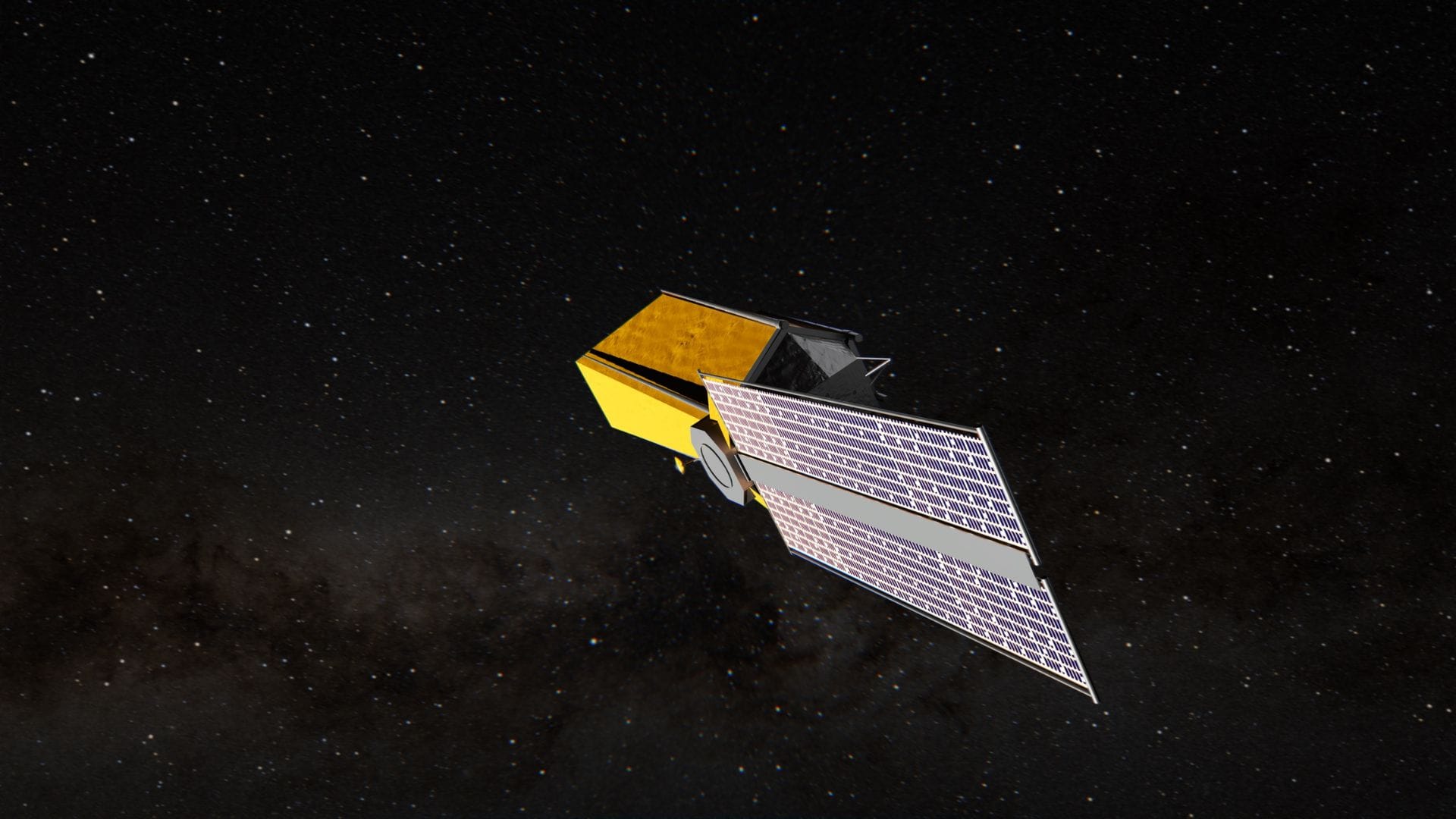
New Delhi: NASA has selected seven proposals to advance technologies for the Habitable Worlds Observatory, a planned flagship mission dedicated to studying the chemical composition of the atmospheres of exoplanets, and look for signs of life. The telescope will also support the exploration of Mars and other objects within the Solar System. The three-year, fixed-price contracts have been awarded to Astroscale, BAE Systems, Busek, L3Harris, Lockheed Martin, Northrop Grumman and Zecoat. The proposals buld on previous industry involvement that was initiated in 2017 under NASA’s System-Level Segmented Telescope Design, and continued with awards for large space telescope technologies in 2024.
The newly selected proposals will help inform NASA’s approach to planning the Habitable Worlds Observatory. NASA Administrator Jared Isaacman said, “The Habitable Worlds Observatory is exactly the kind of bold, forward-leaning science that only NASA can undertake. Humanity is waiting for the breakthroughs this mission is capable of achieving and the questions it could help us answer about life in the universe. We intend to move with urgency, and expedite timelines to the greatest extent possible to bring these discoveries to the world.” NASA aims to launch the mission around 2027. The Habitable Worlds Observatory will be the first telescope designed specifically for searching for life on other planets.
Design of the Habitable Worlds Observatory
The Habitable Worlds Observatory would require a stable optical system that moves no more than the width of an atom while conducting observations. The mission will also require a coronagraph, an instrument that blocks the light of a star to reveal the planets in orbit. This coronagraph would have to be thousands of times more capable than any coronagraph ever build for space. The Habitable Worlds Observatory will also be designed to allow for servicing in space to extend its lifetime and bolster its science. The design is based on two earlier concepts called the Large Ultraviolet Optical Infrared Surveyor (LUVOIR) and Habitable Exoplanets Observatory (HabEx).