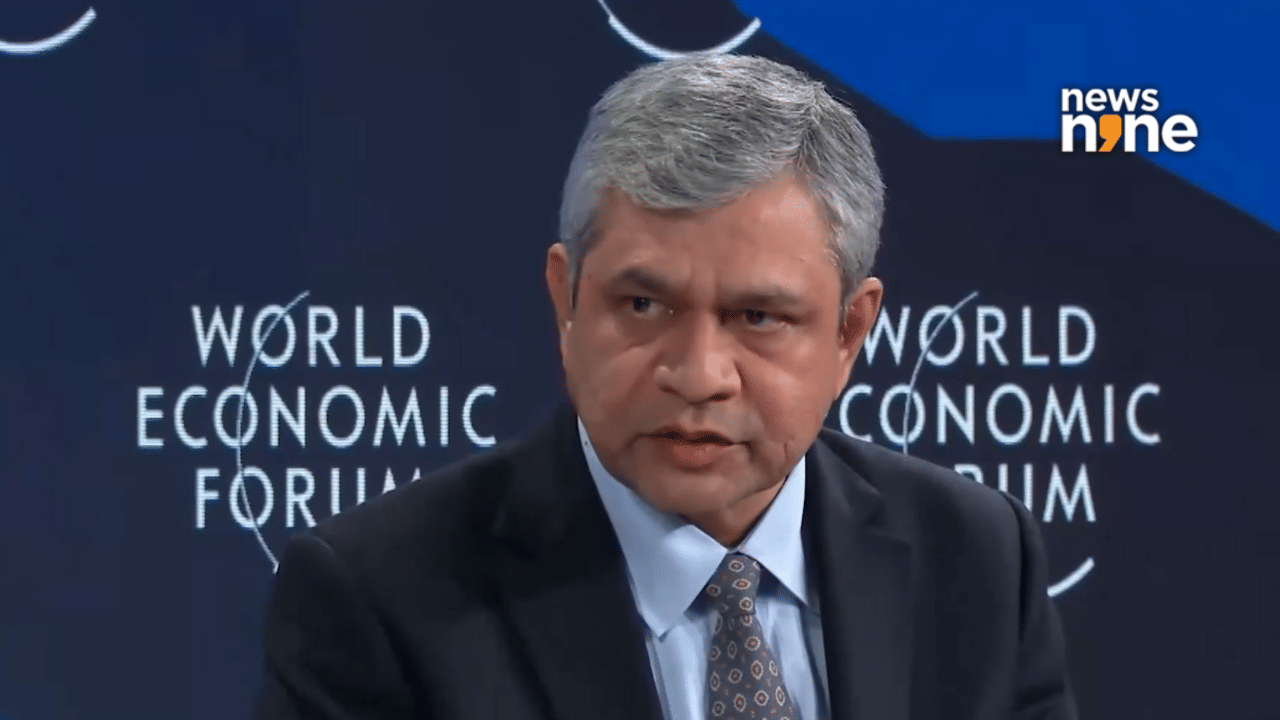
New Delhi: India’s technology ambitions were firmly in focus at Davos this week as Union Minister for Electronics and Information Technology Ashwini Vaishnaw held a series of meetings with global tech leaders. From semiconductors to artificial intelligence and online safety, the conversations reflected how India is pitching itself as a serious long term partner in the global tech supply chain.
The meetings took place on the sidelines of the World Economic Forum in Davos, where government leaders and CEOs have gathered for discussions under the theme “A Spirit of Dialogue”. Vaishnaw shared updates through posts on X, giving a snapshot of how India wants to be seen on the world stage.
▪️Bharat is building a complete semiconductor ecosystem covering design, fabrication, packaging, materials, gases and equipment.
▪️Global industry sees Bharat as an increasingly reliable supply‑chain partner.
▪️Google is strengthening its commitment to India’s AI ecosystem,… pic.twitter.com/IL3ZC5Bjl4
— Ashwini Vaishnaw (@AshwiniVaishnaw) January 20, 2026
Meetings with IBM and Meta at Davos
During the WEF sessions, Ashwini Vaishnaw met Arvind Krishna and Joel Kaplan to discuss India’s growing role in technology and innovation.
Sharing the meeting, Vaishnaw wrote, “The world looks at Bharat as a key driver of global innovation. Met Mr. Arvind Krishna, CEO, IBM and Mr. Joel Kaplan, Chief Global Affairs Officer, Meta.” The post was shared by ANI.
Discussions with Meta focused on online safety, especially concerns around deepfakes and AI generated content. Meta briefed the minister on steps being taken to protect users as such content becomes more common on social platforms.
Chip technology and talent in focus
Talks with IBM covered advanced chip technology, including work around 7 nanometre and 2 nanometre chips. The collaboration is also expected to support the growth of semiconductor talent in India, an area the government has repeatedly flagged as critical.
Earlier in Davos, Vaishnaw said India is building a full semiconductor ecosystem. “Bharat is building a complete semiconductor ecosystem covering design, fabrication, packaging, materials, gases and equipment,” he said in another post.
He added that “Global industry sees Bharat as an increasingly reliable supply chain partner,” a line that reflects how India is positioning itself amid global shifts in chip manufacturing.
Jobs, factories and future plans
Vaishnaw also highlighted the scale of electronics manufacturing back home. He said the sector now supports 25 lakh jobs, with some factories employing over 5,000 people at a single site. A few plants already employ up to 40,000 workers at one location.
He noted that four semiconductor plants are expected to start commercial production in 2026. The government is pushing this through the Semicon India Programme and the India Semiconductor Mission.
The minister also pointed to Google’s commitment to India’s AI ecosystem, including a USD 15 billion investment for an AI data centre in Visakhapatnam and partnerships with Indian startups.
As Davos continues till January 23, 2026, India’s message is consistent. It wants to be seen as a builder, a supplier, and a stable partner in global technology.