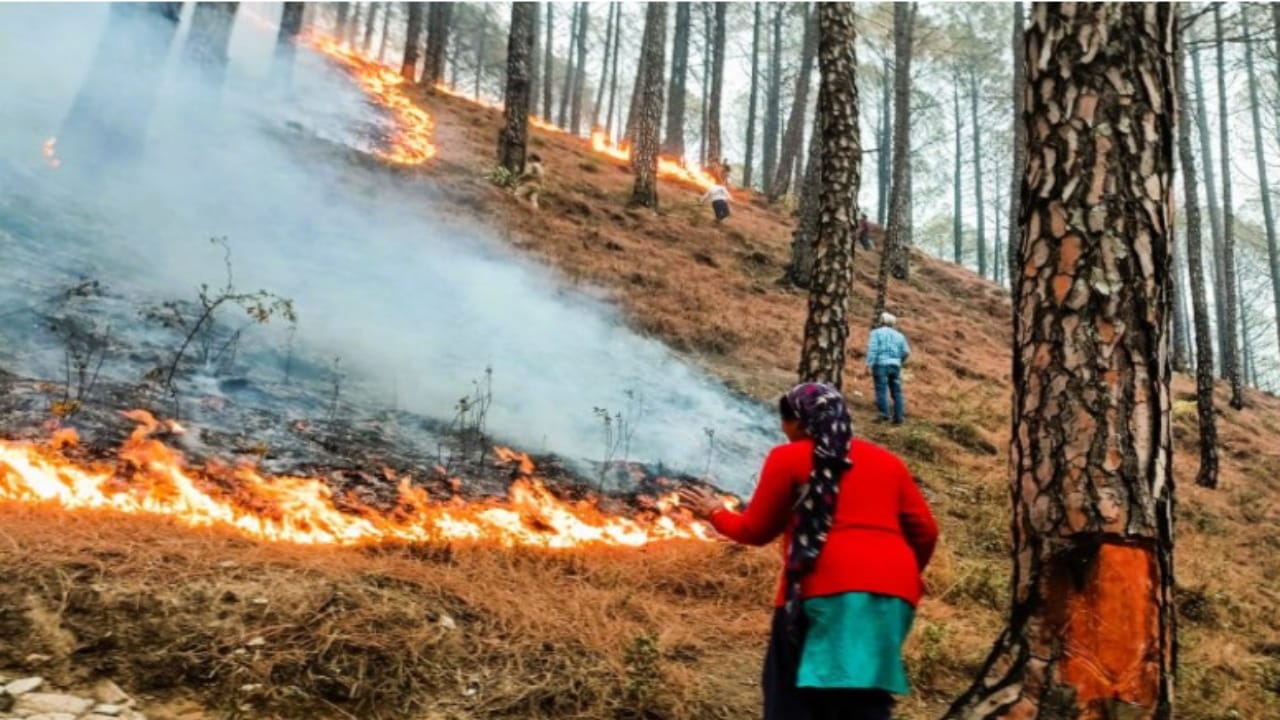
Dehradun: Forest fires are no longer just a problem of burning trees. Across the world, they are now seen as a major environmental crisis affecting human health, climate change, and ecological balance. The devastating fires in the United States, Australia, and Canada have shown that the damage goes far beyond forests. They impact air, water, soil, and human life for years.
Uttarakhand is facing a similar challenge. Every year, between March and June, the state experiences a forest fire season that reduces vast areas to ashes. But this year, the worrying news is that fires have started much earlier—during winter itself. Reports of fires in January have shocked experts and residents alike.
Why fires in winter?
Professor S.P. Sati, a geologist at Veer Chandra Singh Garhwali Uttarakhand University, explained that the main reason is the lack of rainfall and snowfall this season. Mountain peaks that are usually covered with snow are bare. In Garhwal and other regions, snowfall has been minimal, leaving behind dry leaves, grass, and bushes. This biomass has become highly flammable, turning forests into tinderboxes.
Normally, forest fires in Uttarakhand occur in summer when temperatures rise. But this year, the prolonged dry spell and unusually high temperatures have triggered fires in winter. This situation is alarming because it means the fire season may last longer and cause more damage.
Pollution and health risks
The fires are not only destroying forests but also worsening pollution. Smoke and fine particles from burning biomass are spreading across the state. Cities like Dehradun, Rishikesh, and Haldwani have recorded very poor Air Quality Index (AQI) levels, often crossing 300, which is considered dangerous.
Poor air quality affects vulnerable groups the most—children, the elderly, and people with respiratory or heart conditions. Doctors warn that prolonged exposure to smoke and toxic gases from forest fires increases risks of asthma, bronchitis, and other lung diseases.
Forest fires contribute 15 to 20 percent of environmental pollution in the state
A study by the Uttarakhand Environment Protection Board (PCB) revealed that forest fires contribute 15 to 20 percent of environmental pollution in the state. This is a serious figure, showing that fires are now a major source of pollution alongside construction, vehicle emissions, and industrial activity.
PCB Member Secretary Parag Madhukar Dhakate said the board is closely monitoring forest fires and issuing guidelines to departments. He explained that fires release toxic gases like carbon dioxide, methane, carbon monoxide, and PM 2.5 particles. These not only harm health but also accelerate global warming.
Sensitive forest zones
According to the India State of Forest Report, more than 36 percent of Uttarakhand’s forest area is sensitive to frequent fires. About 7.85 percent is classified as highly sensitive. This means a large part of the state remains under threat every year. If fires start before the usual season, the danger becomes even greater.
Impact on biodiversity and glaciers
Professor S.P. Sati highlighted that forest fires damage biodiversity at multiple levels. Lush green forests are destroyed, affecting wildlife habitats and plant species. Toxic gases and black carbon particles released into the atmosphere worsen pollution. These particles also travel long distances and settle on glaciers, absorbing sunlight and speeding up melting. Faster glacier melt can lead to water scarcity and natural disasters in the future. Black carbon is particularly harmful. It heats the atmosphere, accelerates global warming, and disrupts the delicate balance of the Himalayan ecosystem.
Forest fires are a direct attack on air, water, health, and climate
Experts and officials agree that forest fires in Uttarakhand are no longer just a forest issue. They are a direct attack on air, water, health, and climate. If concrete steps are not taken quickly, pollution and environmental imbalance will worsen in the coming years.
Preventing forest fires requires joint efforts from government departments and local communities. Awareness campaigns, early warning systems, and strict monitoring are essential. Installing sensors, increasing patrols, and involving villagers in prevention can help reduce risks.
The Himalayan challenge is clear: winter forest fires are a new and worrying trend. They threaten biodiversity, increase pollution, and pose health risks. Protecting Uttarakhand’s forests is not just about saving trees—it is about safeguarding the environment, human health, and the future of the Himalayas.