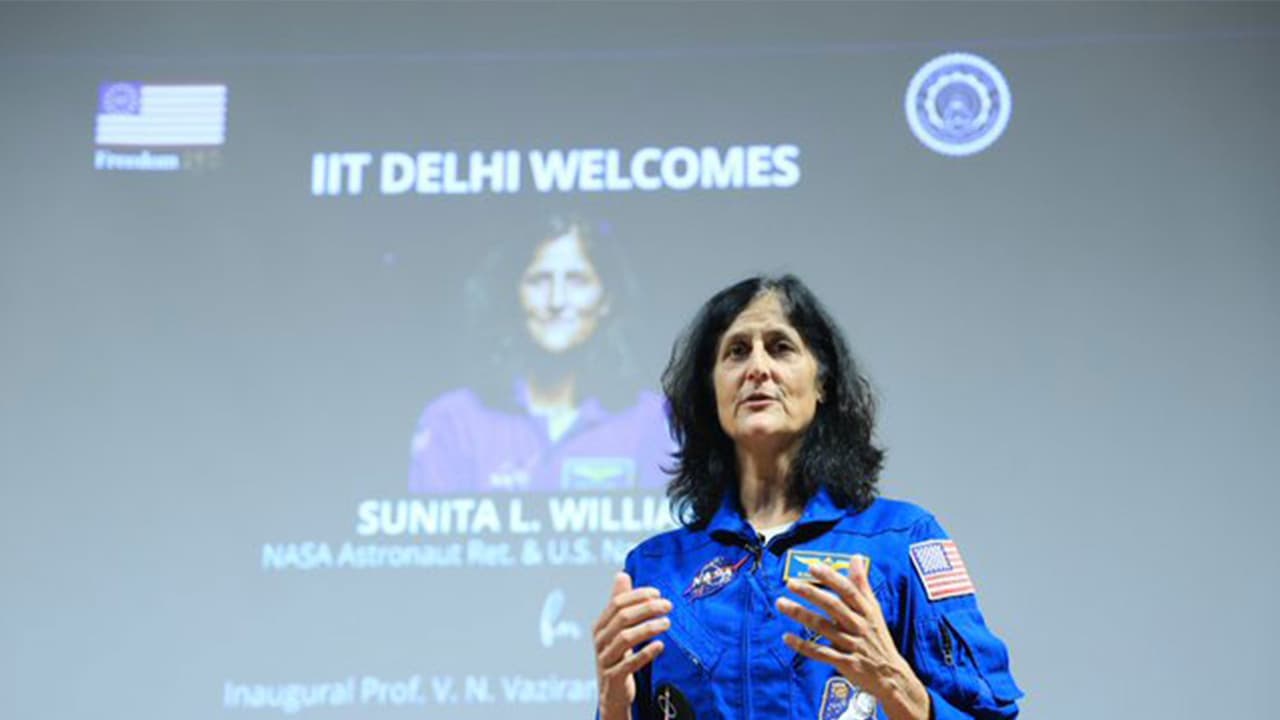
NASA astronaut Sunita Williams asserts that space commercialisation is creating unprecedented opportunities for innovation. While in New Delhi, she also highlighted the growing challenge of space debris and the need for cleaner rocket propulsion.
NASA astronaut Sunita Williams on Tuesday asserted that the horizon of space exploration is rapidly expanding beyond traditional boundaries, stating that the commercialisation of space is creating unprecedented opportunities for innovation, ranging from pharmaceuticals to new propulsion systems. Williams, who is currently in New Delhi to express her gratitude to those who prayed for her safe return during her recent mission, noted that the era of space being limited to government agencies is evolving into a diverse ecosystem.
The Rise of Commercial Space Ventures
“Commercialisation of space is great. It means there are opportunities for people to work in so many different companies–not only rockets and spacecraft, but parts of space, experiments, satellites, and 3D printing of metals,” Williams said.
She emphasised that the International Space Station (ISS) has laid the groundwork for these commercial ventures. “I’m excited for the space station having laid that foundation. As commercial companies turn some of that into production, potentially for pharmaceuticals and new tech demonstrations for spacecraft and spacesuits… all of that is on the horizon because of this commercialisation,” she added.
Addressing the Challenge of Space Debris
Addressing the growing concern of orbital clutter, Williams pointed out that space debris has become a significant challenge over the last decade. “We have a lot of space debris up in orbit. You can actually see Starlink satellites crossing our orbit now. This is a field that needs solutions, and it is a good business to be in for those looking to solve how we clean up space,” she said, adding that the ISS continues to serve as a critical “test bed” for technologies designed to manage satellites and docking systems.
A New ‘Space Race’ and Global Cooperation
When asked about the renewed global interest in the Moon, Williams acknowledged the existence of a modern “space race” but framed it through the lens of international co-operation and sustainability. “I think there is a space race going on. We want to get back to the moon sustainably and start the conversation about rules of engagement–how we actually work together with other countries. We want to do this in a productive, democratic way, much like Antarctica,” she explained.
The Push for Greener Propulsion
Reflecting on the environmental footprint of space travel, the veteran astronaut called for a shift towards greener alternatives. “There are a lot of chemicals burning as rocket engines go. We do need to think about potentially cleaner propulsion. That is another aspect of space exploration we need to look into as we get ready to leave low Earth orbit with big rockets,” Williams noted.
A Message of Gratitude
The astronaut, who has strong ties to India, shared a personal message of thanks during her visit to the capital. “I wanted to come to Delhi just to express my thanks to so many people who were praying for me and my crewmates to get back safely. It’s understated to say thank you, honestly. One of my biggest lessons is that people are good; we often forget that due to the distractions of life, religion, and politics, but we are all people and we care about each other,” she said.
Ensuring Astronaut Health in Orbit
Regarding recent reports of medical issues on the space station, Williams clarified that while hygiene and maintenance remain ongoing priorities with international partners, the focus remains on developing better technologies to ensure the long-term health of astronauts in orbit. (ANI)
(Except for the headline, this story has not been edited by Asianet Newsable English staff and is published from a syndicated feed.)