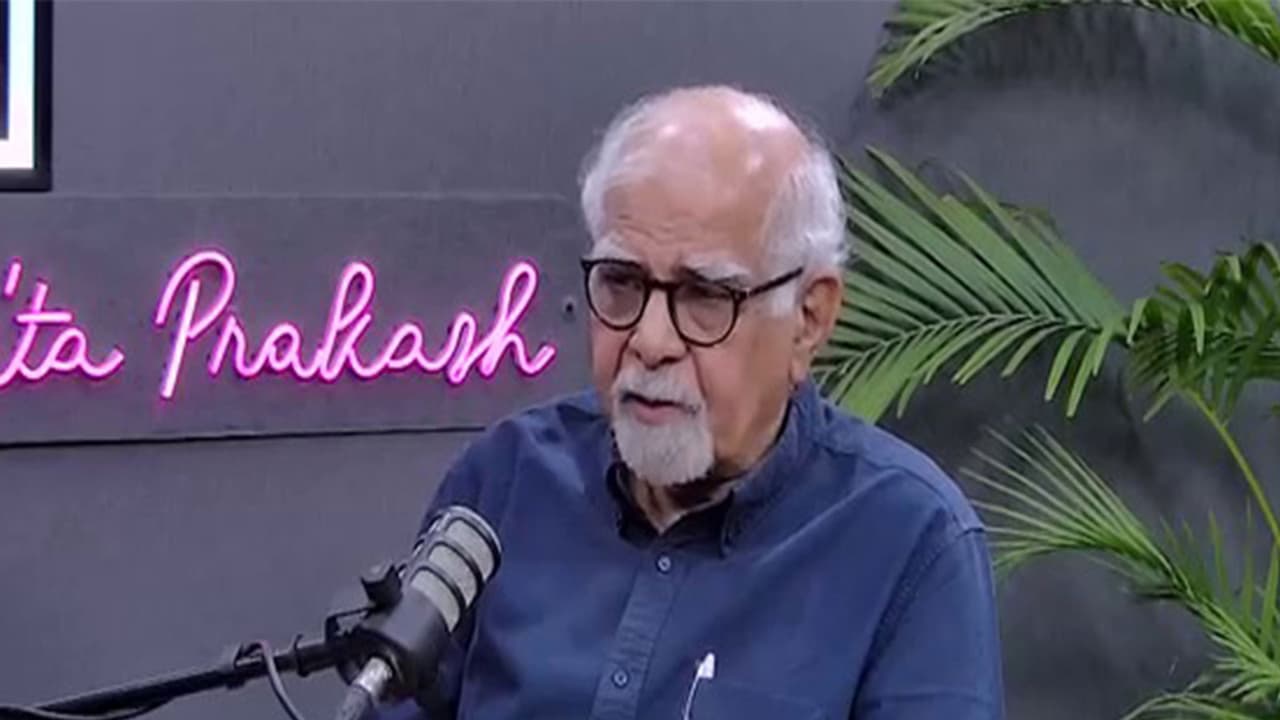
Economist Surjit Bhalla, ex-member of PM’s Economic Advisory Council, has called for repealing the 2013 Food Security Act. He argues it is outdated and inefficient, advocating for its replacement with targeted cash transfers to the poor.
Economist, author and columnist Surjit Bhalla, a former part-time member of Prime Minister Narendra Modi’s Economic Advisory Council, has called for repealing the 2013 Food Security Act, arguing that it has outlived its purpose and continues to perpetuate inefficient welfare policies.
In an interview with ANI, Bhalla said the legislation, enacted under the UPA government, continues to impose an unsustainable framework for food subsidies despite significant changes in India’s poverty profile. Referring to the law, Bhalla said, “The 2013 Food Security Act, which mandated… Just before the government went out, Sonia Gandhi made sure this law got passed. And the Food Security Act says that 75 per cent of rural Indians will be given benefits, food benefits, free food, and 50 per cent of urban.”
Replace Act with Targeted Cash Transfers
Bhalla argued that the law should now be scrapped and replaced with targeted cash transfers for the genuinely poor. “And this is the thing we don’t ever take. And now we can’t do that….there’ll be riots in the street, whatever. We’ll have an excuse. We’ll have an explanation as to why it is impossible for us to do X, Y and Z,” he said.
According to Bhalla, India has historically adopted inefficient agricultural and food subsidy policies instead of directly supporting vulnerable households. “So then we said we’ll buy the crop from the farmers and send it to ration shops. Why not just simple? Give them… money.”
‘Against Universal Freebies, Not Targeted Support’
Asked whether he opposed welfare measures, Bhalla clarified that he was against universal freebies rather than targeted support. Answering a query if he was in favour of ‘efficient’ freebies, the economist said, ” That’s cash transfers. Cash transfers. Yes. And there’s targeted cash transfers. Nobody in the world will ever oppose that. That’s affirmative action.” He added that benefits should be determined by income rather than being universally distributed. “It should be income-determined,” he said, arguing that blanket subsidies have become politically difficult to reform despite changing economic realities.
‘India has tried every bad policy in agriculture’
Bhalla maintained that India has tried every bad policy in the world in agriculture. “I will provide fertilizer at subsidized prices to farmers. I will ban exports whenever the prices go up. Every item that is wrong, we’ve done. Indeed, India is the example. Any country in the world, any wrong policy has been tried in India. That’s our biggest Viksit achievement. We have tried every bad policy in the world and continue with it,” he said.
Shift to Direct Benefit Transfers
The economist stressed that India now has the ability to identify poor households and therefore should shift completely towards direct benefit transfers instead of continuing with a decades-old food distribution framework. “You know who the poor are broadly. We are doing that,” Bhalla said, arguing that targeted cash support would be more efficient than maintaining a universal food entitlement system.
Bhalla argued that reforms delayed due to political considerations continue to weigh on India’s long-term growth prospects, saying changing circumstances require governments to revisit outdated policies rather than preserve them indefinitely. (ANI)
(Except for the headline, this story has not been edited by Asianetnews Editorial staff and is published from a syndicated feed.)