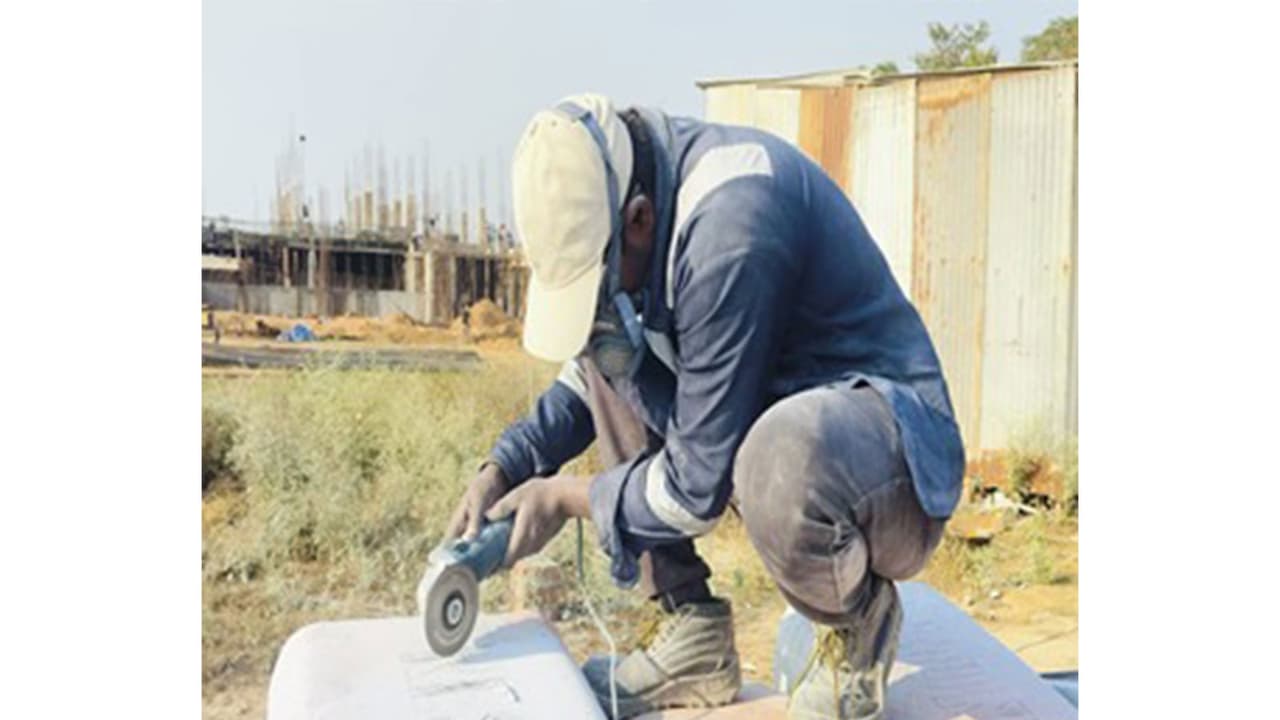
Gujarat’s Stone Artisan Park Training Institute (SAPTI) is empowering artisans by blending traditional stone craft with modern skills. With 674 graduates by Dec 2025, it boosts livelihoods and preserves the state’s rich architectural heritage.
Aligned with the vision of Prime Minister Narendra Modi’s vision of ‘Vikas Bhi, Virasat Bhi’ and under the leadership of Chief Minister Bhupendra Patel, Stone Artisan Park Training Institute (SAPTI) aims to optimise the potential of Gujarat’s stone industry and build on its rich heritage of stone art and architecture. As of December 2025, a total of 674 candidates have graduated from the institute.
SAPTI’s Mission and Vision
According to the Gujarat CMO, SAPTI was established by the Industries and Mining Department and the Office of the Commissioner of Geology and Mining, Government of Gujarat, Gandhinagar, and is transforming Gujarat’s stone-art heritage into high-value, employment-oriented skills. The institute aims to preserve and strengthen stone craft traditions through focused skill development, education, innovation, and industry-oriented training.
Dual Centres for Specialised Training
The State has set up two artisan parks – one in Ambaji (Banaskatha District) and the other in Dhrangadhra. SAPTI-Ambaji in North Gujarat focuses on marble, while SAPTI-Dhrangadhra (Surendranagar district) in the Saurashtra region of Gujarat focuses on sandstone.
According to the Gujarat CMO, between 2022 and 2025, SAPTI enrolled 1,082 candidates across both centres. By 26 December 2025, a total of 674 candidates have successfully passed out, including 307 from the Ambaji centre and 367 from the Dhrangadhra centre, underscoring the institute’s significant role in building a skilled workforce for Gujarat’s stone sector.
Bridging Tradition and Modernity
Beyond employment generation, the Gujarat CMO said that SAPTI plays a critical role in preserving Gujarat’s centuries-old legacy of stone art and architecture by transferring traditional knowledge to a new generation of artisans. By combining heritage techniques with contemporary tools and global design sensibilities, the institute ensures that cultural skills are not lost, but revitalised and made relevant to modern markets.
From Aspirant to Artisan: A Success Story
Akshay Pilani, a trainee from Chuli village in Dhrangadhra taluka of Surendranagar district, exemplifies this transformation. After completing his higher secondary education, Akshay initially aspired to join the Indian Police or the Armed Forces. During this phase, outreach by SAPTI-Dhrangadhra introduced him to professional opportunities in stone craft and design. With limited alternatives, he enrolled in the programme, unaware that it would redefine his career path.
Through structured training, expert mentorship, and extensive hands-on exposure, Akshay developed skills in stone carving, drawing, product design, and the use of modern machinery, while also mastering traditional carving techniques. He further enhanced his expertise by working with stone industry professionals beyond training hours, gaining valuable practical experience and financial support.
Coming from a farming family, Akshay today stands as a skilled stone artisan who has successfully completed two major stone carving projects in Chandigarh. Akshay has emerged as a skilled stone artisan, earning approximately Rs. 40,000 per month and securing financial stability for his family.
Through focused skill development and heritage preservation, Gujarat CMO said that SAPTI is strengthening Gujarat’s stone sector and creating sustainable livelihood opportunities for aspiring artisans. Under the leadership of CM, the initiative reflects Gujarat’s commitment to inclusive growth and Viksit Bharat @2047. (ANI)
(Except for the headline, this story has not been edited by Asianet Newsable English staff and is published from a syndicated feed.)