Twice in the last 14 months, New Zealand have achieved a first on Indian soil, and on both occasions the Black Caps have ended up posing uncomfortable questions for India’s senior cricketers.
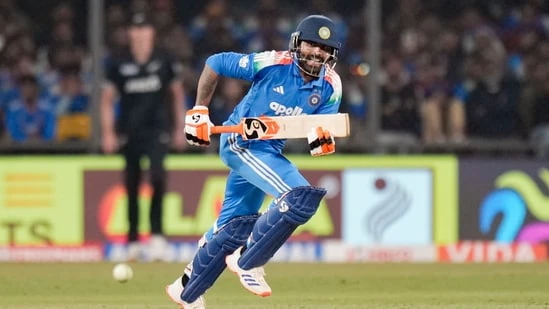
In 2024, it was an unprecedented 3-0 Test series whitewash that reignited long-simmering debates around the future of Virat Kohli and Rohit Sharma in the format, conversations that had largely been brushed under the carpet. Seven months later, both shockingly stepped away from Test cricket, despite the selectors being willing to offer them a final opportunity on the tour of England. Cut to 2026, New Zealand have done it again, securing a first-ever ODI series win against India in India. Only this time, in the centre of the scrutiny is Ravindra Jadeja.
Jadeja’s future in white-ball cricket has often slipped under the radar amid larger conversations surrounding India’s transition phase. The questions, however, were first formally raised last October, when India made five changes to the squad for the ODI tour of Australia from the group that had featured in the Champions Trophy earlier in the year. Jadeja was notably absent. Had the selectors moved on from the all-rounder in ODIs? Is he no longer part of India’s plans for the 2027 World Cup?
India’s chief selector Ajit Agarkar was quick to dismiss the speculation. “Look, at the moment, taking two left-arm spinners to Australia is not possible. Jadeja is clearly in the scheme of things with how good he is,” he said.
Days later, Jadeja, who turned 37 last December and had retired from T20Is after India’s World Cup triumph, reiterated his ambitions in the 50-over format while addressing his omission. “Whenever I get a chance next, I will try and do what I have done all these years. If I get a chance in the World Cup and there are many ODIs before that, and if I do well there, it will be a good thing for Indian cricket,” he said in October.
In November, Jadeja returned to the ODI fold. With Axar Patel rested for the home series against South Africa, India turned to their only other left-arm spin option still in contention. In his previous appearance in the format, during the Champions Trophy, Jadeja had picked up five wickets at an economy rate of 4.35.
However, since his return, the numbers have failed to strengthen his case. In six matches since the end of November, three against South Africa and three against New Zealand, the 38-year-old has scored just 99 runs off 112 balls at a strike rate of 88.39 and an average of 24.75. With the ball, his returns have been even more concerning: just one wicket in 48 overs across six bowling innings.
Jadeja’s ODI struggles
In India’s ODI line-up, Jadeja is primarily tasked with lower-order batting, often carrying finishing responsibilities. However, the left-hander has consistently struggled in the slog overs, finding it difficult to shift gears and accelerate when the situation demands.
Since the 2023 World Cup, India have played 23 ODIs, with Jadeja featuring in 13 of them, all since 2025. In that period, he has scored just 149 runs at a strike rate of 95.91, without registering a single fifty. Among the 146 batters who have faced at least 100 deliveries while batting at No. 5 or below since the last World Cup, Jadeja’s strike rate ranks 101st.
In the death overs (40-50), the numbers offer only marginal improvement. His strike rate of 114 places him 42nd among batters positioned between No. 5 and No. 8 who have faced at least 50 deliveries during the same period.
Jadeja’s struggles were evident in recent outings. In the four-wicket defeat against South Africa in Raipur last month, the senior batter failed to capitalise in the slog overs, managing just 24 not out off 27 balls despite dew significantly aiding stroke-making. Last week, in the second ODI against New Zealand, he scored 27 at a strike rate of around 60, an innings that placed additional pressure on centurion KL Rahul, who was forced to shoulder the scoring burden almost single-handedly.
More concerning than his batting has been his bowling returns. While Jadeja has taken 12 wickets in 13 innings since the 2023 World Cup at an economy rate of 4.97, only one of those wickets has come since his return to the format in November, despite bowling 288 deliveries during that period.
India have to take the Jadeja call
India will not play another ODI until the tour of England in July, when the selectors are expected to shift focus from the T20 World Cup to the 50-over format, with the ODI World Cup in South Africa firmly in sight.
If one revisits Agarkar’s comments from October, it is clear that India are likely to prefer only one left-arm spin-bowling all-rounder for the World Cup, especially in South African conditions that traditionally favour seam bowling. The home series against South Africa and New Zealand offered Jadeja an opportunity to strengthen his case in the absence of Axar.
Axar, despite a modest strike rate of 81 during the same period, scoring 377 runs in 15 innings with one half-century, has been notably more effective with the ball, picking up 16 wickets at an economy rate of 4.32. India also have Washington Sundar in the mix, another spin-bowling all-rounder who has taken 13 wickets in 11 matches since November 2023 at 4.84 runs per over, while scoring 121 runs at a similar strike rate.
Jadeja may still believe he has a window when India resume their ODI World Cup preparations in the summer, particularly given the lack of established finishing options. However, the management’s growing inclination to back Harshit Rana in a lower-order role, highlighted by his fiery maiden fifty in Indore on Sunday, combined with Hardik Pandya’s return and the consistent presence of Rahul, significantly narrows that window.
Hence, at this stage, it is difficult to ignore the possibility that Jadeja may have already played his last ODI.