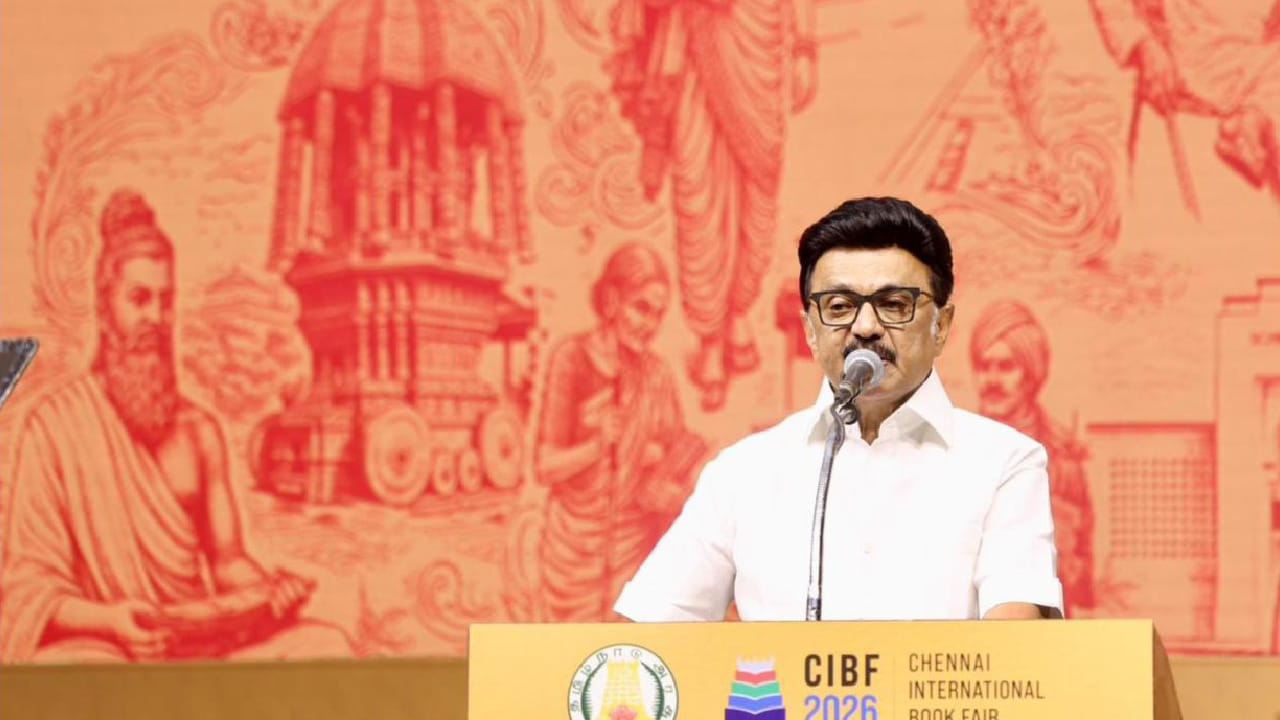
Chennai: In a move seen as a direct cultural and political counter to the Centre, the Tamil Nadu government led by Chief Minister MK Stalin announced the institution of a ‘Classical Language Literary Award’ to be conferred annually on outstanding literary works in seven Indian languages—Tamil, Telugu, Kannada, Malayalam, Odia, Bengali, and Marathi. Notably, Hindi has been excluded from the list.
The award, carrying a cash prize of Rs 5 lakh—five times the amount given by the Sahitya Akademi—was unveiled by Stalin at the closing ceremony of the Chennai International Book Festival. He sharply criticized what he called “political interference” by the central government in literary awards, citing the suspension of the 2025 Sahitya Akademi Awards as the immediate trigger.
A Political and Literary Statement
Stalin framed the new award as a defense of literary autonomy and a promotion of India’s linguistic diversity. He stated, “Political interference even in arts and literary awards is dangerous,” and emphasized that the Dravidian model government is committed to “spreading the light of knowledge.” The choice of languages is significant, as all seven are officially recognized as ‘Classical’ or possess rich literary histories. The exclusion of Hindi is widely viewed as a pointed political statement by the DMK, which has historically opposed Hindi imposition.
Strategic Implications
Analysts see the award as a strategic move to extend the DMK’s influence into the pan-Indian literary sphere, provide an alternative platform for writers—especially those critical of the BJP-led Centre—and reinforce Tamil Nadu’s identity as a guardian of pluralistic culture and federalism. The state government’s willingness to spend a few crores annually on the awards is seen as a long-term investment in soft power, aimed at building alliances with literary communities in non-Hindi states.
Context: The Sahitya Akademi Controversy
The announcement comes amid allegations that the Union Ministry of Culture interfered in the Sahitya Akademi Awards selection process, leading to their suspension. The Tamil Nadu government’s award, with its higher prize money and inclusive yet Hindi-excluding language list, is positioned as both a rebuke and an alternative. By stepping into a space traditionally occupied by national bodies, the Stalin government is signalling its intent to challenge the Centre’s cultural authority—a move likely to resonate in the run-up to the 2026 assembly elections and beyond.