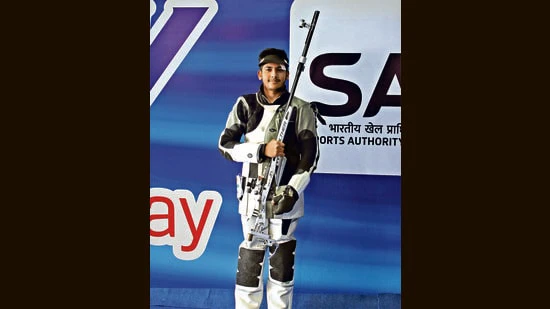
New Delhi: The fight for spots in the Indian shooting team in the year of the Asian Games and World Championships – which will also offer quota places for 2028 LA Olympics – will begin with the two selection trials at the Karni Singh Shooting range here starting on Monday.
For the rifle shooters though another big test awaits as they prepare to take their positions in the qualification range. It is to get their clothing gear cleared at the equipment control room, according to new ISSF (world shooting body) specifications.
The ISSF thickness and stiffness standards for rifle jackets and trousers are being implemented by the NRAI in these trials. From Paris Olympics bronze medallist Swapnil Kusale to world championships silver medallist Aishwary Pratap Singh Tomar, India’s top shooters have spent the last few days in the range worrying more about their apparel than performance at the trials.
Rifle shooting requires incredible balance and stability in still positions, and thick clothing provides the support needed to maintain posture. However, in recent years rifle clothing manufacturers have been producing thicker and stiffer apparel, making several shooters rely more on their gear for performance. As a consequence, skills have taken the backseat. It has also handed newcomers the advantage to fast catch up with established names. Scores in the last two Olympic cycles have gone higher, forcing ISSF to evaluate jackets, trousers and boots for what it perceived to be ‘technical doping’.
A fresh set of rules has thus come in this year. The initial proposal by ISSF in July called for stricter compliance on clothing and shoes. But after feedback from federations, it decided to begin with moderate changes in tolerance levels for thickness and stiffness. This was to save shooters from needing a complete overhaul of clothing, to see if they can pass the specification test through modification.
What is certain is that shooters will now have to depend more on their body balance and stability as the clothing support will be significantly reduced.
“It is a bit of uncharted territory that we are entering into. The scores could be low. We don’t know what to expect in a competition,” says Paris Olympian Arjun Babuta. “I have been working on my fitness levels and getting acquainted with the clothing. The technique, core strength, skills, and focus – everything will be tested.”
Babuta is second in the NRAI air rifle rankings. His average score in the last four events is 633.33. The men’s world record in qualification is held by Chinese Olympic champion Sheng Lihao (637.9). The women’s qualification record too stands at 637.9 in the name of his compatriot Wang Zifei.
“Jackets are going to be loose now, so challenges will increase for shooters. Shooters will have to rely on their physical ability and skills,” says coach Deepak Dubey, who is also an ISSF judge.
“The shooters are worried whether their gear will make it through equipment control, especially in this peak winter in Delhi when clothes become stiff. They were busy with the nationals that ended two weeks back. So, they didn’t have much time to get new clothing. We are advising them on how they can make adjustments in their existing clothing to bring it to ISSF specifications,” he said.
A top-quality rifle jacket and trousers cost around ₹1 lakh and lasts around one year. But several shooters were changing gear in five-six months. “The change will be seen in scores of second rung shooters, or those who often replaced their clothing. They will have to step up their physical and skills. The elite shooters will take some time but will adapt to the changes,” says national rifle head coach Deepali Deshpande.