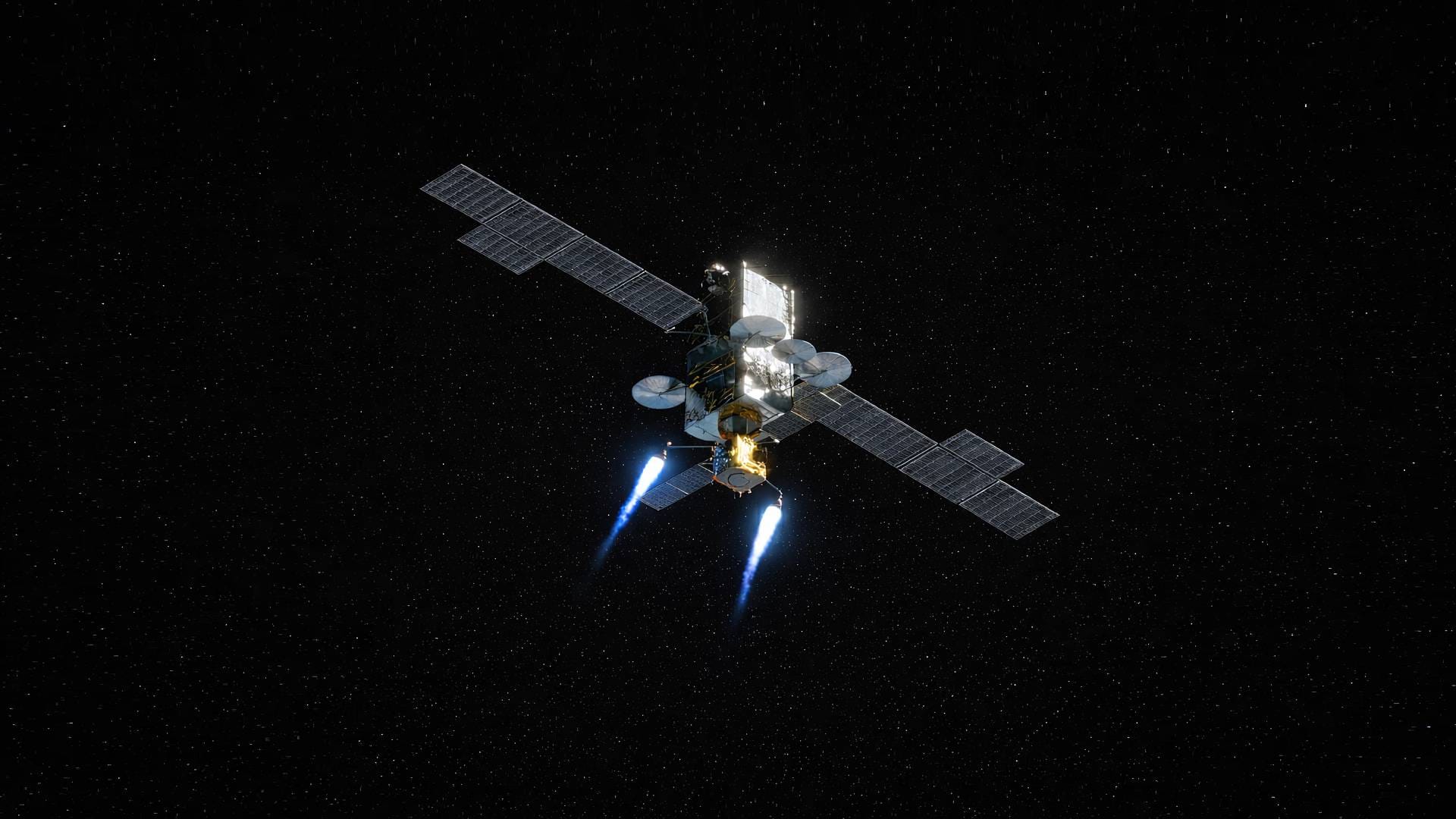
New Delhi: Bengaluru-based New Space Startup Aule Space has raised $2 million in pre-seed funding led by pi ventures with participation from a clutch of angel investors. The company is building autonomous satellites that can dock with and service satellites in orbits. With the funding, Aule Space will expand its engineering team, build ground infrastructure for docking tests, and advance the development of its first demonstration satellties, set to launch next year. These satellites will validate Rendezvous, Proximity Operations and Docking (RPOD), which is the capability for a spacecraft to approach, manoeuvre close to, and physically attach to other objects in space.
Cofounder and CEO of Aule Space, Jay Panchal says, “Imagine buying an expensive car and abandoning it when the fuel runs out. This is how satellites worth over $100 billion are operated today, we want to change that. With launch costs coming down drastically, new forms of value generation will be unlocked in space. Large space assets that enable this will require routine assembly and service in space, for which our RPOD capabilities will be the key building block.” Aule’s innovation is in a satellite-agnostic docking mechanism combined with AI-powered Guidance, Navigation and Control (GNC) algorithms that allows for lightweight and cost efficient fleets of RPOD satellites.
Boosting uncooperative targets
Satellites in the future are expected to have docking ports for servicing missions. However, the satellites launched today do not have such mechanisms, and in the future, not all hardware used is expected to be compatible. Aule space is developing technologies that is agnostic of the satellites, and can dock with and boost even uncooperative targets. This allows for the jetpacks to attach to legacy satellites that were not designed for servicing. Aule is the first company from India developing life-extension solutions for satellites in Geosynchronous orbit, with only a handful of private companies worldwide demonstrating comparable capabilities.