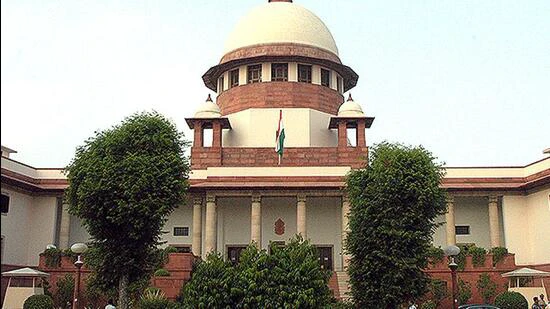
The suggestions came in a significant ruling delivered on Thursday in the Tiger Global-Flipkart case, where the court held that capital gains arising from the American investment firm’s $1.6-billion stake sale in Flipkart to Walmart in 2018 were taxable in India.
While the judgment on tax liability was authored by Justice R Mahadevan, Justice J B Pardiwala wrote a separate but concurring opinion, spelling out broader principles on how India should approach international tax treaties in an era of global trade, digital economies and geopolitical uncertainty.
The occasion for Justice Pardiwala to articulate broader principles on how India should approach international tax treaties arose from the court’s Thursday ruling, which analysed the interplay between domestic anti-avoidance provisions, including the General Anti-Avoidance Rules (GAAR), and the India-Mauritius Double Taxation Avoidance Agreement (DTAA).
Justice Pardiwala warned that tax treaties should not become instruments that weaken India’s sovereign right to tax income generated from its own soil. “Treaties should be driven by national interest, not pressure from foreign governments or corporations,” said the judgment, underlining that a nation’s stability and independence are increasingly judged by the strength of its tax sovereignty.
Checklist for future treaties
The court proposed a comprehensive set of safeguards that India should adopt while negotiating or renewing international tax treaties. These include incorporating limitation of benefits (LOB) clauses to prevent treaty shopping by shell companies, allowing domestic anti-avoidance laws such as the General Anti-Avoidance Rule (GAAR) to override treaty benefits in cases of artificial transactions, and ensuring that India retains the right to tax the digital economy based on “significant economic presence” rather than physical presence alone.
The judgment stressed that treaties must preserve India’s source-based taxation rights, especially over capital gains from Indian companies, interest, royalties and technical fees. It cautioned against residence-based taxation models that disproportionately benefit tax havens and developed economies at the cost of source countries like India.
Justice Pardiwala also underscored that treaties should follow the tax credit method rather than exemptions, so that income is not left untaxed altogether. He called for strong exit and renegotiation clauses, pointing out that India has in the past renegotiated problematic treaties with countries such as Mauritius, Cyprus and Singapore.
Rethinking long-term treaties:
In strong language, the court said nations must rethink very long-term treaties in light of rapidly changing global trade realities. “With newer and newer trade complexities emerging in the global arena, Nations should rethink very long-term treaties. There is no need to carry the burden or legacy of formative years of treating making and even more when it comes to interpretation of such treaties. Interpretations which are more sound and currently relevant should yield to archaic and behind the scheduled objectives,” held the judgment.
Rejecting the idea that future transactions can be permanently “ring-fenced” within static treaty frameworks, the court said tax treaties must remain dynamic and capable of contextual interpretation to match evolving business models and digital trade.
“When current trade affairs are so dynamic, a contextual and meaningful interpretation of such instruments would not only make it currently relevant, but also vibrant matching with the progressive global business dynamics,” it added.
Sovereignty as economic independence:
The judgment offered a wider reflection on tax sovereignty, describing it as a “tightrope walk” that involves balancing geopolitical pressures, diplomacy, investment attractiveness and domestic priorities without compromising core national interests.
Justice Pardiwala noted that while domestic taxation decisions are tested against constitutional principles such as equality and dignity, exercising tax sovereignty internationally involves additional filters such as global power equations and economic bargaining strength. Yielding or compromising sovereignty under external pressure, the court warned, can become a “self-defeating interruption” in a nation’s long-term growth.
The court cautioned against multinational companies or international bodies influencing domestic tax policy choices to suit their own interests, drawing a clear distinction between legitimate investment models and lobbying for legislative changes.
Lessons from past policy choices and security interest:
Referring to India’s 2016 decision to unilaterally revoke several bilateral investment treaties (BITs), the court said the move reflected a conscious assertion of sovereignty after recognising the downsides of older treaty frameworks. It said past practices need not be treated as permanent legacies if changing geo-economic conditions favour a more assertive approach.
The judgment also highlighted the importance of unilateral tax measures when necessary, noting that powerful economies routinely use such tools to protect their interests and align trading partners with their priorities.
Beyond revenue concerns, the court linked tax sovereignty to national security, warning that weak or compromised treaties can facilitate tax evasion, money laundering, round-tripping of funds, and even crimes such as drug and human trafficking. Such abuses, it said, erode economic stability and weaken democratic control.
Calling for transparency and periodic review, the court said tax treaties must allow renegotiation and provide clear safeguards to prevent erosion of the tax base and dilution of parliamentary authority.
Justice Pardiwala summed up the court’s approach by stating that retention of tax sovereignty must be the rule, and yielding the exception, only when it is meaningful, proportionate and never at the cost of the nation’s welfare or long-term interests.