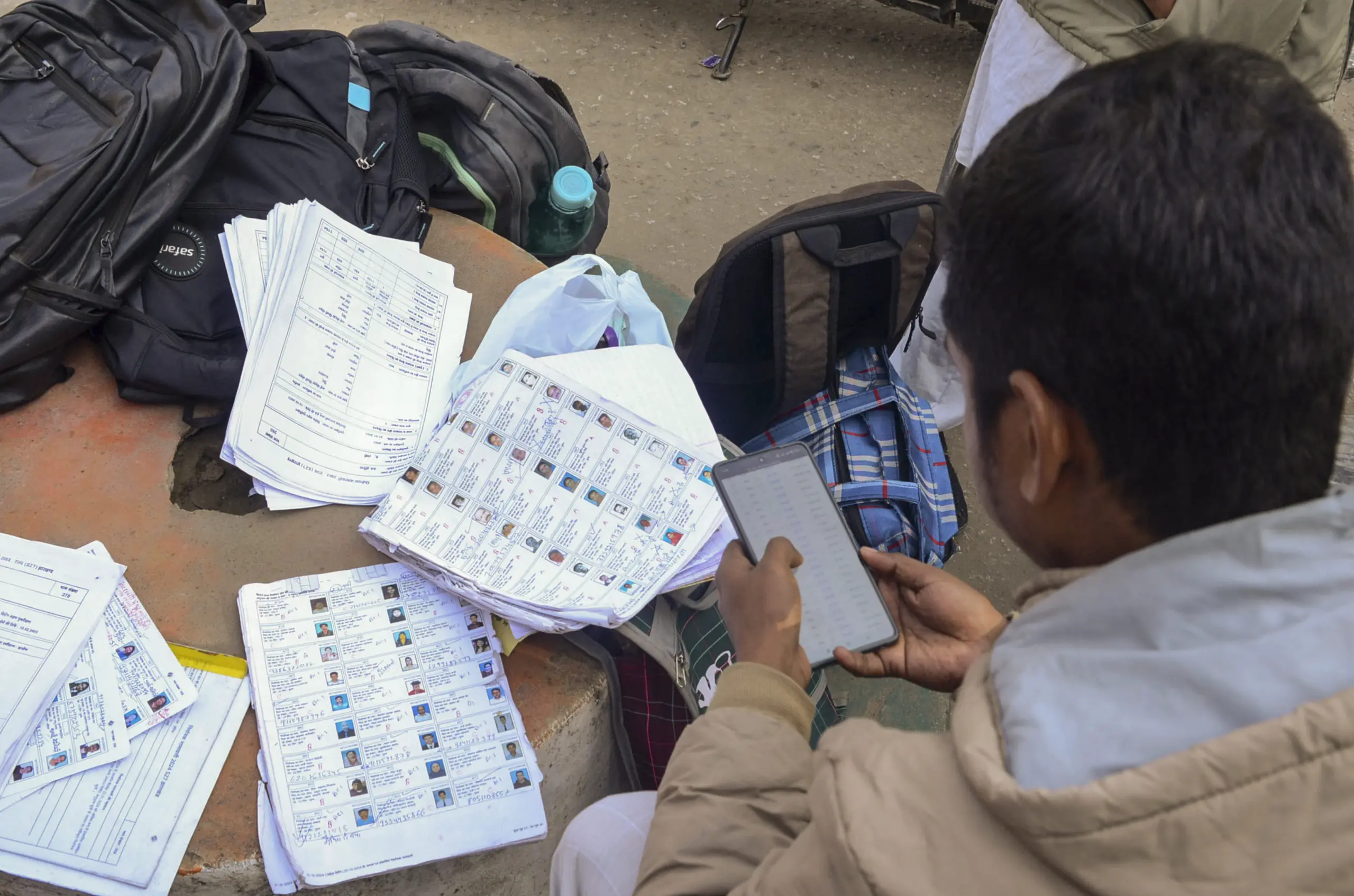
Former Election Commissioner Ashok Lavasa on Friday pointed out that problems arose in the special intensive revision (SIR) of electoral rolls in Bihar as the Election Commission kept modifying procedures during the course of the exercise, thus giving an indication that they were not properly planned.
Lavasa’s observation came during a panel discussion on “Election Commission Credibility and Indian Democracy”. JD-U’s KC Tyagi and head of Association of Democratic Reforms (ADR) Anil Verma were the other panelists. He said the problem lay with the phrasology used by the EC for Bihar SIR, when the electors were categorised into two groups, those belonging to pre-2003 and those who became eligible voters after 2003 (the year when the last SIR was held in Bihar).
“The phrasology employed was that those who existed before 2003, not only have a probative evidence of eligibility, but also a presumption of citizenship as well. This gave an indication that those who come after 2003, have to establish their citizenship…this was unprecedented, because the Election Commission in the past has never used this phrasology….the EC cannot be blamed for being lax in employing this criteria…. However, the fact that many of these procedures were modified during the course of the exercise, showed that they did not think through thoroughly,” Lavasa pointed out.
He however lauded the poll body for being an institution “which has a formidable reputation of employing standard operating procedures, which are transparent”.
With growing cases of what the ECI has described as “logical discrepancies” in database of electors, especially in poll-bound West Bengal, the former Election Commissioner said the issue had arisen mainly due to pre-filled enumeration forms being given to voters under the ongoing SIR in West Bengal.
“If you correlate the information in the pre-filled forms with that provided in the EC’s database, it could probably lead to logical discrepancy…. When you are doing a purification exercise and if you prefill all forms based on the information available with the poll body’s database then even the discrepancies existing in the database get included. Since the forms are pre-filled, the elector has no scope to rectify (those mistakes), as he or she only has to sign and return them. Then there is a risk of carrying forward discrepancies,” he said.
Tyagi spoke on rising expenses in elections while ADR head Verma highlighted its various petitions in courts related to SIR and other electoral issues.